
IS IT ENOUGH?
Whilst many cord blood banks rather unscrupulously hype up the possibilities of stem cell expansion (in order to get clients to store whatever they have and believe in their technology), I've always asked the StemLife team to take a very careful view of the science and the practical realities*.
[As a side note, here in Malaysia cord blood banks claiming to compete with us - operate on the cheap using non-FDA approved storage systems- promote the usage of vials as a storage medium on the pretext that cells can be selectively taken one vial at a time for future expansion. Read on to see why this is a disingenuous marketing ploy...]
THE CHALLENGES OF EXPANSION
The reason why StemLife has taken a cautious approach towards the expansion technology are three fold.
Firstly, in order to expand stem cells, you'll need enough cells -the more the better- in the first place. As a crude analogy, you'll need enough lactobacilli to make yoghurt (too little and it will take too long, allowing other bacteria to destroy the process).
Secondly, sterile technique is absolutely critical; when you're growing the cells, you have to make sure that it contains only the cells that you're growing and nothing else. This requires not only human precision, expensive facilities and sterile reagents, but most importantly, the money to maintain everything in exactly this pristine sterile condition (many, many zeros in any currency).
Thirdly, knowledge of cellular morphology and function is also very important. No one I know would like to risk having cells injected into the heart forming liver or kidney tissue instead. This means identifying the cells and providing the assurance that the cells are indeed stem cells and nothing else.
Hence, any organization, private or public has to be prepared to have deep pockets and a lot of patience when venturing into this technology.
HOW DEEP ARE YOUR POCKETS?
I've been following Viacell's (VIAC) progress in this area for some time, not only because they were one of the first stem cell companies to announce their sincere interest and demonstrate their financial committment in this area, but also because I was kindly shown around their big and beautiful facilities two years ago in Boston.
It is unfortunate therefore to see this press release by Viacell on their decision to terminate the cord blood stem cell expansion project CB001 despite its apparent reported success but on the grounds that the process and product was unaffordable and commercially inviable due to other alternatives.
"What's the alternative?" I hear you ask. The reason why Viacell made the tough commercial decision to cut their losses was that the preferred methodology by transplanters in the US is a dual cord stem cell transplant (using 2 cord blood stem cell units instead of just 1). The results of the expanded product were as good as and in some ways slightly better in the initial trial, but I suspect that the cost did not justify only small improved outcomes. I would say that it was a wise commercial decision by Viacell, and an acknowledgement that what scientists dream and love to do, is not always feasible for clinical practice.
I learned this a long time ago when I was still in research, that what looks good on paper does not necessarily transform into a money spinner despite the winning ideas and long hours of toil.
A GOOD CEO KNOWS WHEN TO QUIT
By cutting the budget for this research and focusing on service improvements, Viacell expects to finally achieve profitability in 2008 for the first time since their listing a few years ago (this is probably also true of many of the other cord blood banks which have committed much of their funding to very costly research, sacrificing their bottom line).
"Given these results and the shift in the treatment paradigm in transplant medicine from single cord to two cord transplants, ViaCell has made the decision not to advance CB001 in future clinical trials. As a result of the reduced clinical and development costs related to CB001, along with anticipated continued growth in its operating business, ViaCell expects to become cash flow positive in the first half of 2008."
Now, Viacell intend to focus on cord blood stem cells for cardiac applications, which I think is probably more interesting and may pose less life-threatening consequences for patients.
"We are committed to continuing to grow our operating business, advancing ViaCyte(SM) through a pivotal clinical trial, which, if successfully developed, will leverage our sales and marketing infrastructure, and working to advance our cord blood-derived cardiac program," said Mr. Beer. "We are already generating cash flow within our ViaCord business and we anticipate continued growth in 2007. As a result, given our reduction in clinical and development costs related to CB001, we expect ViaCord's contributions to the overall operation will allow us to turn cash flow positive in the first half of 2008."
So if you are specifically told by any stem cell company that stem cell expansion technology is available today, they aren't lying, but don't forget to ASK them whether:
1. Your unit baby's cord blood unit has sufficient stem cells to be expanded,
2. Who's offering the service (full due diligence here) and how successful the treatments outcomes have been and what assurances they provide otherwise;
3. And, specifically at what cost.
STEMLIFE BELIEVES IN CHOICES
The way I read the cord blood stem cell tea leaves, if you banked a unit of stem cells and it is not enough, seek other matching units to combine with your own or consider joining StemLife's adult stem cell banking program.
We believe in continually providing affordable and accessible options to our clients... and making stem cell banking a more than once in a lifetime opportunity. :)
*We do not turn away clients who express their wish to proceed but provide them with a cautious advisory to indicate if the stem cell counts are below what we would normally expect. StemLife also provides a full refund for those clients who decide not to proceed to store, and we usually ask them to let us know when they'll be having the next baby (success second time round).
StemLife has a joint research project with the National University of Singapore at very initial stages which differs from Viacell's approach, you can read more about it here.
Saturday, February 24, 2007


Friday, February 23, 2007
StemLife wishes our chinese readers Happy New Year!

Hi Everyone!
Happy New Year to all our chinese readers who celebrate the festival! Its the 3rd day of Chinese New Year (CNY has 15 days) and the StemLife office is back in full force (we're open for clients 24 by 7 but our staff do celebrate certain festivities:)).
The team has decorated the office beautifully whilst I've been away. Here's a sample picture of how the team has decorated the plants in the office.
I've got some new entries I'd like to post and will get round to writing them this weekend. So check back for new information in a day or two.
Saturday, February 10, 2007
Cord Blood Stem Cells Verdict: Same and Better than Allogeneic Stem Cell Transplants from Other Sources

In my conversation with many doctors, there is often a disbelief that cord blood stem cells can be used for successful transplantation. Although, I've been doing my very best to inform them that many adults have also been treated with cord blood stem cells, and that the applications are not limited to pediatric leukemias, I guess the detractors always get more attention for their comments than the published evidence.
Now, I'm happy to see this news published in the prestigious medical journal BLOOD* which states the results of a study conducted by researchers in Japan who compared the outcomes of patients with leukemia or lymphoma who underwent allogeneic stem cell transplants from either cord blood, peripheral blood or bone marrow.
The results were succinctly stated as follows:
At three years mortality related to treatment was 9% for those treated with umbilical cord transplants and 13% for those treated with bone marrow or peripheral blood transplants.
At three years relapses occurred in 17% for those treated with umbilical cord transplants and 26% for those treated with bone marrow or peripheral blood transplants.
At three years cancer-free survival was 70% for those treated with umbilical cord transplants and 60% for those treated with bone marrow or peripheral blood transplants.
For patients who were at a standard risk of developing a recurrence, cancer-free survival at three years was 93% for those treated with umbilical cord transplants and 85% for those treated with bone marrow or peripheral blood transplants.
For patients who were at a high risk of developing a recurrence, cancer-free survival at three years was 56% for those treated with umbilical cord transplants, compared with 45% for those treated with bone marrow or peripheral blood transplants.
GVHD was less frequent after umbilical cord transplants compared with bone marrow or peripheral blood transplants.
The researchers concluded that umbilical cord transplants provide results that are comparable to or better than those achieved with standard allogeneic stem cell transplants utilizing peripheral blood or bone marrow stem cells from a related donor.
These results provide additional evidence that the use of umbilical cord stem cells may be an effective alternative to an allogeneic stem cell transplant from an unrelated donor.
With these results, I'm hoping that haematologists will be considering cord blood stem cells as a source and option for patients equivalent terms, not just as a last resort as it is often currently viewed today. And, if all babies bank their own cord blood stem cells, this will avail them to those units as adults in the future**.
*Reference: Takahashi S, Ooi J, Tomonari A, et al. Comparative single-institute analysis of cord blood transplantation from unrelated donors with bone marrow or peripheral blood stem-cell transplants from related donors in adult patients with hematologic malignancies after myeloablative conditioning regimen. Blood. 2007;109:1322-1330.
**StemLife provides cord blood and adult stem cell banking services for individuals and families. If you've missed the cord blood stem cell banking service for your child, you can consider enrolling in our adult stem cell banking service. Do contact us if you'd like more information.
Thursday, February 08, 2007
Giant Cartilage Weaving Stem Cell Machine
If you're into the whole bio-engineering scene or are planning to work in labs which create polymers for human regenerative use, this machine might interest you. Check out this cool photo of a giant stem cell scaffold weaving loom.
Our collaborators in the National University of Singapore have something like this in Prof. Seeram Ramakrishna's lab but I haven't had the privilege of seeing at work. Right now, they use it to spin the polymers made of gelatin and other organic substances but I don't think its for commercial application just yet.
Our collaborators in the National University of Singapore have something like this in Prof. Seeram Ramakrishna's lab but I haven't had the privilege of seeing at work. Right now, they use it to spin the polymers made of gelatin and other organic substances but I don't think its for commercial application just yet.
Wednesday, February 07, 2007
Malaysian Biotechnology Information Center

Congratulations to the Malaysian Biotechnology Information Center headed by Ms. Maha on the launch of the new logo yesterday!
I was kindly invited as a fellow scientific advisor to attend the launch yesterday morning at MARDI in Serdang and was delighted to see that there was a huge turnout for the event. There is no doubt in my mind that under Maha's leadership, that MABIC will make many in-roads where other larger organizations may find it difficult due to their affiliations.
If you'd like to know what's happening in the Biotechnology field from a non-governmental perspective, do check out MABIC's website.
Tuesday, February 06, 2007
Stem Cell News Updates- Hearts & Virgin & Astronauts...
I came back into the office this morning sporting a new flu bug and trying not to speak to anyone for fear that it might spread. Two bottles of anti-tussive Robitussin (manufactured locally by pharmaceutical manufacturer Pharmaniaga) and a whole tube of fizzy Redoxon later, the fever has fortunately been reduced to phlegmy obstruction in my eustachian tubes, nose and throat.
I have full confidence that my stem cells are kicking into overdrive to produce the necessary lymphocytes and leukocytes to do battle, as evidenced by the phlegm (cellular war debris and aftermath). :)
BATTLE AGAINST BREATHLESSNESS & PAIN
Anyway, I had a quick look at the recent news in the stem cell arena and saw another update on the Gary Schaer trial at Rush Medical Center's Cardiac Catheterization Lab using CD34+ cells for heart disease, where the objective is to "stimulate the growth of new blood vessels to bring more blood and oxygen to the heart muscle, so that these patients will have a better quality of life and less chest pain". One of the reasons why I highlight this clinical application is because one of the big brand names, Baxter, is helping to bring together two specialties- cardiology and hematology. No longer are CD34+ a code language for hematologists to use alone, but these cells have been perhaps overlooked or underestimated in their capacity to regenerate. Their results have been like ours, which is good news to reinforce our work- the treatment is well tolerated and patients report having less chest pain and improved exercise capacity.
Many doctors I speak with are afraid of cross specialties, largely because to properly understand it requires an extensive undertaking in time to read up on one's own, or to have to fork out a decent amount of time (+ money) to receive further training in the area. I understand the reluctance and agree somewhat that these are special interest areas and think that it should probably be left up to those who are keenly interested or have been specifically trained so that it can administered safely and ethically.
Having said that, I also believe that it is possible that doctors who are interested in this subject area but neither have the time nor money to pursue it as a specific interest area, are able to garner the expertise through collaborating with a specialist organization like StemLife. Unlike other companies who found the business attractive and believed they could replicate our work after reading our prospectus, it does take more than cash to ensure committment, energy and drive to fuel passion and continuous knowledge assimilation.
MONEY MAKES THE WORLD GO ROUND?
Whilst we're on the topic of spending wads of cash, I also read about Sir Richard Branson's very PR-driven announcement of initiating a cord blood stem cell bank in the UK. From the BBC news site:
Virgin says its service is unique because it will offer a charitable element, allowing the NHS to use some of stem cells the company stores. Sir Richard explained: "We will take an individual's cord blood and we will divide it in two. "So, part of it will go into a national blood centre that anybody can get access to. And the other half will be put aside for the child." He said this should help particularly high risk ethnic groups who are prone to conditions that can be treated with stem cells but who may have difficulty finding well-matched cord blood.
I found this to be interesting on the ownership and ethical prospect. The idea is marvellous, semi-altruistic (except for the fact that parents still have to pay a fee) but leaves behind quite a number of questions in my mind which I wonder how they will resolve. Here's a few ones that spring immediately to mind:
Parents have to pay 1500 British Pounds or (RM 10,500) to store their stem cells in Virgin's bank.
1. So if it is divided in 2, who owns which half and does the parent have the first right of refusal if someone needs it but they wish not to donate?
2. How will they ensure that the cord blood collected will be sufficient to be divided in half? (volumes are highly variable)
3. Does the NHS have to pay Virgin for the use of the stem cells?
4. With this new company, will the NHS now permit Virgin to collect the cord blood in their trust hospitals or will be specific ones only? (see previous blogs)
5. If the unit is half used and the donor now needs it, can they get a replacement for free?
According to the Virgin press release on this topic, Professor Colin McGuckin and his Newcastle team are involved with Sir Richard on this project and are his advisors. If the cord blood stem cells can also be used for research, it would guarantee their facility an endless supply of cells to work with for stem cell expansion or treatment. I'm not against entrpreneurs wishing to start up stem cell banks, but I do think that if new models are being thought up, I'm keen to know how they are being thought through.
Okay, this is turning out to be a rather long blog entry so bear with me for the last bit which I feel brings everything round and round and round.
STEM CELLS & SPACE TRAVEL: CORD BLOOD INTO A NEW DIMENSION

It turns out that this article mentioned that Prof. Colin McGuckin (yes, him again) has been awarded a USD 1 million grant to determine the potential of growing new body tissues to replace tissue damaged or turned cancerous by space radiation, using his zero-gravity simulator. He plans to put adult stem cells derived from astronaut's blood in a zero-gravity bio-reactor and using a cocktail of stimuli (ie cytokines), instruct the cells to grow into liver or muscle or any other tissue. The aim being to provide NASA with the means for a replacement body part for every astronaut on their travel to another planet (maybe Mars in 2030 or Uranus in 2090?).
This is exciting because it negates the effect of time on the wear and tear of the body. If you are a Star trek fan (and I'm talking The Next Generation here), you'll remember that cool wand that Dr. Beverly Crusher uses whenever one of the crew is injured to stimulate healing in a total of 5 seconds. Must be a stem cell activation factor.
And there weren't too many lives that she couldn't save :)
I have full confidence that my stem cells are kicking into overdrive to produce the necessary lymphocytes and leukocytes to do battle, as evidenced by the phlegm (cellular war debris and aftermath). :)
BATTLE AGAINST BREATHLESSNESS & PAIN
Anyway, I had a quick look at the recent news in the stem cell arena and saw another update on the Gary Schaer trial at Rush Medical Center's Cardiac Catheterization Lab using CD34+ cells for heart disease, where the objective is to "stimulate the growth of new blood vessels to bring more blood and oxygen to the heart muscle, so that these patients will have a better quality of life and less chest pain". One of the reasons why I highlight this clinical application is because one of the big brand names, Baxter, is helping to bring together two specialties- cardiology and hematology. No longer are CD34+ a code language for hematologists to use alone, but these cells have been perhaps overlooked or underestimated in their capacity to regenerate. Their results have been like ours, which is good news to reinforce our work- the treatment is well tolerated and patients report having less chest pain and improved exercise capacity.
Many doctors I speak with are afraid of cross specialties, largely because to properly understand it requires an extensive undertaking in time to read up on one's own, or to have to fork out a decent amount of time (+ money) to receive further training in the area. I understand the reluctance and agree somewhat that these are special interest areas and think that it should probably be left up to those who are keenly interested or have been specifically trained so that it can administered safely and ethically.
Having said that, I also believe that it is possible that doctors who are interested in this subject area but neither have the time nor money to pursue it as a specific interest area, are able to garner the expertise through collaborating with a specialist organization like StemLife. Unlike other companies who found the business attractive and believed they could replicate our work after reading our prospectus, it does take more than cash to ensure committment, energy and drive to fuel passion and continuous knowledge assimilation.
MONEY MAKES THE WORLD GO ROUND?
Whilst we're on the topic of spending wads of cash, I also read about Sir Richard Branson's very PR-driven announcement of initiating a cord blood stem cell bank in the UK. From the BBC news site:
Virgin says its service is unique because it will offer a charitable element, allowing the NHS to use some of stem cells the company stores. Sir Richard explained: "We will take an individual's cord blood and we will divide it in two. "So, part of it will go into a national blood centre that anybody can get access to. And the other half will be put aside for the child." He said this should help particularly high risk ethnic groups who are prone to conditions that can be treated with stem cells but who may have difficulty finding well-matched cord blood.
I found this to be interesting on the ownership and ethical prospect. The idea is marvellous, semi-altruistic (except for the fact that parents still have to pay a fee) but leaves behind quite a number of questions in my mind which I wonder how they will resolve. Here's a few ones that spring immediately to mind:
Parents have to pay 1500 British Pounds or (RM 10,500) to store their stem cells in Virgin's bank.
1. So if it is divided in 2, who owns which half and does the parent have the first right of refusal if someone needs it but they wish not to donate?
2. How will they ensure that the cord blood collected will be sufficient to be divided in half? (volumes are highly variable)
3. Does the NHS have to pay Virgin for the use of the stem cells?
4. With this new company, will the NHS now permit Virgin to collect the cord blood in their trust hospitals or will be specific ones only? (see previous blogs)
5. If the unit is half used and the donor now needs it, can they get a replacement for free?
According to the Virgin press release on this topic, Professor Colin McGuckin and his Newcastle team are involved with Sir Richard on this project and are his advisors. If the cord blood stem cells can also be used for research, it would guarantee their facility an endless supply of cells to work with for stem cell expansion or treatment. I'm not against entrpreneurs wishing to start up stem cell banks, but I do think that if new models are being thought up, I'm keen to know how they are being thought through.
Okay, this is turning out to be a rather long blog entry so bear with me for the last bit which I feel brings everything round and round and round.
STEM CELLS & SPACE TRAVEL: CORD BLOOD INTO A NEW DIMENSION

It turns out that this article mentioned that Prof. Colin McGuckin (yes, him again) has been awarded a USD 1 million grant to determine the potential of growing new body tissues to replace tissue damaged or turned cancerous by space radiation, using his zero-gravity simulator. He plans to put adult stem cells derived from astronaut's blood in a zero-gravity bio-reactor and using a cocktail of stimuli (ie cytokines), instruct the cells to grow into liver or muscle or any other tissue. The aim being to provide NASA with the means for a replacement body part for every astronaut on their travel to another planet (maybe Mars in 2030 or Uranus in 2090?).
This is exciting because it negates the effect of time on the wear and tear of the body. If you are a Star trek fan (and I'm talking The Next Generation here), you'll remember that cool wand that Dr. Beverly Crusher uses whenever one of the crew is injured to stimulate healing in a total of 5 seconds. Must be a stem cell activation factor.
And there weren't too many lives that she couldn't save :)
Monday, January 29, 2007
Encouraging Research Careers in Stem Cells
It's always nice to read about a young person's start in life, filled with passion and career goals, especially in the area of stem cell research and application (my favorite topic!).
Featured in the local paper the Star recently, was 28 year-old Tan Guak Kim from Kota Tinggi, Johor, who recently qualified with a Masters of Medical Science from University Malaya. She has proudly announced winning a full PhD scholarship from the Australian government to pursue her studies on cartilage regeneration in the University of Queensland.
Her work will be centered on (guess what!) scaffolding and biomaterial influence on stem cell differentiation to form cartilage cells. She says that she would like to perhaps start an institute in future which would teach others about stem cell work and provide arthritic applications.
Guak Kim, you're always welcome to give us a call when you're ready with an application. Or maybe just even when you're back in Malaysia for a vacation.
Well done also to all the other winners of the Endeavour award!
I have friends who studied with me in the UK and pursued their PhD programmes there. Scientific pursuit is a lot about having the community of friendly researchers who support each other and a strong funding program as research equipments and reagent are expensive. My friends have gone on to receive support, encouragement and generous funding from the UK governments to pursue their areas of interest, and I suspect sadly, won't be coming home anytime soon.
Featured in the local paper the Star recently, was 28 year-old Tan Guak Kim from Kota Tinggi, Johor, who recently qualified with a Masters of Medical Science from University Malaya. She has proudly announced winning a full PhD scholarship from the Australian government to pursue her studies on cartilage regeneration in the University of Queensland.
Her work will be centered on (guess what!) scaffolding and biomaterial influence on stem cell differentiation to form cartilage cells. She says that she would like to perhaps start an institute in future which would teach others about stem cell work and provide arthritic applications.
Guak Kim, you're always welcome to give us a call when you're ready with an application. Or maybe just even when you're back in Malaysia for a vacation.
Well done also to all the other winners of the Endeavour award!
I have friends who studied with me in the UK and pursued their PhD programmes there. Scientific pursuit is a lot about having the community of friendly researchers who support each other and a strong funding program as research equipments and reagent are expensive. My friends have gone on to receive support, encouragement and generous funding from the UK governments to pursue their areas of interest, and I suspect sadly, won't be coming home anytime soon.
Saturday, January 20, 2007
Recent Stock Prices For Stem Cell Companies in the US & Malaysia

I haven't written much about the financial status of stem cell companies in this blog (it is dedicated to therapy mostly), but in the light of what I've been reading in some very well-read financial magazines, it is difficult to ignore that the better the company is funded and perceived by investors, the more recognition they are able to get for their products and services. This recognition then translates into greater awareness and acceptance by members of the public, which by using the company's services will generate more revenues and greater returns for investors.
STOCK UP 135% - ADULT STEM CELLS FOR BONES
In this month's Bloomberg Markets publication (February 2007, page 22) the first paragraph pretty much brings home the judgement of which stem cell companies are excelling and which are not. The article starts by praising Osiris Therapeutics*, a company focussing on adult stem cells which provides treatment for broken bones and joint therapies, as having taken the path of least resistance. Shares in Osiris recently rocketed up 135% to USD 25.82 in the space of 5 months after its initial public offering (IPO). I think the reason why investors are keen on this company is due to the generation of USD 2.5 million in revenue in the 3rd quarter.
NOT THERE YET- EMBRYONIC STEM CELL HURDLES
Contrast Osiris's stock performance with Geron -a company that focuses on developing embryonic stem cells for treatment in Alzheimer's- which for the year of 2006 rose only 9%. Geron is still in its product development phase and is planning to commence human clinical trials in 2007. Other companies which have also underperformed in 2006 stock price are Aastrom Biosciences and Cytori Therapeutics. Aastrom has had a few changes in top management since their inception (much as the business model may be sexy, savvy investors also look at leadership and team), whilst Cytori started off as Stemsource in California and is now trying to get its fat stem cell processing machine FDA approved.
ADULT STEM CELLS- NO DISPUTE
Amongst the financial community and medical community, there is no dispute about the rationale behind adult stem cell successes which certainly helps a company working on adult stem cells' stock performance. Firstly, U.S. President George Bush imposed funding restrictions on embryonic stem cell research from a moral and ethical perspective. Second, adult stem cells found in umbilical cord blood, bone marrow or peripheral blood has already been proven over the last few decades in medicine. Christopher Thomas Scott, executive director of the Program on Stem Cells in Society at Stanford University was quoted as saying "The companies that will emerge first in the stem cell arena will be those using adult stem cells".
*Osiris Therapeutics is thought to have great potential to perform in the financial arena as it generates mass produced stem cells from one donor for more than 5000 treatments. However, it will be interesting to see if it is possible to overcome all stem cell matching issues and whether the cells respond similarly in all patients. The cells may also be donor dependent and there are always inherent risks when accepting tissue or blood from another person.
FIRST MALAYSIAN STEM CELL COMPANY LISTED ON STOCK EXCHANGE
StemLife recently listed on the Mesdaq board of the Malaysian Stock Exchange. If you'd like to find out how our share price is doing, you can call your broker and ask for stock code 0137 or StemLfe, look in the business news or check out this recent article in the Star.
Thursday, January 18, 2007
MEN: Why your AGE and LENGTH matters...

...to your risk of developing heart disease. I'm talking about your telomeres, by the way!
ANTI-AGING / ANTI- HEART DISEASE
Not only do telomeres shorten with age (like a candle burning at both ends- each cell replication shortens the telomeres hence indicating the passage of time) but now it seems that men with short telomeres may also have a higher risk of developing heart disease. Although telomere length has not been confirmed as a predictive marker of heart disease, the study authors believe that this result has its implications.
"The main implication of the findings is perhaps a better understanding of why some people develop heart disease early and some people, despite having similar risk factors, never develop or develop it later," said study author Dr. Nilesh J. Samani, British Heart Foundation chair of cardiology at the University of Leicester, in the United Kingdom.
The article appeared to be promoting the use of statins in the treatment of men at risk of heart disease as the medical journal The Lancet published the paper (Jan 13th) describing a study where the authors compared the telomere lengths of white blood cells in hight risk middle aged men, out of whom 484 subsequently developed coronary heart disease with 1058 who didn't develop the condition. The analysis of the results showed that in the men who were taking statins but had short telomeres, the risk of developing heart disease was considerably lowered. The authors also postulate that the short telomere lengths may lead to the heart disease and that statins may interact with the telomere length, causing the rate of loss to slow.
CAUTIONARY NOTE
Please note that these results are not conclusive and do not take medication not prescribed by your physician. Note that you should also know that every drug has its adverse effects which may affect some individuals more severely than others when consumed over the same period of time.
Friday, January 12, 2007
Stem Cells for Spinal Cord Injury in China: Update on Dr. Hongyun Huang

I've blogged about Dr. Huang's work with stem cells for spinal cord injury patients before, but this is a new release on another patient who flew in from the US for therapy.
A lady by the name of Carmen Paulino from a town called Hazleton in Pennsylvania travelled halfway around the world to China for stem cell injections into her spinal cord. According to the interview, Ms. Paulino was paralyzed in both legs two years ago in an auto accident (it's a pretty tragic story about her boyfriend's estranged wife who in a fit of rage slammed into the car causing the car she was in to slam into two other cars, resulting in her severe injury and disability).
The article does not make clear whether the stem cells injected into Ms. Paulino's spine were obtained from cord blood or from an embryonic origin- Dr. Huang has worked with several sources previously. However, the results are interesting. Before the procedure, Ms. Paulino was able to stand with braces on her legs. But after the procedure, she is now able to walk from the bedroom to the bathroom with the aid of a walker. Additionally, she has also noticed sensation in her legs when she rests a cold drink against her lap and a burning sensation in her left toe.
The cost of the therapy was USD 20,000 and the procedure took place at Xishan Hospital over the course of just 3 days. Ms. Paulino also mentioned that whilst she was there receiving her injections, she met other foreigners from Canada who were also there for the same procedure. She had physiotherapy, massages and acupuncture to assist in the healing process.
Ms. Paulino is keen to return for another round of treatment in China which will cost her USD 30,000, where Dr. Huang intends to remove the screws in her back and inject stem cells into those damaged areas of her spine.
Another report tells of a 23 year old by the name of Kirk Green who was left quadriplegic after a snowmobile accident who is planning to leave for stem cell treatment in China later this month. I suspect he might be going to the same hospital as Ms. Paulino for a cord blood stem cell injection. Let's see if he also experiences the same extent of recovery.
There is a website called Stem Cells China which has information on Dr. Huang's more recent activities and charges. I can't verify its accuracy or validity but you can check it out here.
Thursday, January 11, 2007
IMPORTANT NEWS for Parents and Doctors: World's 1st Autologous Cord Blood Stem Cell Transplant

I was delighted when I saw this article in the news last week describing how a 3 year old girl diagnosed with leukemia was saved with her own cord blood stem cells 3 years ago (making her a "thriving six-year-old" today).
Despite the article's brevity, there were a few important messages which I feel are important to emphasize:
1. This was the first time in the world where a child used its own cord blood stem cells for treatment
(As the number of bankers increase with time, so will the chances of applications for one condition or another)
2. The pediatric oncologist Dr. Ammar Hayani, commended the foresight of her parents who decided to save the cord blood stem cells in case of a future need.
I wish more doctors in Malaysia felt this way too
3. The doctor had conducted a search for bone marrow matches within the family but was without success.
Upon weighing up the risks of using an unrelated donor's stem cells with the risks of lifelong complications, they decided to use her own cord blood stem cells banked in 1999.
4. The successful transplant also removes the misconception that the collection of cord blood for autologous transplantation in the treatment of childhood leukemia was not possible.
Many doctors have the common misconception that pediatric cases of leukemia should not use their own cord blood stem cells for treatment. However, they often overlook the fact that the risks have to be balanced with its benefits- and if waiting for a matched donor is not feasible or practical, then cord blood stem cells present the best option.
"The results so far suggest they made the right call" said Dr. Hayani.
Her case was published in a prestigious medical journal this year:
The Official Journal of the American Academy of Pediatrics released the report, "First Report of Autologous Cord Blood Transplantation in the Treatment of a Child with Leukemia," in Pediatrics 2007; 119: 296-300 on January 3, 2007.
Congratulations to the private cord blood stem cell bank Corcell who has not only saved a life but planted a new flag and milestone in stem cell transplantation!
StemLife's Umbilical Cord Blood Stem Cell Transplants in Malaysia
StemLife has released 2 cord blood stem cell units successfully for transplantation for leukemia and thalassemia major. Both have been for sibling use thus far.
While we certainly hope that stem cell units remain in our tanks for a lifetime, as time goes by and more applications become available, the chances and opportunities for life-improving uses may also increase. StemLife Parents you have the vision and foresight to bank your babies' stem cells at birth, please help us make sure your friends also "make the right call".
Call StemLife of course :)
+603 2163 8800 or +6012 2050 165
Wednesday, January 03, 2007
Celebrating 2007, 25th Stem Cell Anniversary & Life-saving Siblings
 Happy 2007 to all Stem Cell bankers and StemLife blog readers!I wrote this entry just before midnight asian time and thought it would be nice to end the year of 2006 with a happy stem cell update and another one of hope to start 2007. I would like to start this entry by acknowledging the importance of siblings in enabling successful stem cell transplants.
SIBLINGS ARE SO IMPORTANT
The first story is a lovely one about a sister who donated her bone marrow stem cells to her brother 25 years ago, which saved his life from leukemia. The procedure was performed as one of the pioneering transplants at Hammersmith hospital in London, to think that transplant procedures are considered almost standard at most major hospitals offering cancer therapy today.
Paul Rosen who is now 51 now has 2 grown up children and a successful career as a accountant. His sister Helen, who is six years older than he is, are now sharing their success story to encourage others to also help their siblings if the need should arise.
Unfortunately, at the same time as Paul was in hospital, his friend who was also warded in for the same condition refused to ask his sister to donate (presumably they were told that the procedure was experimental) and they held off the procedure for 2 years. However, in the 2 years, his condition deteriorated and by the time he agreed to undergo the transplant, he passed on.
While there are public registries of bone marrow donors and umbilical cord blood stem cell units, there are many people who are still unable to find a match. StemLife is offering to provide a practical solution to this through stem cell banking for individuals who can store their stem cells for later use.
I found an interesting blog from a leukemia transplant patient who underwent a similar procedure to Paul Rosen at Hammersmith hospital. Check out Sandy Craine's blog.
In a separate story, a little girl of 4, Kayla Smith is searching for matching stem cells which will allow her to undergo a stem cell transplant for her congenital condition- sickle cell anemia (have a look at this site to see what nasty symptoms result from sickle cell anemia). She's already suffered 2 strokes due to the condition which puts her at risk of a potential major stroke. She receives monthly blood transfusions which take several hours, but recently, the blood transfusions have lost their effectiveness and she needs a stem cell transplant to really bring about a cure.
Kayla has a brother but his stem cells were not a match.
Kayla's doctor is a paediatric hematologist and oncologist by the name of Julie Panepinto, and she said that the transient ischemic attacks that her patient has been experiencing since the age of two indicates that the blood transfusions are no longer effective. Her most recent stroke and seizure was when she was nearly three. As a result of these ischemic attacks, a large part of her brain has been affected and Dr. Panepinto suspects that Kayla's learning ability may have been severely compromised.
Initially, the doctors thought that they had found a good bone marrow match, but upon more detailed tests, the match was found to be too imperfect for the transplant. Kayla is still waiting for that perfect match... but in the meantime, I'm wondering if the parents are game to try what others in the same position have done before- concieve another child with a perfect HLA match to Kayla, but without the disease. The UK courts permitted it, probably on grounds that the parents would be able to care and love the child without any economic or emotional problem. This may be an option to explore, so that a stem cell transplant can be performed, before another more severe stroke happens.
StemLife provides stem cell banking services from cord blood and adult peripheral blood. While sickle cell anemia is not common genetically within the Malaysian population, another genetic blood disorder which results in similar symptoms and has a wide prevalence is Thalassemia beta major. Palliative care, as in the case of Kayla, is blood transfusion and chelation therapy but not without its side effects on other organ functions. A stem cell transplant currently provides the only means for a cure and a chance at life without continuous daily medication.
With a view to benefit a diverse Malaysian community and provide accessible services to those who need it most, StemLife takes every unit banked very seriously and endeavors to make a real difference in making stem cell transplantation a reality for StemLife family bankers today.
ps. If you'd like to read a short overview of stem cell transplantation for blood disorders, have a look at this site.
pps. Interestingly, the article on Kayla also mentions little Kailee Wells, a 9 year old adopted chinese girl who suffered from severe aplastic anemia. The update on her case is that she required a second transplant after the first one was unsuccessful. However, despite the second transplant, Kailee's cell counts continued to decline, but fortunately, her donor from China has agreed to donate more marrow to provide a boost via a straightforward stem cell infusion without chemotherapy (chemo is required only to kill cancerous cells or defective stem cells).
Friday, December 29, 2006
News & Progress from Thai StemLife
Some of our avid readers have noticed that Dr. Kostas, Thai StemLife's Chief Operating Officer is featured as a new contributor to this blog. He's been very busy with the company lately and I've been reading some of their accomplishments online.
Thought it might be nice to share the news with you here, if you're interested to know how our Thai company is coming along.
Stem cells can effectively heal patients with diabetes
Thai StemLife has already been actively treating patients with diabetic foot ulcers successfully.
Stem -cell research wins prize
Undoubtedly one of the most innovative business services of the year :)
Stem cell bank bullish on Thailand
Thai StemLife looks to do well next year!
Congratulations to Thai StemLife on winning the top award in the "Top 10 Innovative Business 2006" from the National Innovation Agency (NIA) of the Ministry of Science and Technology!
Thought it might be nice to share the news with you here, if you're interested to know how our Thai company is coming along.
Stem cells can effectively heal patients with diabetes
Thai StemLife has already been actively treating patients with diabetic foot ulcers successfully.
Stem -cell research wins prize
Undoubtedly one of the most innovative business services of the year :)
Stem cell bank bullish on Thailand
Thai StemLife looks to do well next year!
Congratulations to Thai StemLife on winning the top award in the "Top 10 Innovative Business 2006" from the National Innovation Agency (NIA) of the Ministry of Science and Technology!
The Importance of Intricate Scaffolds for Adult Stem Cell Culture and Expansion

A while ago, StemLife recognized the importance of 3-D scaffolding for cellular expansion and this led to the research project collaboration with Singapore National University's Department of Engineering, specifically the Nanoscience and Nanotechnology Department. Advances in nano-engineering technology and increased understanding of the cell's structural needs are evolving the way that scientists from different specialties work together towards a common goal of potentially reconstructing parts of the body. I'll keep you updated on our work as we go along.
It was therefore exciting to read this latest release from MIT regarding their research in 3-D scaffolds for the growth of stem cells. Researchers Zhang Shu guang and Fabrizio Gelain from Milan have created a scaffold made of protein nanofibers (made of amino acid fragments) which has successfully provided the growth bed for adult stem cells obtained from mice.
A 3-D system would not only better mimic the body's natural environment for the cells and the researchers expect that this aspect would assist in obtaining an accurate picture of how cells grow and behave in the body, but also allow the cells which have engrafted onto the scaffold to be transplanted directly into the body.
More interestingly, scaffolds will allow scientists to try seeding different cell types (such as teeth, bone, skin and other important excreting organs such as liver and pancreas cells) and maybe enable these cells to form the important supporting cell types which enable the organ to function biochemically as well as structurally.
MORE INFO:
If you'd like to know a bit more about Prof. Zhang, click here for his CV and contact details.
If you'd like to know more about the nanofiber scaffolds by Prof. Zhang's group, you can view the MIT presentation here. It would be better to listen to him in a presentation and some of the pictures in the slides are missing but you'll get the general idea.
If you're interested in seeing your own body's scaffolding ability, have a close look at your nails with its multiple layers and if you happen to take some of the skin off your lips- you'll also be able to see the intricate layers of protein which give the sheets its tensile strength and patterns. :)
Tuesday, December 26, 2006
Part 4: Bangkok Conference on Stem Cell Therapy for the Failing Heart

MERRY CHRISTMAS EVERYONE!
Thought I'd share with you how we've decorated the office for the season. After a short break yesterday and a hearty dinner, I'm back to the blog...
Let's plunge right into it, the review of the last talk by a Tv representative. The CEO of Tv, Dr. Valentin Fulga didn't give away too much of the company's information or much on himself, except to review the cases done to date and also that he had some experience with the FDA and planned on getting approvals relatively soon. Much of the information he had was already mentioned in other talks and he used his time to credit them for their participation and active work.
THE QUESTION
I promised an answer to DTR's question and essentially I did pose this question at the very end of the symposium to Dr. Valentin Fulga, the CEO of Tv. Firstly, I commended him on successfully having Tv's stem cell technology effectively marketed the treatment to 180 patients to date. Logistics and coordination in itself is a real feat (flying the patient to Bangkok, flying the cells to Israel and back to Bangkok- wouldn't like to know their costs..), not to mention marketing the concept to doctors, hospitals and the patients from all over America. I noted also that almost all the patients were treated in Thailand, and curiously, none in Israel. I asked him why was this not the case as most lab services are derived out of its own community's requirements initially and then to serve a greater regional need.
THE ANSWER
He sort of woffled on for a few minutes and basically said that they were in the process of doing so but didn't really answer my question. I tried to assist by asking if perhaps it was a political issue in Israel that prevented them from doing any clinical work there; and his answer to that was that if there was a political problem he certainly didn't know about it as he hadn't been there in the last 2 months. Essentially, as Dr. Itescu pointed out to me later, there may similarly be many questions and queries on the validity of the work by Tv posed by Israeli doctors which is why they've taken their work to wherever they can.
I also spoke briefly to the president of their company in Thailand and the Asian region, a young trendy thirtysomething who goes by the name of Jimmy, he eluded to a fairly complex ownership structure of subsidiary companies and I wasn't entirely sure how he ended up in this business.
Anyway, since the cells are autologous and the treatments don't seem to be more risky than standard heart bypass procedures, I wish them well in their business as they may set an interesting price and model to shape how people in the US perceive stem cell therapy... preferably, with a vacation in Amazing Thailand. :)
StemLife also offers stem cell harvesting, processing and therapeutic services with renown Malaysian doctors for patients with heart failure and ischemic heart disease. If you're interested to learn how your stem cells can help your failing heart, please feel free to call us at +603 2163 8800 during office hours or ask your doctor to contact us at info@stemlife.com.
ps. If you missed the other parts of the conference entries, click on the label for "conference"
Multiple Myeloma Stem Cell Transplant for Beth Morgan

A lady by the name of Beth Morgan was reported to be raising funds for the International Myeloma Foundation (IMF), her reason for doing so was because she was diagnosed with myeloma and given a 10 year survival rate of 1%.
The only procedure that will help her improve her chances is a stem cell tranplant and she has already undergone the harvesting of her own stem cells for a transplant in the near future.
Interestingly, she believes that her cancer arose from her work in the semiconductor industry for four years, handling radioactive materials. I wonder if others in her workplace have also reported a higher than usual incidence of myeloma. Ms. Morgan went to have her stem cells harvested from her peripheral blood at Wake Forest University Baptist Medical Center and is undergoing chemotherapy to remove most if not all the cancer cells, before the stem cells are transplanted back into her body. Unfortunately, the chemotherapy has affected her nerves, not only leaving her permanently numb in her hands and feet but also affecting her mind.
I really hope her stem cell transplant goes well and that she gets her wish- which is to live to 80.
You can read about Beth's fund raising campaign here.
Saturday, December 23, 2006
Part 3: Bangkok Conference on Stem Cell Therapy for the Failing Heart
In this entry, I will briefly discuss the one other Theravitae (Tv from now on) talks from the heart conference. Sorry to stretch out the entries on this particular event, but it is much easier for me to write bite-sized pieces rather than a really long one.

The next speaker from Tv was Don Margolis who is known as one of the founders of the company. I didn't get a chance to speak with him personally nor ask him his background but his speech was a deviation off the scientific road and took on a more political slant. He didn't have any slides but spoke sort of 'off-the-cuff' or maybe just from the heart (no pun intended). He spoke about the policies in the US for stem cell research and lamented slightly about how embryonic stem cells always seems to get much more attention than adult stem cells which he vigorously supports. He cited Tv patients such as Don Ho and how he has benefitted from stem cell therapy, but unfortunately not in the US. He touched lightly on how he started the company, in the search of doing something worthwhile to help sick people all over the world.
Who is Don Margolis?
I didn't see much stirring in the audience. Despite his rousing speech, he was speaking to a group of doctors and scientists who shared similar opinions and have vested interest in stem cells for therapy. Anyway, I searched google for a picture of him but couldn't find any- so I'm posting the one I took here. If anyone reading this has any comments on Tv or its founders, please feel free to post.
Next one up is the CEO of Tv- Dr. Valentin Fulga's talk.

The next speaker from Tv was Don Margolis who is known as one of the founders of the company. I didn't get a chance to speak with him personally nor ask him his background but his speech was a deviation off the scientific road and took on a more political slant. He didn't have any slides but spoke sort of 'off-the-cuff' or maybe just from the heart (no pun intended). He spoke about the policies in the US for stem cell research and lamented slightly about how embryonic stem cells always seems to get much more attention than adult stem cells which he vigorously supports. He cited Tv patients such as Don Ho and how he has benefitted from stem cell therapy, but unfortunately not in the US. He touched lightly on how he started the company, in the search of doing something worthwhile to help sick people all over the world.
Who is Don Margolis?
I didn't see much stirring in the audience. Despite his rousing speech, he was speaking to a group of doctors and scientists who shared similar opinions and have vested interest in stem cells for therapy. Anyway, I searched google for a picture of him but couldn't find any- so I'm posting the one I took here. If anyone reading this has any comments on Tv or its founders, please feel free to post.
Next one up is the CEO of Tv- Dr. Valentin Fulga's talk.
Friday, December 15, 2006
Part 2: Bangkok Conference on Stem Cell Therapy for the Failing Heart
Thanks DTR, for prompting me to write another entry on the heart conference I attended in Bangkok. These next few entries will hopefully answer your questions, which are pretty much my own as well.
As the main sponsor of the conference, alongside Bangkok Heart Hospital, it was Theravitae's aim to showcase their technology and data to impress doctors from all over the world. Notably, the speeches were delivered by three company respresentatives. Namely Yael Porat (who is the chief scientist at Theravitae's lab in Israel), Dr. Valentin Fulga (CEO of Theravitae Ltd in Israel and Bangkok) and one of the founders by the name of Don Margolis.
Review of Theravitae talk by Yael Porat, Neiss Ziona, Israel
Yael Porat's talk was more "technically" based, giving some simple parameters by which they qualified their work. Essentially, they take a bag of blood (250 ml) from a potential heart patient, fly it over to Israel and leave it in Yael Porat's lab. In simple terms, she plates in out into cell culture flasks and lets the cells known as ACP's (angiogenic circulating progenitors) grow in the presence of growth factors such as EGF, VEGF, IGF and b-FGF. She stresses that no animal serum is used, only patient's autologous serum and some heparin (as an anti-coagulating factor).
After growing the cells several rounds in a GMP/ clean room type facility and achieving as much growth as they can without damaging the cell line, Yael resuspends the cells in medium (not sure what medium it is but it looks like serum), packages the cells in syringes and sends it to the hospital in sterile, bubble wrapped pouches and shhipped at 2-8 degrees Celsius. This final product is known as Vescell and is applied to the patient either via angioplasty or by direct intramyocardial injection.
She couldn't give much away in terms of information apart from showing how they labelled the cells and assuring the audience that the lab in Israel was par excellence. Her slides were mostly text based with just one picture of a biosafety cabinet in a clean room and the cells in syringes and a few staining images. The questions which followed her talk mostly pertained to the manipulation of the cells and its logistics. Manipulation* wise, it seemed like pretty standard cell culture techniques without much selection (although without further disclosure from them, I really wouldn't be able to confirm this) but in the US, FDA does not permit the use of any manipulated cells at this time.
QUESTIONS & ANSWERS
Dr. Doris Taylor asked about the logistics of the cells which have to travel from Bangkok to Israel and back, how would the cells be transported and how would they ensure quality without deterioration or even that they remained the same cells during the journey?
PACKAGING:
In a cooler bag with temperature logger throughout journey to ensure the cells are kept between 2-8 degrees C.
CELL IDENTIFICATION:
The answer that Yael gave was that Theravitae would check the cell numbers and their identity prior to shipment, but there would not be any necessary checking at the hospital when the cells arrive. (ie assumption that cells stay the same)
TRANSPORT:
Next flight out policy, and they have already checked how the cells in the collected blood (at the beginning) can still be viably used after 24 hours as Yael used to work on old/ expiring bags of blood obtained from the blood bank. As for bringing the cells back to the hospital, she says that the cells have to be packaged right and be shipped to the site within 24 hours by special courier.
Next was a question by Dr. Sujit Banyatpiyaphod, cardiac surgeon from Bangkok Heart Hospital. He asked if the cells could be frozen down? Reason being that some of the heart patients were in critical condition and if the patient needs to wait another 2-3 days after the cells arrive for the injection procedure, would the cells still be ok to use or can it be kept frozen for application at a later date.
Yael replied with a NO, the cells cannot currently be frozen down although they are trying to work on it. Right now, if the patient is unable to use the cells, then she would prefer if the doctor collected another round of blood and send it over to her again for culturing so that it is prepared fresh.
PRACTICAL & LIMITING CONSIDERATIONS
It seems to me that there are some practical considerations to this sort of cell therapy where time limitations and cell viability all play a sizeable role in the economic costs to patient, planning costs to the doctor and hospital. One thing Yael didn't volunteer, was whether this situation has arisen before and whether there is a company guarantee for another round due to unexpected circumstances.
Even if Theravitae builds a lab in Bangkok and shortens the logistics time, it is clear from this they will still need to overcome the issue of storage or of affordable 2nd time therapies. The way to understand this is to really understand cellular biology- cells are alive, metabolism keeps going and prolonged exposure to a different or manipulated environment has its own way of changing cellular fate. Obtaining fresh blood from the patient may not be difficult, but re-culturing them in time for the procedure (if its urgent) is a present challenge.
I'll be writing about what the CEO said in the next entry- and answering DTR's question posed in the last blog. :)
*Manipulation in this context means the alteration of the cells' environment, or selecting for certain cells in a mixture, or the addition of factors which may induce changes in the cell's composition or identity.
As the main sponsor of the conference, alongside Bangkok Heart Hospital, it was Theravitae's aim to showcase their technology and data to impress doctors from all over the world. Notably, the speeches were delivered by three company respresentatives. Namely Yael Porat (who is the chief scientist at Theravitae's lab in Israel), Dr. Valentin Fulga (CEO of Theravitae Ltd in Israel and Bangkok) and one of the founders by the name of Don Margolis.
Review of Theravitae talk by Yael Porat, Neiss Ziona, Israel
Yael Porat's talk was more "technically" based, giving some simple parameters by which they qualified their work. Essentially, they take a bag of blood (250 ml) from a potential heart patient, fly it over to Israel and leave it in Yael Porat's lab. In simple terms, she plates in out into cell culture flasks and lets the cells known as ACP's (angiogenic circulating progenitors) grow in the presence of growth factors such as EGF, VEGF, IGF and b-FGF. She stresses that no animal serum is used, only patient's autologous serum and some heparin (as an anti-coagulating factor).
After growing the cells several rounds in a GMP/ clean room type facility and achieving as much growth as they can without damaging the cell line, Yael resuspends the cells in medium (not sure what medium it is but it looks like serum), packages the cells in syringes and sends it to the hospital in sterile, bubble wrapped pouches and shhipped at 2-8 degrees Celsius. This final product is known as Vescell and is applied to the patient either via angioplasty or by direct intramyocardial injection.
She couldn't give much away in terms of information apart from showing how they labelled the cells and assuring the audience that the lab in Israel was par excellence. Her slides were mostly text based with just one picture of a biosafety cabinet in a clean room and the cells in syringes and a few staining images. The questions which followed her talk mostly pertained to the manipulation of the cells and its logistics. Manipulation* wise, it seemed like pretty standard cell culture techniques without much selection (although without further disclosure from them, I really wouldn't be able to confirm this) but in the US, FDA does not permit the use of any manipulated cells at this time.
QUESTIONS & ANSWERS
Dr. Doris Taylor asked about the logistics of the cells which have to travel from Bangkok to Israel and back, how would the cells be transported and how would they ensure quality without deterioration or even that they remained the same cells during the journey?
PACKAGING:
In a cooler bag with temperature logger throughout journey to ensure the cells are kept between 2-8 degrees C.
CELL IDENTIFICATION:
The answer that Yael gave was that Theravitae would check the cell numbers and their identity prior to shipment, but there would not be any necessary checking at the hospital when the cells arrive. (ie assumption that cells stay the same)
TRANSPORT:
Next flight out policy, and they have already checked how the cells in the collected blood (at the beginning) can still be viably used after 24 hours as Yael used to work on old/ expiring bags of blood obtained from the blood bank. As for bringing the cells back to the hospital, she says that the cells have to be packaged right and be shipped to the site within 24 hours by special courier.
Next was a question by Dr. Sujit Banyatpiyaphod, cardiac surgeon from Bangkok Heart Hospital. He asked if the cells could be frozen down? Reason being that some of the heart patients were in critical condition and if the patient needs to wait another 2-3 days after the cells arrive for the injection procedure, would the cells still be ok to use or can it be kept frozen for application at a later date.
Yael replied with a NO, the cells cannot currently be frozen down although they are trying to work on it. Right now, if the patient is unable to use the cells, then she would prefer if the doctor collected another round of blood and send it over to her again for culturing so that it is prepared fresh.
PRACTICAL & LIMITING CONSIDERATIONS
It seems to me that there are some practical considerations to this sort of cell therapy where time limitations and cell viability all play a sizeable role in the economic costs to patient, planning costs to the doctor and hospital. One thing Yael didn't volunteer, was whether this situation has arisen before and whether there is a company guarantee for another round due to unexpected circumstances.
Even if Theravitae builds a lab in Bangkok and shortens the logistics time, it is clear from this they will still need to overcome the issue of storage or of affordable 2nd time therapies. The way to understand this is to really understand cellular biology- cells are alive, metabolism keeps going and prolonged exposure to a different or manipulated environment has its own way of changing cellular fate. Obtaining fresh blood from the patient may not be difficult, but re-culturing them in time for the procedure (if its urgent) is a present challenge.
I'll be writing about what the CEO said in the next entry- and answering DTR's question posed in the last blog. :)
*Manipulation in this context means the alteration of the cells' environment, or selecting for certain cells in a mixture, or the addition of factors which may induce changes in the cell's composition or identity.
Sunday, December 10, 2006
Part 1: Bangkok Conference on Stem Cell Therapy for the Failing Heart
I returned from a heart conference in Bangkok last weekend organized jointly by the Bangkok Heart Hospital and a company providing stem cell therapeutic services in Thailand to American patients known as Theravitae.
There were several interesting presentations, from Thai doctors in academic institutions and also several renowned doctors who were also associated in some form with private enterprises. One of the companies presenting their work was BioHeart. The speaker Kristin Comella gave a talk on how it was their company's belief that Myoblasts (ie muscle stem cells, obtained from the thigh) were the way forward in treating heart disease.
They presented a lot of animal data, which look very convincing, except that the company was asked to stop their trials in the US after several of their patients required the surgical insertion of a pacemaker after the procedure. I admit that their theory sounds attractive, take 10 grams of muscle from the thigh (not that I would want a scar on my thigh), culture the cells and place it in the heart by way of an angioplasty or direct intra-myocardial injection.
Interestingly, Bioheart revealed that they are in the process of manufacturing a machine which separates stem cells from fat. I stood up to ask if it was the same as what Cytori Therapeutics offers and Ms. Comella said YES. I suppose myoblasts from thighs are taking too long to get into commercial application and it would be easier to work with plastic surgeons instead.
I'll review a few other presentations in later entries of the blog as I'm a little tired tonight. Going to catch some sleep... zzz.
There were several interesting presentations, from Thai doctors in academic institutions and also several renowned doctors who were also associated in some form with private enterprises. One of the companies presenting their work was BioHeart. The speaker Kristin Comella gave a talk on how it was their company's belief that Myoblasts (ie muscle stem cells, obtained from the thigh) were the way forward in treating heart disease.
They presented a lot of animal data, which look very convincing, except that the company was asked to stop their trials in the US after several of their patients required the surgical insertion of a pacemaker after the procedure. I admit that their theory sounds attractive, take 10 grams of muscle from the thigh (not that I would want a scar on my thigh), culture the cells and place it in the heart by way of an angioplasty or direct intra-myocardial injection.
Interestingly, Bioheart revealed that they are in the process of manufacturing a machine which separates stem cells from fat. I stood up to ask if it was the same as what Cytori Therapeutics offers and Ms. Comella said YES. I suppose myoblasts from thighs are taking too long to get into commercial application and it would be easier to work with plastic surgeons instead.
I'll review a few other presentations in later entries of the blog as I'm a little tired tonight. Going to catch some sleep... zzz.
Monday, December 04, 2006
Young Blood. Muscle Repair. Count Dracula links Immortality, Youth & Rapid Healing

I came across this very interesting article describing what some Stanford researchers have been working on earlier this year. In an interesting experiment designed to examine aging and stem cell research, the researchers drew blood from young mice and injected them into genetically identical older mice (imagine storing your young blood and injecting it when you're older).
The result was exciting in that the young blood activated stem cells in the old mice's muscles, allowing them to recover from injury much fast than they used to.
"It's not so much about making people live longer," said Dr. Thomas Rando, associate professor of neurology at Stanford University School of Medicine. "But if some older person gets a broken bone or skin wound, maybe we could improve their recovery rate. Maybe there's a chance to enhance the potential of old tissues."
However, the blood supply was over a lengthy period of six weeks and wasn't as straightforward as a simple blood transfusion. But what the researchers also discovered was that there are "youth-inducing" molecules in the young blood that are responsible for switching on stem cell capabilities in old muscles, which will be the next project. Essentially, injecting stem cells alone may not be the only way to get muscles to repair, and it may be a combination of the right growth factors that also help to get the stem cells to work faster or better.
An excerpt from the article:
Rando and his colleagues studied muscle stem cells called satellite cells, which in young mice and humans induce repair when injury strikes. Rando found in previous work that satellite cells exist in older muscle, but they don't respond to a muscle's cry for help after injury. In the new study, the presence of younger blood helped the satellite cells work more like they do in young mice.
According to Dr. Rando, "Many stem-cell applications in people include diseases of old people," he said. "So if the environment of the heart, brain, liver (and) pancreas is less conducive (to healing) than that of a young person, it would be important to know that in advance."
It was thought that Bram Stoker was writing about patients with the genetic condition porphyria, where they are symptomatically anaemic and have hypersensitive skin, making them averse to sunlight (Vampires burning in sunlight- check out the movie Blade for some very cool effects). In the previous centuries, those with these condition thought that drinking blood of others would ensure their survival, and systematically robbed fresh graves seeking their cure. Now, those diagnosed with this condition congenitally may undergo a stem cell transplant for a cure.
But for immortality, Count Dracula recognized that only the young that provided this elixir (hence pursuing Mina). So was Count Dracula after the young blood or the growth factors in young maidens? I suspect that it was probably both.
Count Dracula Blood Quote on Blood and Immortality:
"Blood... Blood... Life... Years of life."
Count Dracula Blood Quote on Blood as a Food:
"We must survive, all of us. The blood of a human for me, a cooked bird for you. Where is the difference?"
If you'd like to contact Dr. Rando, you can find him here.
If you'd like to contact StemLife about storing your youthful blood, you can contact us at (6012) 2050 165. :)
Friday, November 24, 2006
StemLife Blog now in Beta mode!
Hi Everyone!
I'm delighted to mention that Google has finally offered me the option of upgrading StemLife's Blog to Blogger beta version which I'm quite pleased about. The main feature which I was really after was the "label" and "tag" feature which allows me to categorize the entries. So if you are looking for something specific cited on stem cells, you can try clicking on the label which will call up any relevant articles.
I'm in the process of labelling, it might take me a bit to get it all done. So if all fails, use the search blog function available at the top of the page. :)
I'm delighted to mention that Google has finally offered me the option of upgrading StemLife's Blog to Blogger beta version which I'm quite pleased about. The main feature which I was really after was the "label" and "tag" feature which allows me to categorize the entries. So if you are looking for something specific cited on stem cells, you can try clicking on the label which will call up any relevant articles.
I'm in the process of labelling, it might take me a bit to get it all done. So if all fails, use the search blog function available at the top of the page. :)
Concerns over Indian Cord Blood Bank Life Cell
I saw this blog entry which was pretty interesting. Essentially, the author describes the controversies of running a cord blood bank, even a "public-access" one, which create perceptions of charity or public responsibility, but may have its own consequences of ethics and points of controversy*.
I'll provide you with the start of the article and maybe you'll find it interesting enough to read the whole entry (which isn't long) and think through its perspectives... The first 3 lines were very provoking.
Cord blood banks are a lot like real ones. The more people participate, the better the value for everyone.
It's free to make a deposit, but withdrawals come with all kinds of fees.
US banks are pretty well regulated. The rest of the world has its colorful outliers.
People fear that India, which is coming into the cord banking world now with LifeCell, may not be too stringent on who gets to buy their blood -- and people may be dying to donate. Wired has the story:
Most experts agree that public cord-blood banking is a good idea. Stem cells from both cord blood and bone marrow treat many blood diseases, but cord blood is easier to obtain. Cord blood is also less likely to be rejected than bone marrow, which requires an exact match, usually from a family member. Similar to a blood bank, a cord-blood bank relies on donations to cover a broad range of immune types. The more donors, the more likely patients in need will find a match.
But in India, where female infanticide and body-organ sales are not uncommon, watchdog groups worry that a massive cord-blood bank like LifeCell's could create a dangerous demand for umbilical cords.
I believe that if good quality stem cell banking can be made available for a reasonable price, expectant parents would have no qualms about making the decision to store their babies's stem cells. Whilst greater popularity amongst investors should be a good thing, one of the challenges facing cord blood banks in many countries today is posed by ruthless competition, where price slashing may lead to a consequential cutting corners in a service which confuses the public and gives the entire industry a bad name.
At StemLife, we believe in providing value added services to our clients at an affordable cost and going the extra mile to make sure that the stem cell banking service is available to anyone who enquires. Our committment to our clients is that we care about their babies' stem cells and prudent management of the company with proven credibility also enables us to survive and excel in this new but exciting industry.
*Private banks are often accused of making parents feel bad for not banking their babies' cord blood stem cells, but forget that public banks are faced with difficult choices too in order to meet their respective targets.
I'll provide you with the start of the article and maybe you'll find it interesting enough to read the whole entry (which isn't long) and think through its perspectives... The first 3 lines were very provoking.
Cord blood banks are a lot like real ones. The more people participate, the better the value for everyone.
It's free to make a deposit, but withdrawals come with all kinds of fees.
US banks are pretty well regulated. The rest of the world has its colorful outliers.
People fear that India, which is coming into the cord banking world now with LifeCell, may not be too stringent on who gets to buy their blood -- and people may be dying to donate. Wired has the story:
Most experts agree that public cord-blood banking is a good idea. Stem cells from both cord blood and bone marrow treat many blood diseases, but cord blood is easier to obtain. Cord blood is also less likely to be rejected than bone marrow, which requires an exact match, usually from a family member. Similar to a blood bank, a cord-blood bank relies on donations to cover a broad range of immune types. The more donors, the more likely patients in need will find a match.
But in India, where female infanticide and body-organ sales are not uncommon, watchdog groups worry that a massive cord-blood bank like LifeCell's could create a dangerous demand for umbilical cords.
I believe that if good quality stem cell banking can be made available for a reasonable price, expectant parents would have no qualms about making the decision to store their babies's stem cells. Whilst greater popularity amongst investors should be a good thing, one of the challenges facing cord blood banks in many countries today is posed by ruthless competition, where price slashing may lead to a consequential cutting corners in a service which confuses the public and gives the entire industry a bad name.
At StemLife, we believe in providing value added services to our clients at an affordable cost and going the extra mile to make sure that the stem cell banking service is available to anyone who enquires. Our committment to our clients is that we care about their babies' stem cells and prudent management of the company with proven credibility also enables us to survive and excel in this new but exciting industry.
*Private banks are often accused of making parents feel bad for not banking their babies' cord blood stem cells, but forget that public banks are faced with difficult choices too in order to meet their respective targets.
Thursday, November 16, 2006
Growing New Arteries - Brains, Legs and maybe even Erections
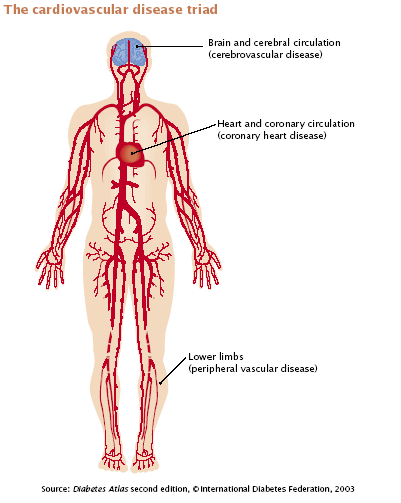
Its been known for a while now that cytokine stimulated stem cells typically used in bone marrow transplantation can be harnessed for vascular regeneration. This particular capacity has been demonstrated in the heart and also in diabetic patients with peripheral vascular disease (PVD). However, due to poor circulation in the area of interest, stem cells need to be "transplanted" from the source of stem cells to the site of the problem.
This latest article mentions the use of GCSF in the regeneration of blood vessels in patients with vascular disease. Citing the administration of this cytokine as a "new treatment", a farmer by the name of Tom Reynolds who was 77 years of age had poor circulation and leg pain. Concerned and afraid about possible gangene infection and limb amputation, Mr. Reynolds tried GCSF injections.
Administered by Dr. Arshed Quyyumi, a cardiologist, Mr. Reynolds has since experienced improved circulation and less pain.
Extracted from emedicine.com:
"Vascular disease may manifest acutely when thrombi, emboli, or acute trauma compromises perfusion. Thromboses are often of an atheromatous nature and occur in the lower extremities more frequently than in the upper extremities. Multiple factors predispose patients for thrombosis. These factors include sepsis, hypotension, low cardiac output, aneurysms, aortic dissection, bypass grafts, and underlying atherosclerotic narrowing of the arterial lumen.
Emboli, the most common cause of sudden ischemia, usually are of cardiac origin (80%); they also can originate from proximal atheroma, tumor, or foreign objects. Emboli tend to lodge at artery bifurcations or in areas where vessels abruptly narrow. The femoral artery bifurcation is the most common site (43%), followed by the iliac arteries (18%), the aorta (15%), and the popliteal arteries (15%)."
I learned from a renown urologist in Malaysia that erectile dysfunction is one of the most common indicators of heart disease and vessel occlusion (small vessel involvement). Diabetics often are unable to enjoy intimacies because of this physical obstruction in blood vessels. I wonder if the doctors will follow up on other aspects of Mr. Reynold's quality of life...? :) That would be an interesting anecdote indeed.
Tuesday, November 14, 2006
Another Cord Blood Stem Cell Application: McGuckin's Hope for Livers
Recent news from the UK has led me to think that stem cell research is beginning to yield some fruits. Prof. Colin McGuckin (blogged about him here) and Dr. Nico Forraz have been able to generate small sections of liver-like cells from cord blood derived stem cells.
Though the cells are not in sufficient quantities to provide tissue for organ replacement now (apparently penny-like sizes), the doctors have set up a company called Conostem which plans to market the cells to pharmaceutical companies for drug testing. The aim is to permit the application of drugs to the cells in order to assess toxicity to liver cells prior to human trials (animal cells may behave differently to pharmaceuticals than human cells).
Interestingly, the cells are grown in a Nasa designed "microgravity bioreactor" which mimicks weightlessness which is said to aid in its creation. Their work has won a local business award but as it has not yet been published, many other scientists and doctors have voiced their opinions that it is still too early to consider it for therapeutic use which may be a decade away. Nonetheless, it may just be a matter of time and sufficient effort in understanding the cells and their behaviour when implanted into the context of the body.
I am wondering how long it took them to grow the penny-sized cells and how many cells they required as a seed culture. It must be expensive, if not the cytokines that are involved then the bioreactor can't be cheap to run. But, this is exciting news because it may open up the realm of tailored therapy for autologous cord blood stem cell use (for all those babies who may grow up to be drinkers*?!) if it becomes commercially applicable and affordable.
Compared to adult stem cell infusions which they are trying in London, this might still be an expensive proposition.
Note that until today, drug companies are purchasing excess human liver cells (from surgical procedures or biopsy) for diagnostic research and pharmaceutical testing. It doesn't happen in every country but generally where the healthcare rules are more relaxed and perhaps surgeons are drafted in to provide the tissue for clinical trials.
*It is estimated that up to 10% of the UK population have problems with their liver - most are linked to lifestyle factors, such as heavy drinking and obesity.
Though the cells are not in sufficient quantities to provide tissue for organ replacement now (apparently penny-like sizes), the doctors have set up a company called Conostem which plans to market the cells to pharmaceutical companies for drug testing. The aim is to permit the application of drugs to the cells in order to assess toxicity to liver cells prior to human trials (animal cells may behave differently to pharmaceuticals than human cells).
Interestingly, the cells are grown in a Nasa designed "microgravity bioreactor" which mimicks weightlessness which is said to aid in its creation. Their work has won a local business award but as it has not yet been published, many other scientists and doctors have voiced their opinions that it is still too early to consider it for therapeutic use which may be a decade away. Nonetheless, it may just be a matter of time and sufficient effort in understanding the cells and their behaviour when implanted into the context of the body.
I am wondering how long it took them to grow the penny-sized cells and how many cells they required as a seed culture. It must be expensive, if not the cytokines that are involved then the bioreactor can't be cheap to run. But, this is exciting news because it may open up the realm of tailored therapy for autologous cord blood stem cell use (for all those babies who may grow up to be drinkers*?!) if it becomes commercially applicable and affordable.
Compared to adult stem cell infusions which they are trying in London, this might still be an expensive proposition.
Note that until today, drug companies are purchasing excess human liver cells (from surgical procedures or biopsy) for diagnostic research and pharmaceutical testing. It doesn't happen in every country but generally where the healthcare rules are more relaxed and perhaps surgeons are drafted in to provide the tissue for clinical trials.
*It is estimated that up to 10% of the UK population have problems with their liver - most are linked to lifestyle factors, such as heavy drinking and obesity.
Friday, November 03, 2006
STEM CELLS for Parkinson's Disease: Michael J Fox check out China
While Michael J Fox has been campaigning fervently in the US for the Democratic vote on the issue of embryonic stem cell research, out pops an article so perfectly timed that reveals the potential of NON-embryonic stem cells for Parkinson's disease.
HOSPITAL PROVIDES SURGICAL OPTION FOR PARKINSON'S DISEASE
Apparently, a hospital -co-owned by a company known as the American Pacific Medical Group*- known as Tiantan Puhua Neurosurgical Hospital located in Beijing is able to procure donor retinal stem cells from the Stem Cell Research Center at Beijing University for transplantation.
FIRST AMERICAN PATIENT OUT OF THIRTEEN
53 year-old Penny Thomas from Captain Cook (Big Island, Hawaii) suffered from Parkinson's disease for almost ten years. She had surgery on May 16 and had 3 million stem cells stereotactically implanted via a 12-inch needle into the center of her brain. The procedure performed by Dr. Xiaodi Han, costed her USD 26,000 (RM 98,800) and took one and a half hours. She had to stay in China for 2 months and seems to have recovered significantly from her previous symptoms.
"I TRIED MEDICATIONS. THEY WEREN'T WORKING FOR ME"
Her doctor, Dr. Cliff Arrington from Kealakekua, vouches for her progressive worsening tremors and encouraged her to explore treatment options available overseas. Her husband and 15 year-old daughter had to do almost everything for her including cutting up her food, getting dressed and showering.
She said: "Getting ready for bed would take almost an hour every night. I tried everything holistically possible and finally went to different doctors. I tried medications. They weren't working for me."
The hospital's vice-president Sherwood Yang released a statement to say that although stem cell treatment is unable to eliminate all symptoms of Parkinson's disease, Penny Thomas' shaking is reportedly reduced, has significantly less muscle tension, increased strength and no freeze-ups. Since then she reports regularly to the hospital and is slowly reducing her medication under the guidance of the Chinese neurological team and Dr. Arrington. She is supposed to have a follow up check up in May next year to see what has happened to the implanted stem cells.
Due to the reduction in medication, her tremors returned but the doctors seem optimistic that the stem cells will do their work. I'm not sure what medication she is on but if its able to put her back on the track of normal life without too much side effect, that might already be a boon to many Parkinson's sufferers out there.
About 6 years ago, I met my friend's grandmother residing in Sydney who had Parkinson's. She would shake in waves so much that she couldn't get out of her wheelchair nor hug her grandson properly. It was my first time meeting a Parkinson's patient and it affected me greatly.
It has been postulated that stem cells obtained from the retina may be able to transform into brain cells, but although several surgical procedures have been conducted, I have yet to see the follow up articles reporting their recovery rates and long term success. I await the final verdict on the engraftment of the stem cells next May and hope that the program may shed some light on how this condition may be treated. But in the meantime, maybe MJ Fox might want to take a closer look.
*The American Pacific Medical Group may sound like an American company but is really one which was set up in 1992 by a group of 35 enterprising doctors who were trained in the US. You can read about them on their website here.
HOSPITAL PROVIDES SURGICAL OPTION FOR PARKINSON'S DISEASE
Apparently, a hospital -co-owned by a company known as the American Pacific Medical Group*- known as Tiantan Puhua Neurosurgical Hospital located in Beijing is able to procure donor retinal stem cells from the Stem Cell Research Center at Beijing University for transplantation.
FIRST AMERICAN PATIENT OUT OF THIRTEEN
53 year-old Penny Thomas from Captain Cook (Big Island, Hawaii) suffered from Parkinson's disease for almost ten years. She had surgery on May 16 and had 3 million stem cells stereotactically implanted via a 12-inch needle into the center of her brain. The procedure performed by Dr. Xiaodi Han, costed her USD 26,000 (RM 98,800) and took one and a half hours. She had to stay in China for 2 months and seems to have recovered significantly from her previous symptoms.
"I TRIED MEDICATIONS. THEY WEREN'T WORKING FOR ME"
Her doctor, Dr. Cliff Arrington from Kealakekua, vouches for her progressive worsening tremors and encouraged her to explore treatment options available overseas. Her husband and 15 year-old daughter had to do almost everything for her including cutting up her food, getting dressed and showering.
She said: "Getting ready for bed would take almost an hour every night. I tried everything holistically possible and finally went to different doctors. I tried medications. They weren't working for me."
The hospital's vice-president Sherwood Yang released a statement to say that although stem cell treatment is unable to eliminate all symptoms of Parkinson's disease, Penny Thomas' shaking is reportedly reduced, has significantly less muscle tension, increased strength and no freeze-ups. Since then she reports regularly to the hospital and is slowly reducing her medication under the guidance of the Chinese neurological team and Dr. Arrington. She is supposed to have a follow up check up in May next year to see what has happened to the implanted stem cells.
Due to the reduction in medication, her tremors returned but the doctors seem optimistic that the stem cells will do their work. I'm not sure what medication she is on but if its able to put her back on the track of normal life without too much side effect, that might already be a boon to many Parkinson's sufferers out there.
About 6 years ago, I met my friend's grandmother residing in Sydney who had Parkinson's. She would shake in waves so much that she couldn't get out of her wheelchair nor hug her grandson properly. It was my first time meeting a Parkinson's patient and it affected me greatly.
It has been postulated that stem cells obtained from the retina may be able to transform into brain cells, but although several surgical procedures have been conducted, I have yet to see the follow up articles reporting their recovery rates and long term success. I await the final verdict on the engraftment of the stem cells next May and hope that the program may shed some light on how this condition may be treated. But in the meantime, maybe MJ Fox might want to take a closer look.
*The American Pacific Medical Group may sound like an American company but is really one which was set up in 1992 by a group of 35 enterprising doctors who were trained in the US. You can read about them on their website here.
Monday, October 30, 2006
11 Year-Old Malaysian Girl Provides Stem Cell Match for Brother With Acute Myeloid Leukemia
Its not often that we get news on Stem Cells in Malaysia but I do think that ever since we've started highlighting the applications, many more doctors are beginning to speak out about the important work that they do.
I read yesterday in the Star about a little girl by the name of Siti who has undergone a peripheral blood stem cell harvest to help her 17 year old brother Muhammad, who was diagnosed 5 months ago with Acute Myeloid Leukemia (see Angel's story).
You can read Siti's story here but I thought that it would be good to pick up on a few key points in the article which supports our preemptive peripheral blood and cord blood stem cell banking service. Its all about providing options for yourself in the future.
The treating haematologist Dr. Ng Soo Chin describes the chances of finding a match within the family:
STEM CELL MATCH
"A blood test, called HLA typing, is done to test whether a potential donor is a match. “There is a 25% chance of a sibling being a match to the patient,” Dr Ng notes. However, parents and half-siblings are usually not such good matches. "
I thought that it was a very well written article and Dr. Ng points out clearly that bone marrow harvesting- which is painful and very unpopular- is on a decline and that now peripheral blood stem cell harvesting is the way to go.
NO MORE PAINFUL BONE MARROW
"Not too long ago, the idea of donating stem cells frightened many people, not least because it required general anaesthesia and painful extraction of the stem cells directly from the bone marrow. Now, 90% of stem cell transplants use peripheral harvesting, instead of bone marrow,” Dr Ng assures. Peripheral harvesting means that the stem cells are collected from the blood stream in a procedure called apheresis. "
Peripheral blood stem cell collection is much preferred over bone marrow because doctors can be assured of a decent harvest. Very often bone marrow extractions require a lot of manipulation and may not obtain a reliable amount of cells for a transplant. Clotting of the blood is often one of the problems, a long with trauma bleeding, anaesthetic risk and patient discomfort.
PERIPHERAL BLOOD STEM CELLS - A VERY SAFE PROCEDURE
Dr. Ng says: “It’s like blood donation, except that it takes longer. However, the actual volume of blood that you donate is only about 50-100ml,” he explains, insisting that this is a very safe procedure.
And he also describes why using one's own stem cells are preferred, although this option is not always available:
When the patient is both the donor and the recipient of the stem cells, there are fewer risks involved – namely, no graft-versus-host disease, no immunosuppression needed and fewer infections.
TRANSPLANT ALREADY PERFORMED
Siti's stem cells had already been transplanted into her brother at the time of the publication and I do hope that he recovers and tells his story so that others may also know how a matching set of stem cells was critical in making the procedure possible.
StemLife provides stem cell collection and banking from the peripheral blood for healthy individuals and families. We also provide services for patients seeking treatment in collaboration with qualified medical specialists.
Please feel free to call us for a no obligation consultation at +603 2163 8800 or at 012 2050 165. We'd be happy to help.
I read yesterday in the Star about a little girl by the name of Siti who has undergone a peripheral blood stem cell harvest to help her 17 year old brother Muhammad, who was diagnosed 5 months ago with Acute Myeloid Leukemia (see Angel's story).
You can read Siti's story here but I thought that it would be good to pick up on a few key points in the article which supports our preemptive peripheral blood and cord blood stem cell banking service. Its all about providing options for yourself in the future.
The treating haematologist Dr. Ng Soo Chin describes the chances of finding a match within the family:
STEM CELL MATCH
"A blood test, called HLA typing, is done to test whether a potential donor is a match. “There is a 25% chance of a sibling being a match to the patient,” Dr Ng notes. However, parents and half-siblings are usually not such good matches. "
I thought that it was a very well written article and Dr. Ng points out clearly that bone marrow harvesting- which is painful and very unpopular- is on a decline and that now peripheral blood stem cell harvesting is the way to go.
NO MORE PAINFUL BONE MARROW
"Not too long ago, the idea of donating stem cells frightened many people, not least because it required general anaesthesia and painful extraction of the stem cells directly from the bone marrow. Now, 90% of stem cell transplants use peripheral harvesting, instead of bone marrow,” Dr Ng assures. Peripheral harvesting means that the stem cells are collected from the blood stream in a procedure called apheresis. "
Peripheral blood stem cell collection is much preferred over bone marrow because doctors can be assured of a decent harvest. Very often bone marrow extractions require a lot of manipulation and may not obtain a reliable amount of cells for a transplant. Clotting of the blood is often one of the problems, a long with trauma bleeding, anaesthetic risk and patient discomfort.
PERIPHERAL BLOOD STEM CELLS - A VERY SAFE PROCEDURE
Dr. Ng says: “It’s like blood donation, except that it takes longer. However, the actual volume of blood that you donate is only about 50-100ml,” he explains, insisting that this is a very safe procedure.
And he also describes why using one's own stem cells are preferred, although this option is not always available:
When the patient is both the donor and the recipient of the stem cells, there are fewer risks involved – namely, no graft-versus-host disease, no immunosuppression needed and fewer infections.
TRANSPLANT ALREADY PERFORMED
Siti's stem cells had already been transplanted into her brother at the time of the publication and I do hope that he recovers and tells his story so that others may also know how a matching set of stem cells was critical in making the procedure possible.
StemLife provides stem cell collection and banking from the peripheral blood for healthy individuals and families. We also provide services for patients seeking treatment in collaboration with qualified medical specialists.
Please feel free to call us for a no obligation consultation at +603 2163 8800 or at 012 2050 165. We'd be happy to help.
Dad dies waiting for matching stem cells
This article is a sad one. A young 32 year old father, Paul Sim (two sons, 13 & 8 years old) was a wagon driver who broke his hip and twisted his knee. During a two and half month stay in hospital for his treatment, his bone marrow stopped producing the necesary replacement cells (condition known as aplastic anemia) and he had to have blood and platelet transfusions. The aplastic anemia could have been a result of his medication or perhaps a viral infection.
However, his condition continued to deteriorate and a donor could not be found despite his countrymen's best efforts at identifying a suitable match. The doctors probably did try to match his sister Angela's stem cells and his children's but to no avail. Hundreds of people came forward but they didn't match either.
The best thing would have been for Paul to have had banked his own stem cells prior to the accident. He could have called on them immediately for the transplant, saving precious money, time and giving himself the best chance of success.
From the Mayo Clinic Website:
Bone marrow transplantation — replacing diseased bone marrow with healthy bone marrow from a donor — may offer the only successful treatment option for people with severe aplastic anemia.
Many people ask me when the best time is to store their stem cells. Frankly in my personal opinion, there is no time like NOW, because one can't predict when these accidents can occur nor how serious small infections might become.
However, his condition continued to deteriorate and a donor could not be found despite his countrymen's best efforts at identifying a suitable match. The doctors probably did try to match his sister Angela's stem cells and his children's but to no avail. Hundreds of people came forward but they didn't match either.
The best thing would have been for Paul to have had banked his own stem cells prior to the accident. He could have called on them immediately for the transplant, saving precious money, time and giving himself the best chance of success.
From the Mayo Clinic Website:
Bone marrow transplantation — replacing diseased bone marrow with healthy bone marrow from a donor — may offer the only successful treatment option for people with severe aplastic anemia.
Many people ask me when the best time is to store their stem cells. Frankly in my personal opinion, there is no time like NOW, because one can't predict when these accidents can occur nor how serious small infections might become.
Thursday, October 26, 2006
Stem Cells for the treatment of Ischemic Heart Disease
Finally it looks like the hospitals in the US will soon have results that will get the FDA to approve stem cell therapy as a potential first liner for ischemic heart disease. This report states that approximately 15-20 sites in the US through their respective divisions of cardiology and pathology are investigating 200 randomly selected patients from across the country, harvesting their CD34+ cells and injecting the cells into the heart to investigate the extent of which new blood vessels are formed.
The patients are selected from an existing pool where usual and conventional treatments have already been applied but failed or where no surgical procedures are thought to be helpful. Myocardial ischemia is one of the most severe forms of coronary artery disease, which is the leading killer in the U.S., according to University Hospital officials.
"This is a study to try and reduce chest pain in people that have this coronary disease and have no other options," said Mark Anderson, director of the Division of Cardiology and associate director of the Cardiovascular Research Center, who is involved in the research.
"By increasing the number of those cells present, it encourages the heart to create biological bypasses to connect with another source of blood," he said. "The area of the heart causing pain is not dead. It is alive, but starved."
The disease causes arteries to tighten so that not enough blood passes to areas of the heart, which leads to chest pain and potentially to heart attacks. The stem cells, researchers hope, will spark new paths for blood to get through.
The treatment method is called Autologous Cellular Therapy CD 34-Chronic Myocardial Ischemia Trial or ACT34-CMI, and is funded by Baxter Healthcare Corporation. Appropriately so as Baxter has its own line of products for stem cell harvesting and processing. Increasing the applications for this line of service beyond cancer would add a new revenue stream for the company.
The American Heart Association estimates that 125,000 to 250,000 people with coronary artery disease develop myocardial ischemia each year. In Malaysia, the estimates would range about 12,000 to 25,000 annually. I hope that they would come to us early so that we can help them salvage as many of those starving cells as we can.
On another note, I found this site which tells us what to do if someone is having a heart attack. Could come in handy.
The patients are selected from an existing pool where usual and conventional treatments have already been applied but failed or where no surgical procedures are thought to be helpful. Myocardial ischemia is one of the most severe forms of coronary artery disease, which is the leading killer in the U.S., according to University Hospital officials.
"This is a study to try and reduce chest pain in people that have this coronary disease and have no other options," said Mark Anderson, director of the Division of Cardiology and associate director of the Cardiovascular Research Center, who is involved in the research.
"By increasing the number of those cells present, it encourages the heart to create biological bypasses to connect with another source of blood," he said. "The area of the heart causing pain is not dead. It is alive, but starved."
The disease causes arteries to tighten so that not enough blood passes to areas of the heart, which leads to chest pain and potentially to heart attacks. The stem cells, researchers hope, will spark new paths for blood to get through.
The treatment method is called Autologous Cellular Therapy CD 34-Chronic Myocardial Ischemia Trial or ACT34-CMI, and is funded by Baxter Healthcare Corporation. Appropriately so as Baxter has its own line of products for stem cell harvesting and processing. Increasing the applications for this line of service beyond cancer would add a new revenue stream for the company.
The American Heart Association estimates that 125,000 to 250,000 people with coronary artery disease develop myocardial ischemia each year. In Malaysia, the estimates would range about 12,000 to 25,000 annually. I hope that they would come to us early so that we can help them salvage as many of those starving cells as we can.
On another note, I found this site which tells us what to do if someone is having a heart attack. Could come in handy.
Friday, October 20, 2006
Adult Stem Cell Therapy for Cardiac Patients in Gujarat, India

I like these kinds of stories because firstly, it shows the forward thinking doctors who are willing to pioneer the concept of stem cell therapy in their geographical location and secondly (more importantly) because their work may have genuinely benefitted the patients.
Essentially, two Gujarati patients aged 35 and 58, Lakshmanbhai Bharwad and Ratanbhai Prajapati respectively, were the first to receive stem cell therapy for their failing hearts. Both patients had poor ejection fractions of 18% and 30% (versus the normal 60-70%), felt exhausted all the time and thus were generally quite unproductive.
The doctors Dr Shalin Thakore together with embryologist Dr Himanshu Patel, of the Krishna Heart and Super Specialty Institute had performed angioplasties for their patients and immediately after diagnosing and widening the relevant blocked arteries, proceeded to mobilize the patient's stem cells and collect them.
The article cites that "About three to four days later, stem cells were cultured into cardiac stem cells and reinjected into the newly reopened arteries via another angiography." I find this rather suspect reporting as I don't think its currently possible to culture and differentiate cells in 3-4 days and identify them morphologically. In any case, the stem cells were re-injected by angiography soon after harvesting.
The patients' ejection rate quite amazingly increased very dramatically, rising from 18% to 45% and 30% to 55% within two months, which is the highest jump that I have ever seen reported.
This rapid increase is unlike any that we've experienced and I am wondering if they are willing to publish their work. One important parameter that is likely to influence the outcome is the number of cells delivered to the injured site and the timing of the delivery.
My questions would be:
How many mobilizing injections did they give?
How many cells did they harvest and use?
How did they measure the ejection fraction? (some equipments are said to be notoriously variable in result)
Does this increase in EF only apply to those who have stem cells within 15 days of the heart attack?
Dr. Thakore's final statement was that this was a one-time procedure but could be repeated in 3 months should the results not meet expectations. Very interesting. I'm waiting to hear if they proceed with more cases and long term follow up.
StemLife currently offers stem cell therapy for cardiac conditions with 2 leading centers in Malaysia, HSC Medical Center and Gleneagles Intan Medical Center and look forward to serving more. Our patients have reported significant symptomatic improvements on 3 and 6 month follow ups.
If you would like to have stem cell therapy for your cardiac condition, please contact us at +6012 2050 165 and we'll be happy to refer you to a doctor or open the dialogue with your doctor in the hospital of your choice.
Saturday, October 14, 2006
Do not misinterpret NHS Trust Doctor's stance on Cord Blood Collection

A quick search on cord blood reveals a number of articles citing a senior consultant obstetrician, Dr. Leroy Edozien, commenting on cord blood collection. I felt that the headlines proclaiming that he was totally against cord blood collection is unfairly represented by the press, as his actual comments relate mostly to the cord blood collected in public hospitals and its logistic issues poses to the doctors.
My analysis of the comments that I could find are as follows:
His concern: "Time spent on collecting cord blood is time away from the care of this mother, the baby, and, critically, other patients."
This may be true in government facilities as staff numbers are sometimes limited and due to the overwhelming load of patient deliveries, doctors and nurses often have to manage multiple ladies in various stages of labor. However, the time spent also does depend on the method of cord blood collection. Some companies provide syringes (cheaper) and expect the doctor to load the anti-coagulant prior to collection. However, StemLife makes this as easy as possible for one doctor/ nurse to perform the collection with sterile, pre-loaded blood bags with anti-coagulant which saves time and manipulation.
He adds: ""As well as being given a realistic assessment of the value of cord blood banking, parents need to know how their care, and the care of other women, can be affected by cord blood collection and what could go wrong during collection. There could also be risks that the cord blood could be contaminated or mislabeled, which could lead to legal action."
True, except that all cord blood stem cell banks should have already signed agreements with parents and counselled them sufficiently to understand that the collection of cord blood is never guaranteed. Some mothers may have emergency deliveries where it may be deemed that cord blood cannot be safely collected. Dr. Edozien's specialty is managing mothers with pregnancy problems and if these ladies requested cord blood collections, this may have bearings on the delivery process.
And not only do cord blood volumes vary from baby to baby (think small, large, long, short umbilical cords) but also despite thorough cleaning of the cord by the doctor, a single bacteria which may remain on the cord may enter the blood bag and contaminate the unit. This is not the doctor's fault nor the cord blood banks' as bacteria exist naturally everywhere, in the mucosa, vaginal tract and also in the digestive tract. All it would take would be a small amount of urine, poo or fart* to get the bacteria onto the cord and perhaps into the blood.
Cord blood banks do not usually accept contaminated units in accordance with good banking practices (StemLife does not, although I understand that there are some in asia who do...) and will discard them after informing the parents of the result. In this event, StemLife provides a full refund to the client and this happens in a small number of collections each month. I suppose if there was no refund involved, then not only would the client have lost the opportunity to bank the stem cell unit but also some money (the sum which is involved in the processing and testing of the unit).
Dr. Edozien also poses the concern of mislabelling but StemLife addresses this issue in 2 ways: 1) pre-labelling the cord blood kit with the mother's name prior to the birth of the baby and 2) ensuring that our collection team member checks on the name of the mother against our delivering database. I'm curious as to how the UK cord blood banks manage this point.
He says: "Even if the rapid pace of technological advancement results in today's speculation becoming tomorrow's reality, risk management, medicolegal, ethical, and public policy considerations militate against commercial collection of cord blood in NHS maternity units. It should therefore be NHS policy not to facilitate umbilical cord blood collection by its staff."
-If I had a child with thalassemia major and my next baby's cord blood could help treat the condition, would you prevent me from collecting the cord blood?
Can you guarantee a matching unit for my child in the public cord blood bank?-
....Its pretty tragic if no exceptions can be made in the NHS hospitals as there may be mothers who really require the service although they may not necessarily know it at the birth of their child. Private cord blood stem cell banks have already facilitated transplants for these patients and the numbers continue to grow.
He admits:"Increasing numbers of women in maternity units across the United Kingdom are requesting collection of umbilical cord blood at delivery to enable storage of stem cells for possible autologous transfusion in the future."
There is no denying that many mothers will come to know about cord blood stem cells. UK Mothers who wish to have cord blood stem cells collected may need to go to private centers. That would be a pity as it would be a step back from making another simple procedure routinely available for all mothers. I'm no expert on the NHS policies and I'm sure the doctors are doing the best they can under the circumstances available, but perhaps they could consider having those mothers who wish to have their cord blood collected check in to specific rooms and pay a small procedural fee to have a doctor, nurse or trained cord blood bank staff perform the collection. This may also provide some financial alleviation on the healthcare budget of the hospital.
*please excuse my use of this colloquialism
Subscribe to:
Posts (Atom)

 Posts
Posts


