Showing posts with label mesenchymal. Show all posts

Tuesday, September 01, 2009

Ibu-Bapa digalakan menderma atau menyimpan Darah Tali Pusat


Laporan dari seminar-seminar Sel Stem...........

Y.B. Dato’ Sri Liow Tiong Lai……Menteri Kesihatan Malaysia berkata.......
..”Ibu-Bapa digalakan menderma atau menyimpan DTP”........

Pengarah Pusat Darah Negara berkata...........
...”1 dari 85 menggunakan DTP dari Pusat Darah Negara”...

Assalamualaikum WBK,

Salam Sejahtera kepada rakan-rakan saya sekelian, ibu-bapa, bakal ibu-bapa, pengunjung dan pembaca blog ini.

Kali ini Saya ingin berkongsi pendapat dan mengulas apa yang telah dibentangkan oleh beberapa penceramah di seminar sel stem yang diadakan baru-baru ini. Satu di Kepala Batas Pulau Pinang yang dianjurkan oleh Universiti Sains Malaysia dan yang kedua di Hospital Ampang Kuala Lumpur yang dianjurkan oleh Kementerian Kesihatan Malaysia.


Di Kepala Batas, penceramah dari Pusat Darah Negara adalah pengarahnya Dr Norhanim Asidin. Beliau telah membentangkan pengalaman PDN dalam menjalankan operasi Bank Sel Stem Darah Tali Pusat Kerajaan. Setakat ini, kata beliau, PDN telah mendapat dermaan DTP dari lebih 6,000 ibu-bapa yang melahirkan bayi di Hospital Kuala Lumpur. PDN berjaya menyimpan lebih kurang 3,100 beg DTP. Ini adalah kerana masaalah kekurangan isipadu DTP dan pencemaran DTP oleh kuman.

Setakat ini, 85 permintaan DTP telah diterima oleh PDN. Satu (1) permintaan berjaya dipenuhi dimana DTP yang disimpan PDN digunapakai, Syabas PDN. Tetapi, hanya 1 permintaan berjaya dari 85 permintaan. Ini agak rendah. Apa terjadi pada 84 pesakit yang gagal mendapatkan DTP dari PDN? Selalunya mereka perlu mencari penderma sum-sum tulang tempatan atau penderma DTP dari bank DTP kerajaan luar Negara dimana harga perolehanya agak tinggi juga. Pada tahun 2006, Pengarah PDN pada masa itu Dato’ Dr Yasmin Ayob telah membuat kenyataan dalam akhbar tempatan dimana beliau menasihati ibu-bapa supaya menderma DTP. Pada masa itu, laporan akhbar menyatakan pihak PDN telah menyimpan lebih kurang 1,000 beg DTP, tetapi ada 17 kanak-kanak yang memerlukanya dan tidak dapat memperolehinya dari PDN. Masaalah yang dilaporkan adalah kesukaran untuk mendapatkan DTP yang sepadan genetiknya dengan pesakit. Jumlah penderma yang diperlukan dianggarkan dalam lingkungan 5,000 supaya kebarangkalian mendapat DTP yang sepadan adalah pada tahap yang agak bagus. Laporan juga telah menganggarkan kos memproses dan menyimpan Satu (1) beg DTP adalah RM3,000.

Apakah masaalah-masaalahnya? Sebabnya tidak dijelaskan dengan mendalam, tetapi pada pengetahuan saya, selalunya sebab-sebabnya termasuk kekurangan jumlah sel stem yang mencukupi bagi berat badan pesakit. Laporan dari beberapa institusi penyelidikan mengunakkan sekurang-kurangnya 20 juta sel bagi 1 kg berat badan pesakit. Jadi, bagi pesakit dengan berat badan 30 kg, pakar memerlukan sekurang-kurangnya 600 juta sel. Teknologi terkini membolehkan pengunaan 2 beg DTP supaya jumlah sel yang mencukupi dapat diberikan pada pesakit. Pada pendapat saya, masaalah yang lebih besar adalah kesukaran mendapatkan DTP yang sepadan diantara penderma dan pesakit. Inilah yang sering dilaporkan di bank-bank luar negara. Anggaranya adalah 1 dalam 20,000 atau 1 dalam 30,000. Ini bermakna, jika saya memerlukan sel stem darah, saya mungkin perlu mencari 30,000 rakan untuk diuji dan mungkin satu (1) akan sepadan dengan saya. Jika dia tidak ingin menderma kerana risikonya, saya perlu keluar mencari lagi. Ini akan mengambil masa yang agak lama juga.


Seminar yang dianjurkan pihak KKM adalah bertujuan untuk mengumumkan kepada orang-ramai apakah garispanduan yang disediakan oleh pihak KKM.

Pihak KKM telah melancarkan garispanduan dan piawaian bagi pengamal-pengamal rawatan sel stem. Dua (2) lagi garispanduan dan satu (1) lagi piawaian telah dilancarkan bersama-sama satu (1) piawaian DTP yang telah dikeluarkan awal tahun ini. Buku-buku yang dilancarkan adalah Garispanduan Penyelidikan dan Rawatan Sel Stem, Garispanduan Kebangsaan Rawatan Sel Stem Hemapoetik, Piawaian Kebangsaan Transplantasi, Pengumpulan, Pemprosesan, Simpanan dan Infusi Sel Stem Hemapoetik dan Sel Terapi.

Apa yang jelas dari garispanduan adalah rawatan Sel Stem Hemapoetik (sel stem darah) dan Transplantasi Sel Stem Darah Tali Pusat bagi penyakit berkaitan darah yang malignan dan yang bukan malignan seperti Lukimia, Limfoma, Myeloma, Talasemia, Anemia, Tumor Organ dan beberapa penyakit Metabolik Genetik Warisan dan Penyakit Kepincangan Sistem Imun adalah terbukti/biasa digunapakai.

Beberapa lagi kegunaan Sel Stem Hemapoetik masih lagi dalam peringkat penyelidikan iaitu dalam Menjana/Merawat Tisu, Penjanaan Saluran Darah seperti dalam masaalah luka kaki pesakit kencing manis, dan penyakit jantung dimana adanya saluran darah jantung yang tersumbat.

Apa yang jelas juga, penggunaan xenotransplant atau penggunaan sel haiwan seperti sel arnab, kambing dan sebagainya bagi rawatan penyakit manusia adalah dilarang. Saya pernah mendengar khabar bahawa beberapa doktor pakar swasta ada mengesyorkan penggunaan sel haiwan. Kini, dengan adanya garispanduan dan piawaian, pengamal-pengamal ini perlu berubah cara rawatan mereka. Anda sebagai pesakit/pengguna perlu melaporkan doktor ini kepada pihak Kementerian Kesihatan Malaysia.

Satu lagi jenis sel yang sering disebut-sebut baru-baru ini adalah sel MSC. Ia jelas dikelaskan dalam peringkat penyelidikan. Itu pun, potensinya dalam penyelidikan hanya terhad kepada penggunaanya dalam penyakit inflamasi dan dalam rejeksi tranplantasi. Sel-sel yang lain masih dalam peringkat ujikaji(experimental).

Sekian buat masa ini.. Wslm.

Monday, January 29, 2007

Encouraging Research Careers in Stem Cells

It's always nice to read about a young person's start in life, filled with passion and career goals, especially in the area of stem cell research and application (my favorite topic!).

Featured in the local paper the Star recently, was 28 year-old Tan Guak Kim from Kota Tinggi, Johor, who recently qualified with a Masters of Medical Science from University Malaya. She has proudly announced winning a full PhD scholarship from the Australian government to pursue her studies on cartilage regeneration in the University of Queensland.

Her work will be centered on (guess what!) scaffolding and biomaterial influence on stem cell differentiation to form cartilage cells. She says that she would like to perhaps start an institute in future which would teach others about stem cell work and provide arthritic applications.

Guak Kim, you're always welcome to give us a call when you're ready with an application. Or maybe just even when you're back in Malaysia for a vacation.


Well done also to all the other winners of the Endeavour award!


I have friends who studied with me in the UK and pursued their PhD programmes there. Scientific pursuit is a lot about having the community of friendly researchers who support each other and a strong funding program as research equipments and reagent are expensive. My friends have gone on to receive support, encouragement and generous funding from the UK governments to pursue their areas of interest, and I suspect sadly, won't be coming home anytime soon.

Friday, October 13, 2006

Adult Stem Cells Help Repair Radiation Damaged Tissue


I was excited to see this news release by the Director of the Clinic for Radiation Therapy as a result of the 25th Annual Congress of the European Society for Therapeutic Radiology and Oncology (ESTRO) held in Germany on the 9th of October.

In a nutshell, adult stem cells when infused after radiation therapy for cancers helps to alleviate the side effects of mucosa (think nasal passages, throat, digestive tracts etc) and skin.


The news release was so clear in its message that I'd like to post it almost in its entirety:

"Stem cell research will have many consequences for various fields of medicine", predicts Catherine Verfaillie, Director of the Stem Cell Institute of the University Leuven (Belgium), in a review lecture during the Presidential Symposium of the ESTRO conference on October 9. For example, stem cells that settle in the organ systems could be stimulated and then repair tissue damage. Radiation therapists have been following this track for some time in various projects that are presented at the ESTRO conference.


Even though the results were obtained in studies on mice, I hope that the radio-oncologists are taking note...!


INTERNATIONAL PROJECT. Rob Coppes of the University Groningen (The Netherlands) presents an EU-sponsored international undertaking at the conference, which is called the "FIRST Project" for short. (FIRST stands for "further improvement of radiotherapy through side effect reduction by stem cell transplantation").

The researchers have discovered that the side effects of a radiation therapy on various healthy tissues, such as skin and mucosa, can be reduced by treatment with adult stem cells. The stem cells migrate to the radiated tissue and support its regeneration. If studies confirm that this stem cell effect also occurs in humans, this would expand the treatment options for tumours because currently valid radiation dosage limits could be surpassed.

For instance, a radiation-biological research team led by Wolfgang Dörr of the Clinic for Radiation Therapy and Radiooncology at the Technical University Dresden reports that adult stem cells can reduce the side effects of radiation therapy on the mouth mucosa in mice. The scientists observed that the radiation tolerance of the mucosa was clearly increased if the animals received a bone marrow transplant prior to or during a fractionated radiation - during which adult stem cells are also transferred practically automatically.

A comparable effect was also observed by the scientists when they lured the stem cells from the bone marrow of the radiated animals into the blood circulation by injecting a growth factor, called G-CSF for short.


MESENCHYMAL STEM CELLS PROTECT. A team led by Dr. Michèle Martin of the Service de Génomique Fonctionnelle from Evry (France) also reports on studies in mice. The researchers had treated the animals with a radiation dose that led to tissue damage of the skin within three weeks. Without treatment, it took eight weeks until this damage had healed. Part of the mice was injected by the researchers with human mesenchymal stem cells 20 hours after the radiation exposure. The stem cells were adult stem cells from, e.g., the bone marrow that can differentiate into fat, cartilage, tendon, skin or muscle cells.

The scientists noted that the skin damage in the treated animals healed faster and better than in the untreated animals. In addition, the scientists examined tissue samples from the damaged skin areas. The stem cells - so the result - had indeed migrated to the radiated skin regions. As Martin reports, their morphology was similar to that of the epithelium.

I have a few friends who are currently undergoing chemo and radiotherapy. If eating and breathing could be made more comfortable, I'm sure they'll want to know about it. I'll tell them about it tomorrow.

Tuesday, September 05, 2006

Yes, the ENVIRONMENT is important to adult stem cells too


With all this pollution going on in Malaysia before Merdeka day, I had to look at this news piece which had the word "environment" in it. Fortunately, we had a big rainstorm here in KL on the eve of Merdeka day and for the first time in 2 months I saw the clear blue sky between the cumulus clouds.


Anyway, back to Stem Cells- Scientists from UPenn's School of Engineering and Applied science have announced in a very prestigious journal "CELL", some very interesting findings on the development of adult stem cells based purely on the hardness or softness of the surroundings. They didn't use any chemical signalling, which is often rated highly amongst scientists as the most important way for cells to move around or know what they ought to form. Mesenchymal stem cells, those most often found in the bone marrow are able to "feel" their physical environment to form the type of tissue that they ought to become.

"According to the researchers, soft microenvironments that mimic the brain guide the cells toward becoming neurons, stiffer microenvironments that mimic muscle guide the cells toward becoming muscle cells and comparatively rigid microenvironments guide the cells toward becoming bone."

The concept that mesenchymal stem cells sense their environment through the force it takes them to push against surrounding objects and the force translates into internal cellular signals which cause the cell to differentiate tinto particular types of tissue is extremely exciting and could lead to a new concept in thinking of how to get the types of cells that we want.

It is also interesting that the researchers highlight that in the event that the tissue into which the stem cells are infused are too damaged (eg severe heart attack or spinal injury), the stem cells may not know what to differentiate into resulting in the lack of effectiveness. But they do believe that it is possible to get round this problem... by creating an environment which acts like the normal tissue to prime the stem cells before implantation.

So, say if you have heart disease and are asked if you have a soft heart or a hard heart...? Tell Prof Sweeney, your cells might be able to be primed in advance :)


StemLife has an on-going collaboration with the National University of Singapore's Nanoscience & Nanotechnology Initiative (NUSNNI) to explore the way cells divide and differentiate in different 3D environments.

Penn researchers included in this study include Adam J. Engler and Shamik Sen from the School of Engineering and Applied Science and H. Lee Sweeney from the School of Medicine.

Tuesday, May 16, 2006

Spanish Research Team Use Peripheral Blood derived Mesenchymal Stem Cells for Sports Injury: WAYNE ROONEY?


It was only a matter of time before Stem Cells made it into the limelight for sports injury.

I have already lost count of the number of football-mad friends who have asked me if StemLife can treat Wayne Rooney's broken metatarsal so that he can play in the upcoming important matches (on which they may have placed their bets). Wayne Rooney's injury has stirred up much frustration and I suspect there are no lack of prayers for his quick recovery.

Truth: we have yet to see any report using stem cells for broken bones (including the little toes) especially since they can heal quite well on their own, given appropriate healing time.

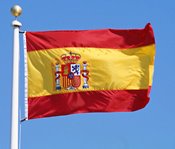
Anyway, today I read an announcement from a group of Universities in Spain (Jaen, Almeria & Granada) who have formed a collaboration with the University of Malaga to work on improving cartilage damage in sports injuries for "elite sports people" (only the best!). This collaboration team is led by Dr. Antonio Aranega (University of Granada) and Dr. Juan Antonio Marchal Corrales (University of Jaen) and will seek to use peripheral blood derived mesenchymal stem cells, collected, cultured and applied in athletes with cartilage damage.

The project only lasts one year, which is quite short and funded by a grant of 15,650 Euros (USD 20,027 or RM 72,492- not a whole lot is it...) from the Spanish education and Sports Ministry (I hope Malaysian Sports Ministry will be 10X more generous if we should want to do something like this).

Questions: How much blood is taken from each athlete? How many cells are cultured? How many cells are injected, how and where?

We can assume that sports injury is a big issue in Spain, especially as soccer (think Real Madrid, Barcelona, Valencia etc), cycling and horseback riding are big tourism and revenue generators for the country. I'm just not sure how their trials will be run on those funds and how many patients they will be able to enrol in this study. Perhaps it is a prelude of what is to come if this trial is successful.

The group has also announced that they will eventually be working on a parallel exploration on embryonic stem cells -as some of their researchers were previously from Karolinska Institute in Stockholm- and have had the relevant experience. I'm wondering if embryonic stem cell pursuits will be equally funded and encouraged in a largely catholic country (>90%), and whether more encouragement will be given to the development of the adult stem cell protocol.

In Malaysia and Thailand, football commands a good following and there are probably many players out there whom this news may interest. I have friends who play Futsal (indoor soccer) and they sometimes have injuries which cause them to limp around for a few weeks or months. Other key Malaysian sports include racquet games like badminton, squash and table tennis.

Of course, we musn't forget Formula One and sailing, but that audience mostly suffers from strained necks, sprained ankles and tired legs from standing and chasing the good-looking crew around. Who knows, perhaps StemLife can treat or prevent these ailments with the aid of stem cells in the not too distant future.

Other research news on cartilage repair can be found here.

If your espanol is any good, you can check the uefa website for latest spanish soccer news and rankings here.

Thursday, April 20, 2006

Heart Attack Trial Treatment by Mesenchymal Stem Cells


A new study has just been announced at a Centre in Illinois that Osiris is funding and supplying mesenchymal stem cells obtained from healthy volunteer donors' bone marrow in a trial for those who have had a single heart attack. The interesting thing about this trial is that there are several deemed advantages from the patient's perspective:
1. No match required! 2. Infusion through a standard IV line, no angioplasty or surgical procedures required.

“A person who has had a single, severe heart attack may survive but can be left with substantial damage to the heart muscle as a result of the blood supply to the heart muscle being cut off during the heart attack. The damaged muscle inhibits the heart's overall ability to pump blood, leading to heart failure,” said Rush principal investigator cardiologist Dr. Gary Schaer, head of the Rush Cardiac Catheterization Laboratory. Rush is the only center in Illinois participating in the trial. There are 15 other sites nationwide participating in the study."

It is thought that the mesenchymal stem cells (MSC) are in the early stages of development and thus do not trigger an immune response when placed in someone else's body. And since adult stem cells are designed by nature to perform tissue repair in mature adults, it is believed that these cells can be used without fear of rejection and promote healing in damaged organs by "homing" into the site of injury. The doctor conducting the trial says that the stem cells know how to go to the heart after a recent heart attack.

Osiris grows the cells in culture to very high numbers, allowing a single donor's cells to treat thousands of patients. The cells are then frozen at Osiris and taken out for distribution or use when required. The article doesn't state how much each infusion costs nor how many cells need to be administered (probably by body weight as they had announced in a previous trial). As the cells may have a multipotential lineage, I wonder if the doctor will also be monitoring other organ functions at the same time to see if there is a global improvement in the patients receiving these stem cells.

According to the article: "The Phase I study is double blind; two thirds of the participants receive the stem cells and one-third receive a placebo. To be eligible for the trial, patients must have experienced a first heart attack within the past seven days, and are between 21 and 85 years old. Patients are given a pulmonary breathing test, a CT scan and an MRI before the procedure. Patients undergo an MRI at the end of the study to see how much of the diseased heart muscle has been repaired and measure heart function. A patient may stay in the hospital only 2-3 days for observation, and then go home. The total time commitment for the study is two years."

If Osiris succeeds in improving heart attack in this trial, the role of cardiologists and cardiac surgeons may change profoundly in the way that a patient is treated. This is revolutionary and exciting news and Osiris might just live up to its name of the god of death and resurrection.
Imagine... just a shot of mesenchymal stem cells, could change the lives of hundreds of thousands of patients living with heart disease and perhaps reduce the possibility of sudden death in Malaysia.