
Bone marrow transplants are often performed for cancer (esp. blood cancers) and usually offered only at major oncology centers. Here in Malaysia, bone marrow transplants are performed for cancer patients and also for other blood disorders like thalassemia major and other severe anemias.
I was reading the National Cancer Institute's website which I thought had a rather informative Q and A section explaining the different types of transplants with stem cells from sources obtained from bone marrow and peripheral blood stem cells (PBSC).
It also mentions donation of cord blood being free of charge, but it does not mention how much it will cost to acquire the stem cells from any of the sources, merely that aspects of it may be covered by insurance.
Do have a read if you'd like to know more about bone marrow transplantation and understand the different types of transplants that a cancer patient may undergo.
Sunday, June 25, 2006


Saturday, June 24, 2006
Cord Blood Stem cells for Multiple Sclerosis? Another report of successful treatment

I had an enquiry about using cord blood stem cells for multiple sclerosis (MS) this week and it appears that cases of multiple sclerosis in Malaysia are not insignificant in number. I referred the enquirer to my previous 2 blog entries ([1],[2]) for information on who performed the therapy and its reported outcome and whilst browsing found another article which also describes the procedure and its outcome.
My belief is that the clinic which conducted the treatment may be the very same one in Rotterdam mentioned previously and the price for the therapy quoted is largely similar (GBP 13,500). A lady suffering from MS, Julia Sandeman (33 years old) was previously confined to a wheelchair and apparently had no sensation in her limbs. After the stem cell infusion, she was able to balance upright in a pool and regained some sensation in her limbs. The article mentions that before her condition started, she was a dancer and had a daughter 5 years ago. Her hope is that she would be able to walk alongside her daughter on a beach. Her condition deteriorated fairly rapidly and her vision was affected, as was sensation in her limbs.
Apparently, the cord blood stem cells were injected into the acupuncture points in her body in February this year. Her father vouches for her improvement and has observed her move her foot and steadying her hand enough to send a text message. Additionally, her father is willing to liquidate some of his assets in order to fund further treatment for her in the hope that she will improve much more.
I am not sure why stem cells injected specifically into acupuncture points would help to re-myelinate nerve tissue or perhaps play a role in immuno-modulation to stop the immune attack, but these observations are interesting and in science and medicine, many of the body's functions remain nature's secret and have not been able to be explained by current analysis (even acupuncture is not well explained in western medicine despite its clearly effective use for thousands of years!).
Clearly though, its taken 5 months to see this change and it will be interesting to see whether she'll improve after another 5. The Dutch clinic seems to attract quite a number of people in the UK. I'm wondering how many MS patients they have treated already and whether the results are consistent. Given that this area has received a lot of media attention and hailed successes, I'm sure it won't be long before its revealed to us- let's pray that this isn't a fraud and is indeed an experimental therapy worth trying.
Thursday, June 22, 2006
First Collective Interview of Adult Stem Cell Patients with Successful Outcomes
I read with great interest an announcement that a few successful adult stem cell therapy patients would be gathering in Washington to share their experiences and show how they have improved.
Many patients are tremendously shy when discussing their condition and I think its marvellous that they are willing to come forward. No doubt there may be a political slant to organizing this event (given that Senator Sam Brownback from Kansas and Dr. David Weldon who is from the House of Representatives will be giving keynote speeches), but if it is to promote awareness and funding for stem cell clinical trials and to further understanding of applications, I'm all for it.
There were 5 featured speakers:
Jacki Rabon- Stem cells used for treatment in her spinal cord (see previous entry)
Cathy Pell- Daughter Abby received cord blood treatment for cerebral palsy and used her own cord blood stem cells
Dr. David Foege- Heart failure patient who underwent Theravitae's stem cell therapy developed by Dr. Amit Patel in Pittsburgh
Mary Schneider- Son Ryan treated with his own cord blood when he was 2 for cerebral palsy at Duke University (same as Abby)
Stephen Sprague- Was diagnosed with CML 10 years ago and used cord blood stem cells for a transplant source and is well today
Apparently they shared phenomenal stories of success in their treatments and encourage more adult stem cell work to be done.
"To date, embryonic stem-cell research has failed to produce one successful treatment," said Paul Chaim Schenck, director of the national pro-life action center. "Conversely, adult and cord-blood stem-cell research has yielded over 65 successful treatments, including curing diabetes in some patients."
Interestingly, the session was organized rather innovatively as a wine-tasting session sponsored by a company called BOGO wines. Its owner, Bill Schneeberger is a Catholic from Ohio who donates $2 (USD) from every bottle sold to adult stem cell research. Check out the follow-up article here, it's got some interesting insights to the event but not much on the patients themselves.
I would have loved to be there to listen and ask them questions. If anyone reading this blog attended the session, I'd really appreciate if you'd share the information with me.
Many patients are tremendously shy when discussing their condition and I think its marvellous that they are willing to come forward. No doubt there may be a political slant to organizing this event (given that Senator Sam Brownback from Kansas and Dr. David Weldon who is from the House of Representatives will be giving keynote speeches), but if it is to promote awareness and funding for stem cell clinical trials and to further understanding of applications, I'm all for it.
There were 5 featured speakers:
Jacki Rabon- Stem cells used for treatment in her spinal cord (see previous entry)
Cathy Pell- Daughter Abby received cord blood treatment for cerebral palsy and used her own cord blood stem cells
Dr. David Foege- Heart failure patient who underwent Theravitae's stem cell therapy developed by Dr. Amit Patel in Pittsburgh
Mary Schneider- Son Ryan treated with his own cord blood when he was 2 for cerebral palsy at Duke University (same as Abby)
Stephen Sprague- Was diagnosed with CML 10 years ago and used cord blood stem cells for a transplant source and is well today
Apparently they shared phenomenal stories of success in their treatments and encourage more adult stem cell work to be done.
"To date, embryonic stem-cell research has failed to produce one successful treatment," said Paul Chaim Schenck, director of the national pro-life action center. "Conversely, adult and cord-blood stem-cell research has yielded over 65 successful treatments, including curing diabetes in some patients."
Interestingly, the session was organized rather innovatively as a wine-tasting session sponsored by a company called BOGO wines. Its owner, Bill Schneeberger is a Catholic from Ohio who donates $2 (USD) from every bottle sold to adult stem cell research. Check out the follow-up article here, it's got some interesting insights to the event but not much on the patients themselves.
I would have loved to be there to listen and ask them questions. If anyone reading this blog attended the session, I'd really appreciate if you'd share the information with me.
Monday, June 19, 2006
Mobilized Peripheral Stem Cells for Retina Repair?
A welcome announcement from the researchers at University of Florida earlier in the month on the possibility of using patient's own mobilized bone marrow stem cells in peripheral blood to restore lost retinal pigment epithelium (RPE).
RPE is important as it forms the nourishing outer barrier of the retina and supports the cells that receive light for transmission through our optic nerve to our brain. Essentially, damaged RPE results in macular degeneration (important for fine work and reading) which often happens with age.
Interestingly, scientists were able to establish that RPE cells could replenish naturally in animals that received bone marrow cells. What they did was to use bone marrow stem cells from normal male mice and put them into albino females with acute RPE injuries. The scientists were able to track the male pigment producing cells in the female albino recipients, proof that the stem cells were the reason for regenerating the RPEs.
The interesting part is that the stem cells were able to travel to the site of injury from the blood stream and repair the damaged RPEs which were thought incapable of regeneration in adults.
"The dogma has been that we're born with a fixed amount of RPE, but there is growing evidence retinal progenitor cells exist in the adult," said Lawrence Rizzolo, Ph.D., a Yale University associate professor of anatomy and experimental surgery and of ophthalmology and visual science.
"To derive cells of neuronal lineage from cells of bone-marrow lineage is significant, if the finding stands up to the test of time. Compared to RPE transplantation, there are a lot of advantages if someone's own bone marrow could supply the cells, because it's a ready source and the cells would not be rejected by the patient. Further, if bone-marrow progenitors circulating in the blood could be attracted to sites of disease, surgery could be avoided."
Sight is such an important sense, probably more than smell and likely on par with hearing and touch. If a stem cell infusion could restore RPEs and at least help stop the progress of macular degeneration, this would really be a treatment categorized under anti-aging. Apart from mice, I'm wondering when they'll start enrolling humans into the trial.
RPE is important as it forms the nourishing outer barrier of the retina and supports the cells that receive light for transmission through our optic nerve to our brain. Essentially, damaged RPE results in macular degeneration (important for fine work and reading) which often happens with age.
Interestingly, scientists were able to establish that RPE cells could replenish naturally in animals that received bone marrow cells. What they did was to use bone marrow stem cells from normal male mice and put them into albino females with acute RPE injuries. The scientists were able to track the male pigment producing cells in the female albino recipients, proof that the stem cells were the reason for regenerating the RPEs.
The interesting part is that the stem cells were able to travel to the site of injury from the blood stream and repair the damaged RPEs which were thought incapable of regeneration in adults.
"The dogma has been that we're born with a fixed amount of RPE, but there is growing evidence retinal progenitor cells exist in the adult," said Lawrence Rizzolo, Ph.D., a Yale University associate professor of anatomy and experimental surgery and of ophthalmology and visual science.
"To derive cells of neuronal lineage from cells of bone-marrow lineage is significant, if the finding stands up to the test of time. Compared to RPE transplantation, there are a lot of advantages if someone's own bone marrow could supply the cells, because it's a ready source and the cells would not be rejected by the patient. Further, if bone-marrow progenitors circulating in the blood could be attracted to sites of disease, surgery could be avoided."
Sight is such an important sense, probably more than smell and likely on par with hearing and touch. If a stem cell infusion could restore RPEs and at least help stop the progress of macular degeneration, this would really be a treatment categorized under anti-aging. Apart from mice, I'm wondering when they'll start enrolling humans into the trial.
Sunday, June 18, 2006
Cord Blood Banking in the UK: Status and Directions of the RCOG
Its been a hectic week at StemLife and I apologise for not having updated the blog for a while. A few friends and family members kindly updated me with emails about the recent announcement by the Royal College of Obstetricians and Gynaecologists (RCOG) on cord blood banking.
Firstly, I'd like to clarify the role and function of the RCOG. Most relevant is that the RCOG sets the exams that all aspiring gynaecologists have to pass in order to practice. If you check out their website, its tagline is "Setting standards to improve women's health". Clearly, the focus of the College is on women and one of their roles is also to "reduce maternal and neonatal mortality and morbidity", i.e. to assess the risks involved in any gynaecological or obstetric procedures for both the mother and the doctor involved.
It was in this capacity that the College issued a recent statement reflecting the same sentiment that they had back in 2001- that they supported cord blood banking if for altruistic reasons- that is for donation and public use. From the statement made by the head of Department of Women's Health at King's College London and Chair of the RCOG expert group, Professor Peter Braude said that they "had a huge amount of commercial companies offering cord blood storage to parents and medical practitioners wanted guidance on the validity of some of the advertising claims".
I checked out the number of companies offering this service in the UK and found that there are now 7 (acknowledgements to Dr. Frances Verter's wonderful site) which is a significant number for 595,000 or so births per year. I can imagine that the clinics must get very crowded with brochures all claiming to be the better bank. There has also probably been some confusion amongst the doctors, nurses and hospital staff when parents come in requesting a collection from cord blood bank a,b or c.
However, the biggest problem that I forsee is not so much that parents might come in with different kits, but rather for the three following reasons:
1) Most deliveries requesting cord blood are at NHS (government) hospitals where doctors are on rotation duty (leading to point 2)
2) The doctors delivering the babies are not necessarily the same as those seeing the patient in the clinic (which doctor gives consent to collect?)
3) Most doctors are not trained to collect cord blood for this purpose and may not always be successful (whom does the client/patient hold responsible?)
Clearly, these pertinent issues warrant the intervention of the RCOG due to the potential risk taken by the doctor in collecting the cord blood when the doctor may not know what to do and that he/she has to do it. It is the slight confusion that happens which can result in really bad taste for both patient, hospital and doctor. Therefore, to protect the reputation of the doctors and lessen the paper procedures (which are already a big hassle for the hospital staff), the RCOG has taken the stand that cord blood should be donated to the NHS, and that if NHS hospitals choose to permit cord blood collection, they have to draw up their own guidelines on what charges there should be and who bears the liability. I think that a fair payment made to the hospital and doctor for successful procedures would be acceptable to the requesting client (full refund if unsuccessful for the avoidance of doubt on anyone's part).
A MIS-INTERPRETATION
Unlike what has been proclaimed on the headlines of news articles(BBC, Times), the RCOG is not against cord blood banking but rather prefers that in its NHS hospitals, cord blood is donated for the public's immediate use- instead of banking it for a possible future use.
One of the messages that the RCOG then helps to advertise is that the NHS provides banking of donated cord blood at the following hospitals, where staff are available to assist and ensure that its done right.
I found the list of hospitals from this site and here's an extract:
NHS cord blood banks centres currently collecting donor cord bloods in UK
Although antenatal patients may offer to donate for unrelated transplantation, the option of altruistic cord blood banking for the National Blood Service banks is, for logistic reasons, currently undertaken only at the following hospitals: Northwick Park Hospital in Harrow, Barnet General Hospital, The Luton and Dunstable Hospital, and the Mater Infirmorum Hospital in Belfast.
Is collecting cord blood as dangerous as the RCOG articles proclaim?
StemLife Malaysia has already successfully banked more than 6000 units of cord blood with the assistance of doctors and nurses with the mutual understanding that cord blood collection can only take place if it is safe and does not alter the process of birth by the mother nor affect the baby's aftercare. I'm not sure about the UK, but having worked with private hospitals in Malaysia, care of the mother and the baby is always the doctor's first priority. Cord blood is collected in utero to ensure that the blood is collected without clots and only as much as the umbilical cord is able to yield. Furthermore, doctors also respect the patient's wishes and knows that they may play a part in the welfare of the child subsequently in life (StemLife has a story about this, but I'll tell you about it at a later date).
Additionally, I checked out the College of Paediatrics website too to see what the role of its doctors are supposed to play. I found that one of the roles would involve the education of the public about the potential use of cord blood stem cells in the child's life.
Duties of a paediatrician:
Paediatricians, whatever their specialty interest, should understand their particular responsibilities for the holistic and life-long health of children who come under their care: each contact is an opportunity for health promotion and disease prevention.
Paediatricians should be aware of current medical and political affairs affecting the lives and health of children.
We have supportive paediatricians here and I'm delighted to say that they are increasingly aware that stem cells could play a role in helping siblings and the child itself should it take ill with a condition treatable with stem cells.
You can read the actual message from the RCOG here, but bear in mind that it takes into account the fact that the NHS is already an overburdened government healthcare institution. In the appeal for funding for the NHS cord blood bank, if the potential use of cord blood stem cells is as small and insignificant as they say, why bother putting anymore money into something which might never be used?
The NHS has had structural and economic issues* for a while and we should not find it surprising that if you try to overlay a private service (like cord blood banking) on top of a public-funded healthcare system, there will undoubtedly be tensions as to what services are on offer at public hospitals and, at what cost to the system.
*UK Health Secretary Patrcia Hewitt has announced earlier this month that the NHS's overall deficit is GBP 512 million (approx. RM 3.4 billion).
Firstly, I'd like to clarify the role and function of the RCOG. Most relevant is that the RCOG sets the exams that all aspiring gynaecologists have to pass in order to practice. If you check out their website, its tagline is "Setting standards to improve women's health". Clearly, the focus of the College is on women and one of their roles is also to "reduce maternal and neonatal mortality and morbidity", i.e. to assess the risks involved in any gynaecological or obstetric procedures for both the mother and the doctor involved.
It was in this capacity that the College issued a recent statement reflecting the same sentiment that they had back in 2001- that they supported cord blood banking if for altruistic reasons- that is for donation and public use. From the statement made by the head of Department of Women's Health at King's College London and Chair of the RCOG expert group, Professor Peter Braude said that they "had a huge amount of commercial companies offering cord blood storage to parents and medical practitioners wanted guidance on the validity of some of the advertising claims".
I checked out the number of companies offering this service in the UK and found that there are now 7 (acknowledgements to Dr. Frances Verter's wonderful site) which is a significant number for 595,000 or so births per year. I can imagine that the clinics must get very crowded with brochures all claiming to be the better bank. There has also probably been some confusion amongst the doctors, nurses and hospital staff when parents come in requesting a collection from cord blood bank a,b or c.
However, the biggest problem that I forsee is not so much that parents might come in with different kits, but rather for the three following reasons:
1) Most deliveries requesting cord blood are at NHS (government) hospitals where doctors are on rotation duty (leading to point 2)
2) The doctors delivering the babies are not necessarily the same as those seeing the patient in the clinic (which doctor gives consent to collect?)
3) Most doctors are not trained to collect cord blood for this purpose and may not always be successful (whom does the client/patient hold responsible?)
Clearly, these pertinent issues warrant the intervention of the RCOG due to the potential risk taken by the doctor in collecting the cord blood when the doctor may not know what to do and that he/she has to do it. It is the slight confusion that happens which can result in really bad taste for both patient, hospital and doctor. Therefore, to protect the reputation of the doctors and lessen the paper procedures (which are already a big hassle for the hospital staff), the RCOG has taken the stand that cord blood should be donated to the NHS, and that if NHS hospitals choose to permit cord blood collection, they have to draw up their own guidelines on what charges there should be and who bears the liability. I think that a fair payment made to the hospital and doctor for successful procedures would be acceptable to the requesting client (full refund if unsuccessful for the avoidance of doubt on anyone's part).
A MIS-INTERPRETATION
Unlike what has been proclaimed on the headlines of news articles(BBC, Times), the RCOG is not against cord blood banking but rather prefers that in its NHS hospitals, cord blood is donated for the public's immediate use- instead of banking it for a possible future use.
One of the messages that the RCOG then helps to advertise is that the NHS provides banking of donated cord blood at the following hospitals, where staff are available to assist and ensure that its done right.
I found the list of hospitals from this site and here's an extract:
NHS cord blood banks centres currently collecting donor cord bloods in UK
Although antenatal patients may offer to donate for unrelated transplantation, the option of altruistic cord blood banking for the National Blood Service banks is, for logistic reasons, currently undertaken only at the following hospitals: Northwick Park Hospital in Harrow, Barnet General Hospital, The Luton and Dunstable Hospital, and the Mater Infirmorum Hospital in Belfast.
Is collecting cord blood as dangerous as the RCOG articles proclaim?
StemLife Malaysia has already successfully banked more than 6000 units of cord blood with the assistance of doctors and nurses with the mutual understanding that cord blood collection can only take place if it is safe and does not alter the process of birth by the mother nor affect the baby's aftercare. I'm not sure about the UK, but having worked with private hospitals in Malaysia, care of the mother and the baby is always the doctor's first priority. Cord blood is collected in utero to ensure that the blood is collected without clots and only as much as the umbilical cord is able to yield. Furthermore, doctors also respect the patient's wishes and knows that they may play a part in the welfare of the child subsequently in life (StemLife has a story about this, but I'll tell you about it at a later date).
Additionally, I checked out the College of Paediatrics website too to see what the role of its doctors are supposed to play. I found that one of the roles would involve the education of the public about the potential use of cord blood stem cells in the child's life.
Duties of a paediatrician:
Paediatricians, whatever their specialty interest, should understand their particular responsibilities for the holistic and life-long health of children who come under their care: each contact is an opportunity for health promotion and disease prevention.
Paediatricians should be aware of current medical and political affairs affecting the lives and health of children.
We have supportive paediatricians here and I'm delighted to say that they are increasingly aware that stem cells could play a role in helping siblings and the child itself should it take ill with a condition treatable with stem cells.
You can read the actual message from the RCOG here, but bear in mind that it takes into account the fact that the NHS is already an overburdened government healthcare institution. In the appeal for funding for the NHS cord blood bank, if the potential use of cord blood stem cells is as small and insignificant as they say, why bother putting anymore money into something which might never be used?
The NHS has had structural and economic issues* for a while and we should not find it surprising that if you try to overlay a private service (like cord blood banking) on top of a public-funded healthcare system, there will undoubtedly be tensions as to what services are on offer at public hospitals and, at what cost to the system.
*UK Health Secretary Patrcia Hewitt has announced earlier this month that the NHS's overall deficit is GBP 512 million (approx. RM 3.4 billion).
Sunday, June 11, 2006
Cavan General Hospital Gives in on Harvest of Cord Blood Stem Cells
Hurray for Catherina MacCauley's newborn baby!
Caven General Hospital which had previously refused its patient's request to collect umbilical cord blood stem cells has given in to media and industry pressure and agreed to permit its own hospital staff to perform the collection procedure after a confidential waiver was signed. The baby has already had its cord blood stem cells collected and banked.
The reason stated for not permitting the procedure in the first place was that hospital management was worried about liability should the procedure fail.
There are 2 salient points which I'd like to highlight here:
1) The converse liability of not permitting a patient a choice to bank- could the mother sue the hospital if her baby was diagnosed subsequently with a condition which its own cord blood stem cells could be used to treat? (..and possibly died as a result of not having the stem cells for therapy?)
2) I'm surprised that the bank Ms. MacCauley chose did not have a waiver already prepared for the doctor and hospital to sign. (StemLife has this in place for all doctors, hospital staff and everyone involved in the collection. Umbilical cord blood is not collected in the event where the safety of mother or baby is compromised)
That lawyers and risk management specialists had to be consulted on something which is pretty routine (cord blood is currently collected for neo-natal testing for G6PD and TSH), which poses no significant harm to mother or child (proven in probably almost a million babies cord blood stem cells collected and banked worldwide over the last 17 years) and with support from their own staff would take so much to achieve.
Having said that though, its always about education and whether this topic touches a personal and compassionate nerve. Many articles cite the minimal chances of use and some doctors cite these articles to their patients. But while a balanced view must be presented to every patient, so should its corresponding opportunity for patients to bank their babies stem cells.
The chances may be slim for cancer (last published estimates several years ago are 1:20,000, but I seem to have many friends whose family members have had cancer so I think this statistic is out of date) but think about the other uses which may come online for the healing and repair of damaged tissue (accidents? sports injuries? infection related injuries?) or for degenerative conditions such as heart, liver, joints or eyes. In these cases, drugs or surgery can help reduce the pain and prolong life, but once the damage is done, most patients are never able to return quite to the lifestyle they had before the onset of the symptoms. It is this return to active life that stem cells aims to achieve in conjunction with current modes of therapy.
Most of us are likely and lucky to be born healthy, but it is down to our own pre-emptive action to stay healthy which is what keeps us productive and alive.
Caven General Hospital which had previously refused its patient's request to collect umbilical cord blood stem cells has given in to media and industry pressure and agreed to permit its own hospital staff to perform the collection procedure after a confidential waiver was signed. The baby has already had its cord blood stem cells collected and banked.
The reason stated for not permitting the procedure in the first place was that hospital management was worried about liability should the procedure fail.
There are 2 salient points which I'd like to highlight here:
1) The converse liability of not permitting a patient a choice to bank- could the mother sue the hospital if her baby was diagnosed subsequently with a condition which its own cord blood stem cells could be used to treat? (..and possibly died as a result of not having the stem cells for therapy?)
2) I'm surprised that the bank Ms. MacCauley chose did not have a waiver already prepared for the doctor and hospital to sign. (StemLife has this in place for all doctors, hospital staff and everyone involved in the collection. Umbilical cord blood is not collected in the event where the safety of mother or baby is compromised)
That lawyers and risk management specialists had to be consulted on something which is pretty routine (cord blood is currently collected for neo-natal testing for G6PD and TSH), which poses no significant harm to mother or child (proven in probably almost a million babies cord blood stem cells collected and banked worldwide over the last 17 years) and with support from their own staff would take so much to achieve.
Having said that though, its always about education and whether this topic touches a personal and compassionate nerve. Many articles cite the minimal chances of use and some doctors cite these articles to their patients. But while a balanced view must be presented to every patient, so should its corresponding opportunity for patients to bank their babies stem cells.
The chances may be slim for cancer (last published estimates several years ago are 1:20,000, but I seem to have many friends whose family members have had cancer so I think this statistic is out of date) but think about the other uses which may come online for the healing and repair of damaged tissue (accidents? sports injuries? infection related injuries?) or for degenerative conditions such as heart, liver, joints or eyes. In these cases, drugs or surgery can help reduce the pain and prolong life, but once the damage is done, most patients are never able to return quite to the lifestyle they had before the onset of the symptoms. It is this return to active life that stem cells aims to achieve in conjunction with current modes of therapy.
Most of us are likely and lucky to be born healthy, but it is down to our own pre-emptive action to stay healthy which is what keeps us productive and alive.
Thursday, June 08, 2006
Kuala Lumpur Stem Cell Resource Center for Malaysians and International Patients
StemLife Malaysia held a press conference with Gleneagles Hospital and HSC Medical Center yesterday to announce the launch of a stem cell resource center for members of the public or medical community to be able to obtain information on stem cells, its applications and therapies available in Malaysia. It was an overall well attended event with the film crew from TV3 and editors from The Edge, New Straits Times, Sin Chew Jit Poh and Nanyang Siau Pau. We also had guests from Hong Kong, Mr & Mrs Albert Wong and Dr. Kostas from Thai StemLife and 2 of his colleagues.
For Immediate Release
6 June 2006
MoU SIGNING CEREMONY BETWEEN GLENEAGLES HOSPITAL (KL) SDN. BHD., STEMLIFE BHD. & HSC TELE-MEDIC BHD.-
THE ESTABLISHMENT OF KL STEM CELL RESOURCES & THERAPY CENTRE

Kuala Lumpur, 6 June 2006 - Gleneagles Hospital (KL) Sdn. Bhd., StemLife Bhd. and HSC Tele-Medic Sdn. Bhd. announced the signing of a tri-partite MoU for the exclusive formation of a stem cell therapy and resources centre and stem cell therapeutic treatment centre today (also to be known as KL Stem Cell Resources & Therapy Centre).
The KL Stem Cell Resources & Therapy Centre which will be located in Gleneagles Intan Medical Centre, will allow patients interested in stem cell banking and stem cell therapy to obtain information on stem cell services and treatments available in Gleneagles Intan and HSC Medical Centre. The services offered at Gleneagles and HSC will be provided by medical professionals at the respective medical centers in a collaborative effort with StemLife, Malaysia’s first stem cells bank and regenerative medicine company.
This new facility is the first of its kind in South East Asia. In addition, the respective private medical centers are also the first in Malaysia to provide stem cell therapeutic services for heart and diabetic foot ulcer patients. Furthermore, this facility- the first collaboration in innovative medical treatments involving one of Kuala Lumpur’s leading hospitals and diagnostic centers as well as one of the country’s most reputable stem cell companies- represents a commitment by the partners to invest in the advancement of stem cell therapies and regenerative medicine for the benefit of patients suffering from chronic degenerative diseases.
Commenting on the signing of this momentous MOU, Mr. Stuart J.V. Pack, Chief Executive Officer of Gleneagles Intan Medical Centre said: “This is good news for the healthcare and medical service industry in the country and an excellent step forward for GIMC in our continuous effort to be one of the best health service providers in the region. GIMC is committed in offering innovative therapies and high quality medical services to serve local and international patients. We are proud to be associated with established partners with proven track records and expertise.”
HSC Medical Centre’s Executive Director, Dr. Lim Yin Chow, said: “HSC Medical Centre is an early adopter of stem cell therapy for the treatment of heart diseases. We believe that stem cell innovation is the way of developing future medical therapies. We look forward to the next phase of development in creating public awareness in stem cell research and therapy through this team effort and dedication. Furthermore, we hope that our combined expertise and accumulated knowledge will place us in good stead to treat heart diseases by utilizing stem cell therapy, within the next few years.
Sharon Low, Managing Director of StemLife, said:” I am delighted that Gleneagles Intan and HSC Medical Center have chosen StemLife as their partner in the formation of the first resource and therapy center of its kind in the region. We look forward to working with our medical colleagues and the hospital team in developing this highly stimulating and innovative cutting edge science and its clinical applications. We greatly appreciate the invitation and opportunity to be a part of the KL Stem Cell Resources & Therapy Centre.”
Institutions involved:
Gleneagles Intan Medical Center
HSC Medical Center
StemLife
For Immediate Release
6 June 2006
MoU SIGNING CEREMONY BETWEEN GLENEAGLES HOSPITAL (KL) SDN. BHD., STEMLIFE BHD. & HSC TELE-MEDIC BHD.-
THE ESTABLISHMENT OF KL STEM CELL RESOURCES & THERAPY CENTRE

Kuala Lumpur, 6 June 2006 - Gleneagles Hospital (KL) Sdn. Bhd., StemLife Bhd. and HSC Tele-Medic Sdn. Bhd. announced the signing of a tri-partite MoU for the exclusive formation of a stem cell therapy and resources centre and stem cell therapeutic treatment centre today (also to be known as KL Stem Cell Resources & Therapy Centre).
The KL Stem Cell Resources & Therapy Centre which will be located in Gleneagles Intan Medical Centre, will allow patients interested in stem cell banking and stem cell therapy to obtain information on stem cell services and treatments available in Gleneagles Intan and HSC Medical Centre. The services offered at Gleneagles and HSC will be provided by medical professionals at the respective medical centers in a collaborative effort with StemLife, Malaysia’s first stem cells bank and regenerative medicine company.
This new facility is the first of its kind in South East Asia. In addition, the respective private medical centers are also the first in Malaysia to provide stem cell therapeutic services for heart and diabetic foot ulcer patients. Furthermore, this facility- the first collaboration in innovative medical treatments involving one of Kuala Lumpur’s leading hospitals and diagnostic centers as well as one of the country’s most reputable stem cell companies- represents a commitment by the partners to invest in the advancement of stem cell therapies and regenerative medicine for the benefit of patients suffering from chronic degenerative diseases.
Commenting on the signing of this momentous MOU, Mr. Stuart J.V. Pack, Chief Executive Officer of Gleneagles Intan Medical Centre said: “This is good news for the healthcare and medical service industry in the country and an excellent step forward for GIMC in our continuous effort to be one of the best health service providers in the region. GIMC is committed in offering innovative therapies and high quality medical services to serve local and international patients. We are proud to be associated with established partners with proven track records and expertise.”
HSC Medical Centre’s Executive Director, Dr. Lim Yin Chow, said: “HSC Medical Centre is an early adopter of stem cell therapy for the treatment of heart diseases. We believe that stem cell innovation is the way of developing future medical therapies. We look forward to the next phase of development in creating public awareness in stem cell research and therapy through this team effort and dedication. Furthermore, we hope that our combined expertise and accumulated knowledge will place us in good stead to treat heart diseases by utilizing stem cell therapy, within the next few years.
Sharon Low, Managing Director of StemLife, said:” I am delighted that Gleneagles Intan and HSC Medical Center have chosen StemLife as their partner in the formation of the first resource and therapy center of its kind in the region. We look forward to working with our medical colleagues and the hospital team in developing this highly stimulating and innovative cutting edge science and its clinical applications. We greatly appreciate the invitation and opportunity to be a part of the KL Stem Cell Resources & Therapy Centre.”
Institutions involved:
Gleneagles Intan Medical Center
HSC Medical Center
StemLife
Monday, June 05, 2006
Pre-clinical Evaluation of Magnetically Enabled Injection Catheter for the Heart
Yesterday, I wrote an entry on stem cells for the heart and lightly touched on the subject of related stem cell delivery equipment. Today, I happened to find a press release from May 17, describing the catheter and how it works. It sounds completely robotic, with the doctor controlling the entire procedure from a control room. Given the high technology that is going into this product, I'm not sure how much they would consider pricing it at and how much the consumables would cost.
A friendly cardiac surgeon who works with robotics told me that each "part" of the robotic machine may cost as much as USD 1,000, each with a shelf-life of 1 operation. As much as I'd like to see it mainstream, it sounds like this might take quite a while to adopt and may remain a training equipment show piece for the time being. But let's not be too pessimistic, this state-of-the art development may have spun off other useful technologies- magnetic catheters may be used for other specific site injections as well...
A friendly cardiac surgeon who works with robotics told me that each "part" of the robotic machine may cost as much as USD 1,000, each with a shelf-life of 1 operation. As much as I'd like to see it mainstream, it sounds like this might take quite a while to adopt and may remain a training equipment show piece for the time being. But let's not be too pessimistic, this state-of-the art development may have spun off other useful technologies- magnetic catheters may be used for other specific site injections as well...
Sunday, June 04, 2006
Heart Surgery with Stem Cells from Patient's Own Thigh Muscles
Its been a busy week for me but a slow week on stem cell news. One piece of news that I thought interesting to mention was about the use of muscle stem cells obtained from a patient's thigh and implanted into his failing heart in the US. A company called Bioheart has been promoting the use of patient's own cultured muscle cells for re-implantation via angioplasty since its inception in 1999. They have been conducting clinical trials for their process- results expected in 2008- and have also developed related instruments for delivery (much like Cordis, which I blogged about in another entry).
The news piece related the story of a patient, Richard Howell, who had heart failure and underwent experimental heart surgery at The Cleveland Clinic (listed as one of Bioheart's clinical trial centers). The treating doctor, Dr. Stephen Ellis did not describe the procedure in any great detail but revealed that the patient received 18 separate injections of a total of 200 million cells. The article mentions a "surgery" that was performed and it is unclear to me as to whether the cells were delivered by angioplasty or by direct cardiac injection.
It does however, say that he underwent the surgery 6 weeks ago and is feeling much better than he has in six years, enough to be out on the beach when he could not leave his living room before.
Previous trials with stem cells obtained from thigh muscles had poor outcomes, enough to stall these trials in a number of countries including Singapore. The stem cells were cultured to form "myoblasts" which are muscle cells and injected into the heart. But little known to the scientists and doctors at the time, although the cells looked genuinely like cardiac muscle cells, they lacked one important and necessary factor- the timing of the heartbeat known as "twitch". Skeletal muscle (normal muscle) fibers exhibit "slow twitch" but cardiac muscle fibers have to have "fast twitch" in order to maintain the contractile action of the heart to pump blood around the body.
There were a few publications that came out strongly against this technique of using cultured thigh muscle cells- although the cells in culture did show the twitch rhythm of the heart- the results upon injection showed that the thigh muscle cells never really engrafted or express cardiac markers, and in fact the cells died after some time. The consequence of this poor clinical outcome was serious enough to warrant patients requiring a pacemaker and to take other measures for their worsening condition.
Ever since those publications in 2002-2003, support for this area of work has waned clinically but I'm sure scientifically, it has spurred the need for greater understanding of the expression markers necessary to show that at the minimum, these cells do no harm to the patient.
As for StemLife's work on the heart, we have taken a more conservative approach of using a mixed population of cells obtained from mobilized peripheral blood. Cell culture is neither cheap nor easy to prove that it works better than a mixed population of cells. For now, we'll be preparing the cells with our own in-house developed protocol, which has helped patients feel better and certainly done them no harm.
If you know anyone with heart failure who would like to seek advice or participate in StemLife's cardiac cell therapy program, feel free to drop by or give us a call.
StemLife Malaysia: +603 2163 8800 (ask for me)
StemLife Thailand: +662 613 1515-8 (ask for Kostas)
We'd be delighted to set up a no obligations appointment for an honest and friendly consultation.
The news piece related the story of a patient, Richard Howell, who had heart failure and underwent experimental heart surgery at The Cleveland Clinic (listed as one of Bioheart's clinical trial centers). The treating doctor, Dr. Stephen Ellis did not describe the procedure in any great detail but revealed that the patient received 18 separate injections of a total of 200 million cells. The article mentions a "surgery" that was performed and it is unclear to me as to whether the cells were delivered by angioplasty or by direct cardiac injection.
It does however, say that he underwent the surgery 6 weeks ago and is feeling much better than he has in six years, enough to be out on the beach when he could not leave his living room before.
Previous trials with stem cells obtained from thigh muscles had poor outcomes, enough to stall these trials in a number of countries including Singapore. The stem cells were cultured to form "myoblasts" which are muscle cells and injected into the heart. But little known to the scientists and doctors at the time, although the cells looked genuinely like cardiac muscle cells, they lacked one important and necessary factor- the timing of the heartbeat known as "twitch". Skeletal muscle (normal muscle) fibers exhibit "slow twitch" but cardiac muscle fibers have to have "fast twitch" in order to maintain the contractile action of the heart to pump blood around the body.
There were a few publications that came out strongly against this technique of using cultured thigh muscle cells- although the cells in culture did show the twitch rhythm of the heart- the results upon injection showed that the thigh muscle cells never really engrafted or express cardiac markers, and in fact the cells died after some time. The consequence of this poor clinical outcome was serious enough to warrant patients requiring a pacemaker and to take other measures for their worsening condition.
Ever since those publications in 2002-2003, support for this area of work has waned clinically but I'm sure scientifically, it has spurred the need for greater understanding of the expression markers necessary to show that at the minimum, these cells do no harm to the patient.
As for StemLife's work on the heart, we have taken a more conservative approach of using a mixed population of cells obtained from mobilized peripheral blood. Cell culture is neither cheap nor easy to prove that it works better than a mixed population of cells. For now, we'll be preparing the cells with our own in-house developed protocol, which has helped patients feel better and certainly done them no harm.
If you know anyone with heart failure who would like to seek advice or participate in StemLife's cardiac cell therapy program, feel free to drop by or give us a call.
StemLife Malaysia: +603 2163 8800 (ask for me)
StemLife Thailand: +662 613 1515-8 (ask for Kostas)
We'd be delighted to set up a no obligations appointment for an honest and friendly consultation.
Monday, May 29, 2006
Breast Reconstruction with Stem Cells from Fat

An interesting report yesterday on stem cells obtained from fat tissue for breast reconstruction for women who have undergone breast cancer surgery.
20 women who have undergone partial mastectomies for breast cancer are enrolling into a safety trial at Kyushu Central Hospital in Fukuoka, Japan. The research team is led by Dr. Keizo Sugimachi (the president of the hospital) and already 3 women have had a procedure similar to liposuction. The fatty cells are put through a machine known as the "Celution System" developed by Cytori Therapeutics (I suppose they would be sponsoring this trial), where the stem cells are concentrated in an hour, and sent back to the surgeon for injection into the affected breast. It will only be known after 6 months if the patient will know whether the stem cells implanted will be able to replace the lost tissue.
Currently, this is a safety trial and tests the machine manufactured by Cytori, and will indicate the quality and quantity of the cells at output. Cytori will then probably submit the results for their CE European approvals and the FDA approvals for subsequent marketing in the US.
I met a scientist from Cytori Therapeutics at a stem cell conference I attended last year in Pittsburgh, he shared with me that this machine has been years in the making with much money invested to optimize it for on-site use. You might like to know that Cytori used to be known as StemSource, a company founded by a well-known plastic surgeon based on the west coast of the US.
I wonder how much fat one has to be able to contribute, what volume the cells will be returned in and how they can be implanted, the answer may vary largely from patient to patient. The selection is probably currently limited to only those who have lost small amounts of tissue (but is very unsightly) and where the stem cells will be able to stimulate tissue regeneration within an already defined site. Women who have had whole mastectomies might not be suitable candidates, unless a scaffold accompanies the stem cells to provide the right shape.
Breast mastectomies can be very traumatic, I had the opportunity to meet a breast cancer patient when I did an internship at a hospital in London (many, many years ago before StemLife) and she was kind enough to share with me her experience and show me her double mastectomy scars. It reminded me of scars from heart bypass surgery, the scar running like an uneven zip starting near her collarbone and ending at her stomach, held by steel staples. It was deforming, uncomfortably tight at times and required her to wear turtlenecks and jackets to conceal her chest (or rather the lack of it).
More than the physical discomfort or appearance, it was the psychological trauma of making the decision to have to lose both breasts. Breasts aren't like hands or feet but I do believe that feel, function and form are important to humans and the feeling of "completeness" and reflection of health to others.
Surgical techniques have improved since then of course, but nonetheless if stem cells can help rebuild tissue, heal scars and surgical wounds, the return of normal appearance may help the patient to forget the trauma of disease and get back into exercising (swimming, running etc.) and confidently move on with their lives.
Attention Kylie Minogue fans, she has announced that she's had her breast surgery and chemotherapy and ready to get back on stage to perform.
As for Malaysian, Thai, Indonesian and Singaporean readers looking for a gravity-defying Dolly Parton asset or an Angelina Jolie pout, well... that I'll save for another blog entry. :)
Read a discussion on this topic at another blog here.
Sunday, May 28, 2006
Malaysia's public bank: Directions and Progress
I often have to field enquiries about the status of government funded cord blood banking in Malaysia. A doctor representing a research committee in Malaysia has also published an article to inform the public that cord blood is free to donate but refrains from informing us how much it would cost taxpayers or patients requiring the stem cells. The article also does not inform us of how many requests it has received and if any transplants have been conducted with the units collected after 3 years of operations.
You can find another related blog entry here.
I managed to find a press release from the time when the government funded cord blood bank was launched by the former Minister of Health. As the article is no longer available on the news sites, I thought it best to reproduce it wholly as a record of its direction at the time of launch. I haven't seen an update since then, but will definitely post an entry if I do.
StemLife did propose to assist the local health authorities back in 2002/03 with the establishing and daily operations of a public stem cell bank for all Malaysians, after all, we have already got the infrastructure, network and staff. But, a major concern from the health authorities was liability should any legal action arise from the birthing process from which cord blood was collected. In any case, the banking of cord blood stem cells should still be encouraged privately to grow the number of units banked. In the future with technological improvements, clients who have banked their units privately may be encouraged to donate their cells towards saving another person's life. Without the units banked in the first place, the resource will never be available.
On a more controversial note, maybe governments should make cord blood stem cell banking for every family a law, unless any factors prevent the parents from doing so... otherwise donation of units will be continuous hard work and a tougher recruitment process than obtaining units for blood donation or organ transplantation.
Unlike blood donation, cord blood donors can't contribute a unit every three to six months nor a unit replaced if retrieved by someone else, so the implications of the cord blood donation much more complicated to explain.
------------------------------------------------------------
October 09, 2003 20:04 PM
Malaysia Supplying Cord Blood To Malays Of The World
KUALA LUMPUR, Oct 9 (Bernama) -- The National Blood Bank here is the
first in the world to offer an umbilical cord blood service for Malays
all over the country, Health Minister Datuk Chua Jui Meng said here on
Thursday.
He said the service, introduced by the bank in July last year, was also
available to Malays from other countries.
"Every race has a different composition in their blood and if they do
not match, it cannot be used. Since the bank is the first ever centre to
offer such a service, it can save the lives of Malays from other
countries such as Indonesia, Vietnam, Thailand, the United States and
England," he told a media conference after the official opening of
National Blood Bank by the Prime Minister's wife, Datin Seri Dr Siti
Hasmah Mohd Ali, here on Thursday.
Chua said the bank had so far collected 580 units of umbilical cord
blood but only 193 units could be stored in special rooms with a
temperature of less than 200 degrees Celcius and useable.
He added that an infant's umbilical cord blood was rich with stem cells
and it gave hope to treating 60 types of diseases such as cancer,
blood-related problems and the body's immune system.
Chua said the bank would also forge cooperation with various foreign
institutions, especially those in the United States, England and Taiwan,
in providing umbilical cord blood exchange services and other related
services.
He added that various efforts were undertaken to upgrade the centre's
services to make it a world-class facility. Among them was making the
bank a research and development centre for umbilical cord blood.
In his speech earlier, Chua said that in the future the bank would be
responsible for eight regional blood service centres planned for
construction.
--BERNAMA
You can find another related blog entry here.
I managed to find a press release from the time when the government funded cord blood bank was launched by the former Minister of Health. As the article is no longer available on the news sites, I thought it best to reproduce it wholly as a record of its direction at the time of launch. I haven't seen an update since then, but will definitely post an entry if I do.
StemLife did propose to assist the local health authorities back in 2002/03 with the establishing and daily operations of a public stem cell bank for all Malaysians, after all, we have already got the infrastructure, network and staff. But, a major concern from the health authorities was liability should any legal action arise from the birthing process from which cord blood was collected. In any case, the banking of cord blood stem cells should still be encouraged privately to grow the number of units banked. In the future with technological improvements, clients who have banked their units privately may be encouraged to donate their cells towards saving another person's life. Without the units banked in the first place, the resource will never be available.
On a more controversial note, maybe governments should make cord blood stem cell banking for every family a law, unless any factors prevent the parents from doing so... otherwise donation of units will be continuous hard work and a tougher recruitment process than obtaining units for blood donation or organ transplantation.
Unlike blood donation, cord blood donors can't contribute a unit every three to six months nor a unit replaced if retrieved by someone else, so the implications of the cord blood donation much more complicated to explain.
------------------------------------------------------------
October 09, 2003 20:04 PM
Malaysia Supplying Cord Blood To Malays Of The World
KUALA LUMPUR, Oct 9 (Bernama) -- The National Blood Bank here is the
first in the world to offer an umbilical cord blood service for Malays
all over the country, Health Minister Datuk Chua Jui Meng said here on
Thursday.
He said the service, introduced by the bank in July last year, was also
available to Malays from other countries.
"Every race has a different composition in their blood and if they do
not match, it cannot be used. Since the bank is the first ever centre to
offer such a service, it can save the lives of Malays from other
countries such as Indonesia, Vietnam, Thailand, the United States and
England," he told a media conference after the official opening of
National Blood Bank by the Prime Minister's wife, Datin Seri Dr Siti
Hasmah Mohd Ali, here on Thursday.
Chua said the bank had so far collected 580 units of umbilical cord
blood but only 193 units could be stored in special rooms with a
temperature of less than 200 degrees Celcius and useable.
He added that an infant's umbilical cord blood was rich with stem cells
and it gave hope to treating 60 types of diseases such as cancer,
blood-related problems and the body's immune system.
Chua said the bank would also forge cooperation with various foreign
institutions, especially those in the United States, England and Taiwan,
in providing umbilical cord blood exchange services and other related
services.
He added that various efforts were undertaken to upgrade the centre's
services to make it a world-class facility. Among them was making the
bank a research and development centre for umbilical cord blood.
In his speech earlier, Chua said that in the future the bank would be
responsible for eight regional blood service centres planned for
construction.
--BERNAMA
Cord Blood Stem Cell Transplant for 61 year-old Patient
A 61 year-old gentleman by the name of Arthur Lee who was diagnosed with Acute Myelogenous Leukemia (AML) in February this year was reported to have undergone a cord blood stem cell transplant to rebuild his blood and immune system after chemotherapy. The doctors tried to find a living donor but were unsuccessful and instead found a matching unit of cord blood. It is the first cord blood stem cell transplant for the Methodist University Hospital in Memphis, Tennessee.
If you'd like to read up more on AML, click here and scroll down half the page.
If you'd like to read up more on AML, click here and scroll down half the page.
Wednesday, May 24, 2006
Lung stem cells for Hong Kong Citizens
I'm in Hong Kong for a short trip and although there has been a typhoon that just passed by and a huge rain that whipped up as a result, the smog is back in full force. It remained hazy and cloudy all day long, not entirely in a cumulonimbus-rainy sort of way, but that which reminded me of forest fires plumes drifting above the Petronas twin towers during the Sumateran forest fires.
A question posed to me this evening was if stem cells might help replace cells affected by pollution and perhaps that this regeneration might help desist lung cancer?
I know that Helen Rippon is working on deriving lung cells from stem cells to coat an artifical lung but I guess it isn't quite the same. No answer from stem cells yet, so better just to sort out the roots of the pollution. The costs to government, healthcare facilities and citizens might work out to be just the same.
A question posed to me this evening was if stem cells might help replace cells affected by pollution and perhaps that this regeneration might help desist lung cancer?
I know that Helen Rippon is working on deriving lung cells from stem cells to coat an artifical lung but I guess it isn't quite the same. No answer from stem cells yet, so better just to sort out the roots of the pollution. The costs to government, healthcare facilities and citizens might work out to be just the same.
Tuesday, May 23, 2006
"Stems of Life" Channel News Asia & Mediacorp Production
I finally got round to watching the 30 minute program produced by Mediacorp on stem cells on Monday morning, my apologies for only getting round to writing about it now.
Overall, I thought that the tone of the program was pretty basic, which was fine for introducing Singaporeans to a topic much featured in the press. It is packed with world famous scientists (see below) now residing in Singapore and their views on the topic, but I feel that it is lacking in patient testimonies on how existing stem cell technology already available in Singapore has helped Singaporeans. Maybe they'll do it for the next episode.
This entry describes what's in the program, so read it only if you didn't get round to watching it.
The program starts off on the basis that the "average person" doesn't know a lot about stem cells but that scientists believe that stem cells are the key to unlocking the secrets to diseases (and their respective cures). It moves on to quote Victor Nurcombe, a principal investigator at Singapore's Institute of Molecular Cell Biology (IMCB) who explains how stem cells form different tissues in the body; Dr. William Hwang (Haematologist, Singapore General Hospital) who elaborates that stem cells are capable of infinite self renewal, and more specifically how blood stem cells an form red blood cells etc.
It then moves on to say that despite human stem cell history going way back to the 1960's, it was actually Polly the sheep made stem cells famous. Cut in Dr. Alan Colman, the creator of Dolly the sheep who is now residing in Singapore as the CEO of ES Cell International Pte. Ltd.- who said that stem cells were a wake-up call which inspired people to take another look at the area of regenerative medicine. Cut to Paul Robson, Senior Scientist at the Genome Institute of Singapore whose expressed his focus on stem cells in 3 words: understand, create, manipulate.
After the strong emphasis by the scientists showcasing Singapore's imported scientific prowess, the camera shifts to the plight of a Singaporean patient by the name of David Ong who had suffered from Multiple Myeloma since 2004. David Ong relates that he discovered the condition when he went swimming and got breathless and had fractured ribs. His wife Ong Whee Ling describes with much emotion that she was in disbelief and shock, and that it was a difficult time for the family to accept that Dr. William Hwang gave a prognosis of 4-8 years survival.
*With dramatic music in the background*
Dr. William Hwang, who was David's doctor told David and his family that a stem cell transplant was his only cure, tantamount to pressing a "reset" button in his blood system. Fortuntately for David, he hails from a family of 6 siblings (very unusual for Singapore these days) and was able to establish 2 perfect HLA matches amongst his sisters. David's sister Angie, donated her bone marrow (which they showed being syringed out through a large needle from her hip bone and into an open falcon tube). David then explains how he felt: "After the transplant on the first day, I felt itchy all over and really down and depressed", he just didn't know if he would make it through (marrow transplants are quite anti-climatic). He also experienced some side effects of the chemotherapy whilst his blood type changed from O to his sister's blood type AB. The narrator implies that David is lucky as many others wait for a matching unit and time slips away whilst the patient's condition worsens and they have to spend time looking for other sources of stem cells.
Next interviewee, Fidah Alsagoff the Executive Director of the Singapore Public Cord Blood Bank. His personal view: "...few things as tragic than knowing that there is a cure but having no access to it" and that his bank was there to serve Singaporeans should they need it. He proceeds to reinforce that stem cell transplantation is now mainstream therapy for many previously incurable diseases and "That's very powerful".
Cut in a quip from Professor Lee Eng Hin from the Tissue Engineering Center, saying that "Some scientists are interested in working 3 areas, brain, heart and diabetes" and that governments around the world were racing to be at the forefront of stem cell research".
From this, the program moves on to the topic of embryonic stem cells and Dr. Lawrence Stanton from the Genome Institute of Singapore. He justifies the use of embryos for research by saying that IVF clinics have oocytes, materials generated as part of the IVF process by women seeking to have children. After they [the women] have achieved their goal, they can choose to donate them to embryonic stem cell research.
At this point, I was wondering if they were going to bring up the Korean research scandal... which they did! The narrator explained that in 2005, Hwang Woo Suk fell from grace due to the illegal procurement of their lab's hundreds of "donated" eggs without proper informed consent.
Lawrence Stanton who works on embryonic stem cells said that one has to be very careful with embryonic stem cells as it was very touchy and it was imperative to work with the highest ethical standards. Alan Colman goes further to say that the eggs that were donated to research may be the non-viable ones (not useful to the doctor or mother) and could hold a cure for other people, where the fate of the health of future people was greater than the fate of the entity (embryo), which were discarded anyway.
In a slightly confusing final loop, the program reverts back to David Ong again. The narrator says that stem cells hold the miracle of therapy but the ultimate cure for all diseases remains to be seen.
This open-ended ambiguity was unfortunate given that the program had the opportunity to reinforce two important facts:
1) stem cell therapies have been saving lives for years and
2) advances in the last few years have greatly increased the number of therapeutic applications.
Overall, I thought that the tone of the program was pretty basic, which was fine for introducing Singaporeans to a topic much featured in the press. It is packed with world famous scientists (see below) now residing in Singapore and their views on the topic, but I feel that it is lacking in patient testimonies on how existing stem cell technology already available in Singapore has helped Singaporeans. Maybe they'll do it for the next episode.
This entry describes what's in the program, so read it only if you didn't get round to watching it.
The program starts off on the basis that the "average person" doesn't know a lot about stem cells but that scientists believe that stem cells are the key to unlocking the secrets to diseases (and their respective cures). It moves on to quote Victor Nurcombe, a principal investigator at Singapore's Institute of Molecular Cell Biology (IMCB) who explains how stem cells form different tissues in the body; Dr. William Hwang (Haematologist, Singapore General Hospital) who elaborates that stem cells are capable of infinite self renewal, and more specifically how blood stem cells an form red blood cells etc.
It then moves on to say that despite human stem cell history going way back to the 1960's, it was actually Polly the sheep made stem cells famous. Cut in Dr. Alan Colman, the creator of Dolly the sheep who is now residing in Singapore as the CEO of ES Cell International Pte. Ltd.- who said that stem cells were a wake-up call which inspired people to take another look at the area of regenerative medicine. Cut to Paul Robson, Senior Scientist at the Genome Institute of Singapore whose expressed his focus on stem cells in 3 words: understand, create, manipulate.
After the strong emphasis by the scientists showcasing Singapore's imported scientific prowess, the camera shifts to the plight of a Singaporean patient by the name of David Ong who had suffered from Multiple Myeloma since 2004. David Ong relates that he discovered the condition when he went swimming and got breathless and had fractured ribs. His wife Ong Whee Ling describes with much emotion that she was in disbelief and shock, and that it was a difficult time for the family to accept that Dr. William Hwang gave a prognosis of 4-8 years survival.
*With dramatic music in the background*
Dr. William Hwang, who was David's doctor told David and his family that a stem cell transplant was his only cure, tantamount to pressing a "reset" button in his blood system. Fortuntately for David, he hails from a family of 6 siblings (very unusual for Singapore these days) and was able to establish 2 perfect HLA matches amongst his sisters. David's sister Angie, donated her bone marrow (which they showed being syringed out through a large needle from her hip bone and into an open falcon tube). David then explains how he felt: "After the transplant on the first day, I felt itchy all over and really down and depressed", he just didn't know if he would make it through (marrow transplants are quite anti-climatic). He also experienced some side effects of the chemotherapy whilst his blood type changed from O to his sister's blood type AB. The narrator implies that David is lucky as many others wait for a matching unit and time slips away whilst the patient's condition worsens and they have to spend time looking for other sources of stem cells.
Next interviewee, Fidah Alsagoff the Executive Director of the Singapore Public Cord Blood Bank. His personal view: "...few things as tragic than knowing that there is a cure but having no access to it" and that his bank was there to serve Singaporeans should they need it. He proceeds to reinforce that stem cell transplantation is now mainstream therapy for many previously incurable diseases and "That's very powerful".
Cut in a quip from Professor Lee Eng Hin from the Tissue Engineering Center, saying that "Some scientists are interested in working 3 areas, brain, heart and diabetes" and that governments around the world were racing to be at the forefront of stem cell research".
From this, the program moves on to the topic of embryonic stem cells and Dr. Lawrence Stanton from the Genome Institute of Singapore. He justifies the use of embryos for research by saying that IVF clinics have oocytes, materials generated as part of the IVF process by women seeking to have children. After they [the women] have achieved their goal, they can choose to donate them to embryonic stem cell research.
At this point, I was wondering if they were going to bring up the Korean research scandal... which they did! The narrator explained that in 2005, Hwang Woo Suk fell from grace due to the illegal procurement of their lab's hundreds of "donated" eggs without proper informed consent.
Lawrence Stanton who works on embryonic stem cells said that one has to be very careful with embryonic stem cells as it was very touchy and it was imperative to work with the highest ethical standards. Alan Colman goes further to say that the eggs that were donated to research may be the non-viable ones (not useful to the doctor or mother) and could hold a cure for other people, where the fate of the health of future people was greater than the fate of the entity (embryo), which were discarded anyway.
In a slightly confusing final loop, the program reverts back to David Ong again. The narrator says that stem cells hold the miracle of therapy but the ultimate cure for all diseases remains to be seen.
This open-ended ambiguity was unfortunate given that the program had the opportunity to reinforce two important facts:
1) stem cell therapies have been saving lives for years and
2) advances in the last few years have greatly increased the number of therapeutic applications.
Sunday, May 21, 2006
Lack of Cord Blood Collection Services at Cavan General Hospital in Ireland
I was most disappointed to read about the case of Catriona McCauley, a stem cell scientist who has worked in stem cell research for multi-national pharmaceutical companies and is in the know of the benefits of stem cells.
THE CASE:
Ms. McCauley had already signed up for stem cell banking with an Irish cord blood bank and the doctors at the hospital where she is due to deliver have denied her request of assisting with the cord blood collection (which, by the way, only takes 5-10 minutes of the doctor's time and is "extremely easy" see quote in article by Obstetric doctor Gerry Rafferty).
She said that she will have to extract the blood herself after she gives birth (how ridiculous!!) as the doctors and management staff of the hospital believe that there is "insufficient" evidence to support cord blood stem cell storage. Additionally, they are concerned about the ethics, logistics and potential litigation.
All of these points can be simply addressed:
Ethics: It is collected with patient's consent -causing no harm to the baby- from the placenta and umbilical cord which contains blood that's going to be discarded anyway. The patient will also be paying for all costs involved.
Logistics: Irish cord blood stem cell bank and parents should be able to sort this out, it isn't the hospital's responsibility to send it to the processing facility.
Potential Litigation: Typically the patient signs a waiver for the collection, indemnifying the doctor, hospital and anyone related to the facility. As long as all the factors of non-viable collection are properly explained, most parents understand.
THE RATIONALE:
Critics of this service always quote the figure of a child ever needing its own stem cells to be in the range of 1 in 20,000 but what diseases does that take into account? Only cancer? And in what span of time? How about projecting forward for a lifetime? (think heart disease, stroke, joints, limb ischemia*... all conditions not to be sniffed at).
Doctors may also wish to acknowledge that patients have a right to invest in the various types of insurance policies for their children, but unlike any traditional insurance policies, the possible applications of stem cell therapy continues to grow every month.
I wonder if they would permit the cord blood collection if she already had a child who needed the stem cells for therapy?
My medical director gave me an analogy in his area of specialty. Recall the days when epidurals (spinal anaesthesia) first started, it was believed by many that you would suffer spinal damage for the rest of your life. Now, with the improved instruments and greater imaging power to guide doctors in training, the technique has become so commonplace that all hospitals offering anaesthesia provide the service as another tick on the delivery checklist (yes international readers, Malaysian obstetric care is quite up to-date).
Cord Blood Collection should be a tick on a hospital checklist; hospital management should actively take part in continual medical education to keep up with the scientific pace and be on the lookout for revolutionary healthcare services.
Ms. McCauley, get your cord blood stem cell bank to help with the collection if they can**. Otherwise, you could consider selecting a hospital that has a sympathetic management and clinical team who will facilitate your request.
*While no stem cell banks can guarantee that your baby's cord blood stem cells will cure the diseases mentioned (eg. heart disease, cancer, anemias, etc.), I don't know of any doctor, surgeon or hospital who would guarantee the success of any existing invasive procedure conducted in their facility either.
**StemLife acknowledges our tireless collaborators. Obstetric doctors and nurses who make StemLife's cord blood collection service available for patients (in Malaysia, Thailand, Indonesia & Singapore) and do their utmost to ensure that their patients have the greatest number of stem cells for future therapy with minimal risks of contamination. You have already helped save 2 StemLife family members.
THE CASE:
Ms. McCauley had already signed up for stem cell banking with an Irish cord blood bank and the doctors at the hospital where she is due to deliver have denied her request of assisting with the cord blood collection (which, by the way, only takes 5-10 minutes of the doctor's time and is "extremely easy" see quote in article by Obstetric doctor Gerry Rafferty).
She said that she will have to extract the blood herself after she gives birth (how ridiculous!!) as the doctors and management staff of the hospital believe that there is "insufficient" evidence to support cord blood stem cell storage. Additionally, they are concerned about the ethics, logistics and potential litigation.
All of these points can be simply addressed:
Ethics: It is collected with patient's consent -causing no harm to the baby- from the placenta and umbilical cord which contains blood that's going to be discarded anyway. The patient will also be paying for all costs involved.
Logistics: Irish cord blood stem cell bank and parents should be able to sort this out, it isn't the hospital's responsibility to send it to the processing facility.
Potential Litigation: Typically the patient signs a waiver for the collection, indemnifying the doctor, hospital and anyone related to the facility. As long as all the factors of non-viable collection are properly explained, most parents understand.
THE RATIONALE:
Critics of this service always quote the figure of a child ever needing its own stem cells to be in the range of 1 in 20,000 but what diseases does that take into account? Only cancer? And in what span of time? How about projecting forward for a lifetime? (think heart disease, stroke, joints, limb ischemia*... all conditions not to be sniffed at).
Doctors may also wish to acknowledge that patients have a right to invest in the various types of insurance policies for their children, but unlike any traditional insurance policies, the possible applications of stem cell therapy continues to grow every month.
I wonder if they would permit the cord blood collection if she already had a child who needed the stem cells for therapy?
My medical director gave me an analogy in his area of specialty. Recall the days when epidurals (spinal anaesthesia) first started, it was believed by many that you would suffer spinal damage for the rest of your life. Now, with the improved instruments and greater imaging power to guide doctors in training, the technique has become so commonplace that all hospitals offering anaesthesia provide the service as another tick on the delivery checklist (yes international readers, Malaysian obstetric care is quite up to-date).
Cord Blood Collection should be a tick on a hospital checklist; hospital management should actively take part in continual medical education to keep up with the scientific pace and be on the lookout for revolutionary healthcare services.
Ms. McCauley, get your cord blood stem cell bank to help with the collection if they can**. Otherwise, you could consider selecting a hospital that has a sympathetic management and clinical team who will facilitate your request.
*While no stem cell banks can guarantee that your baby's cord blood stem cells will cure the diseases mentioned (eg. heart disease, cancer, anemias, etc.), I don't know of any doctor, surgeon or hospital who would guarantee the success of any existing invasive procedure conducted in their facility either.
**StemLife acknowledges our tireless collaborators. Obstetric doctors and nurses who make StemLife's cord blood collection service available for patients (in Malaysia, Thailand, Indonesia & Singapore) and do their utmost to ensure that their patients have the greatest number of stem cells for future therapy with minimal risks of contamination. You have already helped save 2 StemLife family members.
Saturday, May 20, 2006
US Spinal Cord Injury Patient update from Treatment in Portugal
It looks like the Portuguese team have been able to attract a number of young spinal cord injury patients to undergo stem cell therapy with testimonial success. Here's another story of 20 year-old Paul Rudat who is paralyzed from the chest down and now has sensation in his toes. Choose whether you want to believe it or not, but I'm all for improvement in quality of life.
Try and watch the video if you have broadband, you can see the scar where he had the surgery done and the patient himself describes how he has improved. This news is most encouraging but clearly the patient had to be willing to take the necessary steps to initiate his own rehabilitation.
Try and watch the video if you have broadband, you can see the scar where he had the surgery done and the patient himself describes how he has improved. This news is most encouraging but clearly the patient had to be willing to take the necessary steps to initiate his own rehabilitation.
What does the StemLife Logo mean?
On Monday June 12th 2004, one of our clients James wrote in his blog that StemLife had a "kick-ass logo" (read the rest of his comment below). Thank you very much for your compliment James, I would like to take this opportunity to explain the significance of the StemLife logo.
When we first started the company in 2001, I thought a lot about what the philosophy of the company ought to be and also what sort of brand image would reflect the services we would offer.
The points I held firmly in my mind were:
a) stem cells, all types
b) what do they become?
c) what diseases can stem cells treat?
d) why are stem cells important to us and what are the consequences for our future generations?
With these thoughts, I described the nature of stem cells, their intrinsic value to life-improving therapies and my personal feelings about banking my own stem cells for my future use (note that I didn't use the word 'potential') to a trusted friend, a web designer who really took the time to listen and imagine with me.
He listened to me explaining the function of stem cells, part of our rejuvenating, healing and essential regenerative capabilities to form new blood and tissue. He followed me on a journey of a stem cell in a life-saving transplant from one person to another; he began to wonder what other diseases might be treated with stem cells. Could they repair families with genetic diseases passed on from one generation to the next? Might our own stem cells be used by a close family member?
By the way, you can find all these answers quite easily in this blog and in other online resources :)
"Design it with passion," I said "and make it meaningful so that it survives the passage of time".
I was presented with about 30 logos, varying from dripping blood to very science fiction logos that reminded me of something I had seen on Star Trek (TNG, of course). The one that immediately caught my attention was very similar to the one that you see today. It was a twisty DNA structure with orbs in the middle with rainbow colors (designer tried hard to please...) and I asked him to modify it to the one you see below.

Moving your eyes from LEFT to RIGHT:
FIRST CIRCLE:
The first circle represents a stem cell (early, pale, immature)
SECOND CIRCLE:
The second circle represents the transformation of the stem cell into a downstream cell (red blood cell, immune cell, clotting factors or integration into other tissue).
THIRD CIRCLE:
The final circle is actually a drop of blood (look closely) and is the most obvious product of stem cells from our bone marrow.
PATHWAY AROUND THE CIRCLES: 2 levels of significance
(1) INFINITY- The blood flows throughout our body (follow the bloodstream around the circles) and is woven into an infinity path, signifying that stem cells can regenerate and are the immortal cells of our body, providing the continuous healing that keeps our body healthy and intact. Stem Cells are unique markers of an individual comprised of a genetic blend of our parents. They are in some ways a genetic heritage.
(2) HEALING- Of genetic diseases like Thalassemia major, which requires successful stem cell transplants to enable the patient to live without transfusions.
Like a stem cell, StemLife is a company that is always renewing itself and is on a mission to improve quality of lives and treat diseases.
The StemLife logo fully embraces our name and creates the first and lasting impression that StemLife is a knowledge-based brand, with a team that puts much thought, consideration and care into everything it does...
...Right from the beginning.
James, I hope you don't mind that I take an excerpt from your blog:
"I know I sound really superficial but as far as I am concerned, any company with a well designed logo, website and literature is a company who saw it fit to go the extra mile. An organisation with a conviction to its customer. Besides, a company with a professionally designed logo is a company who hired people like me. So if I support such an organisation, I am essentially supporting the graphic design and/or advertising fraternity. I'm watching out for the brethren of communications. *ahem*"
My acknowledgements and thanks to Tony, who has since moved back to the UK to design for bigger names ;)
Like our logo? Tell us about it and leave us a comment!
Friday, May 19, 2006
Update on the Spinal Cord stem cell patient at Westlake
As an update to my last entry on a lady who used her own bone marrow stem cells for her chronic back pain, I found a more detailed account published today which describes her condition before and after the infusion.
It also reveals the patient's name, Lotrell Davis from Texas. Interestingly, it also mentions that the centrifugation is done by a company by the name of "Surgical Outcomes" but on its website, it states that the company is an information exchange, and I didn't find anything on stem cells in any of the pages.
Quite a number of patients from Texas undergoing stem cell therapy in the news recently!
It also reveals the patient's name, Lotrell Davis from Texas. Interestingly, it also mentions that the centrifugation is done by a company by the name of "Surgical Outcomes" but on its website, it states that the company is an information exchange, and I didn't find anything on stem cells in any of the pages.
Quite a number of patients from Texas undergoing stem cell therapy in the news recently!
A Hospital in the US announces Stem Cells for Spinal Cord Injury
A very short article with barely any details tells us that a hospital in the US, Westlake Medical Centre has used autologous (person's own) stem cells for spinal cord injury.
The stem cells were extracted from the middle-aged female patient's hip (quite standard procedure) by Dr. Scott Spann, using "a special needle and other specialized equipment" from a company called Spinesmith.
An unnamed collaborator performed the cell separation and the resulting cell concentrate was implanted into the injured area of the spine. The VP of Spinesmith claims that this method has been in use in Europe for several years, but it doesn't make clear if this procedure is a replication of them, nor where they have been performed.
I looked around for Spinesmith but could only find the website of a chiropractor who definitely believes that first impressions sell, check out the huge photo on the front page. Then I looked around for VCD Medical which is said to own Spinesmith, and the website had even less information...
The only legitimate looking website was that of the hospital which looks rather posh inside. Apart from the list of expertise they have available, the website has some interesting features, aerial photos of the hospital (??), comprehensive live weather charts and space at the hospital is also advertised for lease. The credentials of the doctor who performed the procedure can be found on this page.
At this point, maybe I should just add that in Malaysia, StemLife's heart procedures has been performed at two medical centres so far. One of them is at HSC Medical Center (check out the stem cell therapy news) and the other is at Gleneagles Intan Medical Centre, both in Kuala Lumpur.
The stem cells were extracted from the middle-aged female patient's hip (quite standard procedure) by Dr. Scott Spann, using "a special needle and other specialized equipment" from a company called Spinesmith.
An unnamed collaborator performed the cell separation and the resulting cell concentrate was implanted into the injured area of the spine. The VP of Spinesmith claims that this method has been in use in Europe for several years, but it doesn't make clear if this procedure is a replication of them, nor where they have been performed.
I looked around for Spinesmith but could only find the website of a chiropractor who definitely believes that first impressions sell, check out the huge photo on the front page. Then I looked around for VCD Medical which is said to own Spinesmith, and the website had even less information...
The only legitimate looking website was that of the hospital which looks rather posh inside. Apart from the list of expertise they have available, the website has some interesting features, aerial photos of the hospital (??), comprehensive live weather charts and space at the hospital is also advertised for lease. The credentials of the doctor who performed the procedure can be found on this page.
At this point, maybe I should just add that in Malaysia, StemLife's heart procedures has been performed at two medical centres so far. One of them is at HSC Medical Center (check out the stem cell therapy news) and the other is at Gleneagles Intan Medical Centre, both in Kuala Lumpur.
Wednesday, May 17, 2006
StemLife Malaysia Clients' Interesting Blogs
This entry is an acknowledgement to all the postings that I could find on the internet by StemLife clients or bloggers with an interest in StemLife. Note that they have all been bloggers longer than I have and often have much nicer pictures on their site too!
ADULT STEM CELL (PBSC) CLIENT:
StemLife parents! I hope you've been receiving your newsletters announcing our latest stem cell banking program for adults. No longer do you have to be too worried that you will deprive your baby of its stem cells should another family member require it. Now with our adult stem cell program, the technology is available and you can bank your own stem cells for your own use.
One of our recent Adult Stem Cell Clients based in Hong Kong banked his stem cells for future possible sports injuries.
Read his reasons for banking here.
HAPPY STEMLIFE MOTHERS:
This StemLife client has blogged about her lovely baby Isabelle.
Sue's son Izac has the blissful sleep expression, its really nice to be able to see all the wonderful pictures.
Baby Kaiwen sounds like he's famous at a very young age! His mum even has videos of him on the blog! There are some nice animated photos of him.
PRO-ACTIVE STEMLIFE FATHERS:
James wrote about us back in 2004 when his baby was born. I noted your comments James :) our brochures have changed but not our "kick-ass" logo*
Daddy Nick's blogs are pretty entertaining! Check out his entry on us for his son Kevin.
STEMLIFE CHINESE FATHER BLOGGER (the only one I could find so far):
Mr. Redrabit, thank you for sharing your experience and recommending us. We're delighted that you took up our cord blood banking program.
CONSIDERING PARENTS:
The owner of this blog is considering which stem cell bank to go with... (thanks Daddy Nick for letting her know about StemLife!)
A blogger who goes by the name Hot Mama
DOCTOR BLOGGER:
Thanks John! Glad you enjoyed our talk on Stem Cells and please help us ensure that patients who might benefit from stem cell therapy get to know about us.
GENERAL INTEREST IN STEMLIFE'S SERVICES:
This lady blogger read about us in a magazine whilst doing her hair.
A gentleman heard our presentation and thinks he'll do it for his next baby. I think he has some interesting philosophical points.
If I've missed anyone out, I apologise in advance and please let me know. I'd be happy to update the page. Thai StemLife and StemLife Indonesia Clients, if you have blogs, please also send your postings my way.
*The significance behind the StemLife logo? Check it out in the next few entries...
ADULT STEM CELL (PBSC) CLIENT:
StemLife parents! I hope you've been receiving your newsletters announcing our latest stem cell banking program for adults. No longer do you have to be too worried that you will deprive your baby of its stem cells should another family member require it. Now with our adult stem cell program, the technology is available and you can bank your own stem cells for your own use.
One of our recent Adult Stem Cell Clients based in Hong Kong banked his stem cells for future possible sports injuries.
Read his reasons for banking here.
HAPPY STEMLIFE MOTHERS:
This StemLife client has blogged about her lovely baby Isabelle.
Sue's son Izac has the blissful sleep expression, its really nice to be able to see all the wonderful pictures.
Baby Kaiwen sounds like he's famous at a very young age! His mum even has videos of him on the blog! There are some nice animated photos of him.
PRO-ACTIVE STEMLIFE FATHERS:
James wrote about us back in 2004 when his baby was born. I noted your comments James :) our brochures have changed but not our "kick-ass" logo*
Daddy Nick's blogs are pretty entertaining! Check out his entry on us for his son Kevin.
STEMLIFE CHINESE FATHER BLOGGER (the only one I could find so far):
Mr. Redrabit, thank you for sharing your experience and recommending us. We're delighted that you took up our cord blood banking program.
CONSIDERING PARENTS:
The owner of this blog is considering which stem cell bank to go with... (thanks Daddy Nick for letting her know about StemLife!)
A blogger who goes by the name Hot Mama
DOCTOR BLOGGER:
Thanks John! Glad you enjoyed our talk on Stem Cells and please help us ensure that patients who might benefit from stem cell therapy get to know about us.
GENERAL INTEREST IN STEMLIFE'S SERVICES:
This lady blogger read about us in a magazine whilst doing her hair.
A gentleman heard our presentation and thinks he'll do it for his next baby. I think he has some interesting philosophical points.
If I've missed anyone out, I apologise in advance and please let me know. I'd be happy to update the page. Thai StemLife and StemLife Indonesia Clients, if you have blogs, please also send your postings my way.
*The significance behind the StemLife logo? Check it out in the next few entries...
35 year-old Adult Peripheral Stem Cell Donor for Cancer Patient
This is a nice write up on a peripheral stem cell donation and procedure of transplant for a lady (Susan Butcher) with leukemia. It doesn't mention however, how many stem cells she requires from her donor and whether its the donor's first time. Notably though, the donor is young and the stem cells that the patient is receiving are healthy and hopefully will reconstitute her blood system in 2 weeks. Another more detailed article describing her chemotherapy and radiotherapy can be found here.
Tuesday, May 16, 2006
Spanish Research Team Use Peripheral Blood derived Mesenchymal Stem Cells for Sports Injury: WAYNE ROONEY?

It was only a matter of time before Stem Cells made it into the limelight for sports injury.
I have already lost count of the number of football-mad friends who have asked me if StemLife can treat Wayne Rooney's broken metatarsal so that he can play in the upcoming important matches (on which they may have placed their bets). Wayne Rooney's injury has stirred up much frustration and I suspect there are no lack of prayers for his quick recovery.
Truth: we have yet to see any report using stem cells for broken bones (including the little toes) especially since they can heal quite well on their own, given appropriate healing time.
Anyway, today I read an announcement from a group of Universities in Spain (Jaen, Almeria & Granada) who have formed a collaboration with the University of Malaga to work on improving cartilage damage in sports injuries for "elite sports people" (only the best!). This collaboration team is led by Dr. Antonio Aranega (University of Granada) and Dr. Juan Antonio Marchal Corrales (University of Jaen) and will seek to use peripheral blood derived mesenchymal stem cells, collected, cultured and applied in athletes with cartilage damage.
The project only lasts one year, which is quite short and funded by a grant of 15,650 Euros (USD 20,027 or RM 72,492- not a whole lot is it...) from the Spanish education and Sports Ministry (I hope Malaysian Sports Ministry will be 10X more generous if we should want to do something like this).
Questions: How much blood is taken from each athlete? How many cells are cultured? How many cells are injected, how and where?
We can assume that sports injury is a big issue in Spain, especially as soccer (think Real Madrid, Barcelona, Valencia etc), cycling and horseback riding are big tourism and revenue generators for the country. I'm just not sure how their trials will be run on those funds and how many patients they will be able to enrol in this study. Perhaps it is a prelude of what is to come if this trial is successful.
The group has also announced that they will eventually be working on a parallel exploration on embryonic stem cells -as some of their researchers were previously from Karolinska Institute in Stockholm- and have had the relevant experience. I'm wondering if embryonic stem cell pursuits will be equally funded and encouraged in a largely catholic country (>90%), and whether more encouragement will be given to the development of the adult stem cell protocol.
In Malaysia and Thailand, football commands a good following and there are probably many players out there whom this news may interest. I have friends who play Futsal (indoor soccer) and they sometimes have injuries which cause them to limp around for a few weeks or months. Other key Malaysian sports include racquet games like badminton, squash and table tennis.
Of course, we musn't forget Formula One and sailing, but that audience mostly suffers from strained necks, sprained ankles and tired legs from standing and chasing the good-looking crew around. Who knows, perhaps StemLife can treat or prevent these ailments with the aid of stem cells in the not too distant future.
Other research news on cartilage repair can be found here.
If your espanol is any good, you can check the uefa website for latest spanish soccer news and rankings here.
Saturday, May 13, 2006
Thai StemLife responds to Bangkok Post Article: Cord Blood Stem Cell Banking is available in Thailand!
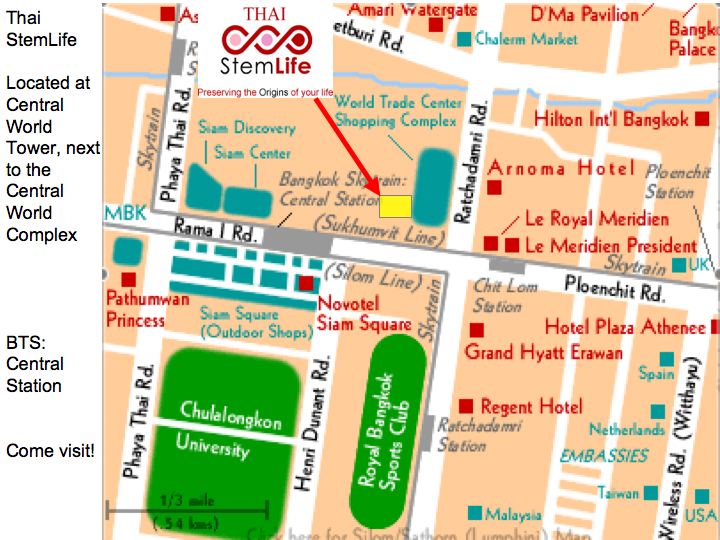
My colleague in Thai StemLife told me that he had written to the Bangkok Post regarding the article they published last month on the lack of an available cord blood bank in Thailand. I looked for it online but it appears that the article is no longer available on the Bangkok Post website, and can only be found on a cached folder on Google search . Just to make it easier to read the article, I decided to republish the letter in this entry because it also serves to educate on the differences in Stem Cells and also the information that makes it compelling for any expecting parent to make the obvious decision and bank cord blood stem cells locally.
If you are visiting Bangkok, please feel free to call and drop by our office in Central World Tower, downtown near the new Siam Paragon in Pathumwan. You should call in advance, just because the lifts are so secure, its almost impossible to find your way upstairs without a guide with a proper pass to our floor!
Letter published in Bangkok Post News, Saturday May 6th 2006:
STEM CELL STORAGE AVAILABLE LOCALLY
I read with interest your front-page article on stem cells published April 17, 2006. I feel compelled to respond to it as a number of inconsistencies is evident. The information provided is not correct and potentially misleading to residents of Thailand that are interested in storing their own and their babies' adult stem cells. Cord Blood stem cells can be stored in Thailand privately with THAI StemLife as well as with the private arm of the Thai Red Cross.
Substantial public confusion is maintained by the incomplete knowledge of the media trying to report on stem cells and mostly, what we hear are the two words: stem cells.
The reports make us feel like a Pandora's Box has been opened on questions of ethics and morals. Still, most of the time the only question that needs to be answered is whether someone with incomplete knowledge, background and after incomplete research should be allowed to write scientific articles.
Adult Stem Cells (ASC), include Bone Marrow Stem Cells (BMSC), Umbilical Cord Blood Stem Cells (UCBSC) and Peripheral Blood Stem Cells (PBSC). ASC have limited but still wide potency and plasticity to develop to most tissues of an organism. The ability of certain tissues in the adult (bone marrow, skin, liver and bone) to repair and renew indicates the presence of stem cells in all of us. Human bone marrow is already transplanted since many decades, with proven therapeutic effects, and lately other ASC sources are being used.
Umbilical cord blood is therefore an excellent alternative and never-ending source of stem cells. It is collected within five minutes from the umbilical cord and placenta after a baby is born, without any risk to the mother or baby. This blood that is normally discarded is rich in blood-forming cells. The cord blood is tested for viral, bacterial and fungal infections, frozen and stored at -196C at a cord blood bank for future use.
The transplant process is the same as for marrow and peripheral blood stem cell transplants. To date, more than 6,000 cord blood (UCBSC) transplants have been performed, among which it should be noted that the first worldwide cord blood transplant for thalassemia was performed in Thailand in 1995.
Moreover, ASC bone marrow transplants, PBSC heart and diabetic ulcer injections are taking place in Thailand. So local expertise is indeed abundant in the Kingdom, in contrast to what the article implies. Cryogenic storage has since July 2005 been available for Thai parents in the Kingdom with THAI StemLife, the first private cord blood bank, that provides this service 24 hours a day, seven days a week to all pregnant mothers at every hospital in Bangkok and throughout Thailand. Thai parents do not need to send their baby's precious blood out of the country, which would mean that risks for cold-chain disruptions and thus destruction of stem cells would be imminent and real.
Furthermore, if those precious stem cells are needed, the patient would not have to fly to Singapore but can be easily treated in local hospitals in Bangkok.
THAI StemLife is also involved in research of both peripheral blood and cord blood stem cells. Prices are also not as expensive as the article implies. THAI StemLife charges 40,000 baht as an initial fee including first year storage and has 9- and 18-year packages, bringing down the prices to 4,000 and 3,500 baht per year, respectively. The information that storage cost is 10,000 baht a week is absurd.
Moreover, the cost of cord blood stem cells (UCBSC) from abroad (mostly Taiwan) for a bone marrow transplant is close to 800,000 baht if found to match, thus significantly more expensive than life-long storage for own use with THAI StemLife.
Stem cells present a fantastic alternative difficult to overlook and the existence of local storage facilities in Thailand makes it easy for patients to decide for future storage, provided they are presented with unbiased and correct information.
DR KOSTAS I PAPADOPOULOS
Executive Board Director, THAI StemLife
www.thaistemlife.com
Friday, May 12, 2006
Vesak Day Stem Cell Program on Channel News Asia

Malaysia, Singapore, Indonesia and Thailand celebrate Vesak Day (Day of the Buddha) today and it's a National Holiday here in Kuala Lumpur. I was alerted by my colleague based in Johor Bahru (JB) that there is a program on Stem Cells entitled "Stems of Life" on Channel News Asia, a Singapore TV station which is broadcasted in Singapore but residents in JB can receive the signal due to its proximity. I think viewers in Hong Kong and East Malaysia may also be able to receive the channel due the syndication of its programs.
I haven't seen the program yet, and am not sure what it is about but plan to try catching it tomorrow. If you'd like to watch it too, switch the TV on and tune in Saturday at 15:30pm Singapore, Malaysia, HK time (+8 GMT). I just checked the channel and it is repeated again on Sunday at 10:30am. Unless you're celebrating or have religious obligations, most of us (but not StemLife*!) are either meeting up from friends or lounging around, and it would be good to use the time to update ourselves on new information which may revolutionize healthcare in our lifetime.
Don't worry if you can't catch it, I'll try to summarize what it's about in another entry. Have a Happy Vesak Day and a Good Weekend :)
*StemLife operates 24/7 and as so far today, we've had 10 babies born with their cord blood units sent to our laboratory. How auspicious to be welcomed into the world on the day of buddhist enlightenment!
Lupus (SLE) Peripheral Blood Stem Cell Transplant for Texan lady at North Western Memorial Hospital

This article describes a patient by the name of Kim Freeman, who has lived with the disease for 10 years but lupus (SLE*) was taking its toll -attacking all her organ linings- causing her heart and lungs to fail. She seems brave and quite determined (and despite her insurance being unable to cover the costs of treatment) has managed to raise sufficient funds through her own effort plus a little help from her local philanthropists.
Her 5-week treatment involves peripheral blood stem cell mobilization to elicit the generation of new stem cells and immune cells, and to move these new cells from the bone marrow to the bloodstream. These newly generated and disease free stem cells are harvested, processed and banked for a subsequent return in the form of a bone marrow stem cell transplant. Chemotherapy is then administered after the stem cells have been harvested to remove the affected cells from her bloodstream and to wipe out the bone marrow cells to make way for the returning cells (presumably lupus affects the cells later on when they have become mature immune cells). She underwent this procedure on May 9th 2006.
Typical treatments range from drugs and chemotherapy to knock off or sequester the immune cells causing the problem to therapeutic apheresis (blood separation by specialized machine), which removes the cells from the blood circulation. In the worst case scenario where neither of these two techniques work, a stem cell transplant is performed to essentially turn back the bone marrow’s cellular clock to a time before the immune cells developed the wrong function.
In Chicago’s North Western Memorial Hospital, doctors have been steadily refining the protocols of stem cell transplantation for SLE and have successfully treated more than 50 patients. This procedure is still classified as “experimental” as each procedure is tailored to the patient’s given condition at the time and there are no guarantees of success, but for patients who have no other option this may buy them some quality of life back and some hope that their medication and its accompanying side effects can be simultaneously reduced.
It is estimated that 1.5 million Americans suffer from Lupus and I don’t know the figures for Malaysia or Thailand but I know it isn’t rare (but early, accurate diagnosis might still be a problem). At StemLife, we have met quite a number of lupus patients, mostly females in their early twenties whose lives have been almost ruined by the disease and caused grief and constant concern amongst family members.
Most of them seek us out to enquire if a treatment is available to which I’ve responded that the only work I know of is that mentioned in this article in the US. However, I have heard that the Singapore General Hospital has made a decision to treat this condition and have sent doctors to Chicago to learn the procedure. Perhaps these patients will be able to go to nearby Singapore in the near future to have their treatment as the US is awfully far away for these patients to travel.
The article estimates that it will be 6-12 months before we find out if it worked for Kim Freeman, which I hope it does.
If you have lupus and would like to find out about clinical trials for SLE, have a look at their website here.
*SLE = Systemic Lupus Erythmatoses
Wednesday, May 10, 2006
Advances in Stem Cell Therapy for Thalassemia, StemLife Cord Blood Stem Cell Transplantation

Recent news on Thalassemia stem cell therapy -published in journal Nature Biotechnology- from a joint collaboration effort between New York's Sloan Kettering Cancer Center and Palermo's Cervello Hospital. This is great news and means a lot to those who are aware that they are carriers of the thalassemia gene.
Thalassemia beta major is a genetic condition
Thalassemia beta major babies when first born do not exhibit the symptoms of severe thalassemia as the baby has a special type of fetal hemoglobin known as Hb F. It has alpha chains and gamma chains but no defective beta chains (hence the name beta thalassemia major). However, as its hemoglobin converts to adult beta chains, the condition becomes noticeable as the child is anemic, requiring blood transfusions with all its related complications (see this chart on the problems associated with beta thalassemia)
How might the Trojan horse therapy work?
More on the basis of the stem cell therapy is available in this article but it essentially describes the virus carrying a healthy gene to replace the defective one in a thalassemia major patient's stem cells. This results increased levels of hemoglobin and converting the patient symptomatically and somatically into a thalassemia minor (compatible with normal life).
What about the next generation?
I'm not sure if the Trojan horse will also affect the germline cells, as only the bone marrow stem cells are extracted and exposed to the virus... meaning that children of these treated patients may still have a significant chance of inheriting 2 defective beta genes (one defective gene from each parent) and result in a thalassemia major child as well. However, if this technology is safe, can be easily replicated and commercially viable, it is a more elegant way of treating the condition vis-a-vis a stem cell transplant (which has its own risks).
Human trials with the Trojan horse stem cell therapy are due to start in the next few months. The article estimates that 3 million people worldwide are afflicted with this genetic condition and 50,000 succumb to the disease every year.
Prevalence and treatment in South East Asia
Apart from Singapore, which has managed to eradicate almost all cases of thalassemia major by pro-active screening and a strict genetic diagnosis program, in Malaysia and Thailand, thalassemia major is quite prevalent and many families especially in east Malaysia are not properly diagnosed nor chelation therapy administered due to costs associated with the desferrioxamine drug. Stem cell transplants only happen if there is a matched sibling source (bone marrow / umbilical cord blood / peripheral blood stem cells), a unit / donor which can be purchased from international banks; and if the child is still fit to undergo the procedure.
Stem cell transplantation for Thalassemia major by StemLife
Whilst on the topic of thalassemia major, StemLife has released a unit of cord blood stem cells for a sibling thalassemia major transplantation in the first quarter of this year and I'm happy to share that the child has since returned home. I'll share more updates with you when I have consent to release the details ;).
Sunday, May 07, 2006
Stem Cells Extend Life for Cancer Patient
Check out this nice blog entry by a columnist in the US, Rick Badie. He describes a golfer, Jim Gates who finds out that he has multiple myeloma* and has undergone his own stem cell harvesting (peripheral blood stem cells) at Emory University Hospital and the procedure has helped extend his life for an estimate of 2-6 years. At least this will give him enough time to set his affairs in order and spend precious time with his loved ones, which the most of us often take for granted.
It will be interesting to know if he can undergo a second round of transplantation to extend his life further. Mr. Badie, please keep us informed.
Another interesting stem cell transplant story for Multiple Myeloma where the patient, Brian MacLeod complemented his treatment with a medical combination of east and west, blending chinese acupuncture with herbal remedies. The transplant took place in the year 2000 and he's still fine 6 years after.
*Peripheral Blood Stem Cells Harvesting for Multiple Myeloma is well tolerated in elderly patients of 60 years old and older. A recent study at Mayo Clinic showed that mobilization (where stem cells are generated from the bone marrow into the bloodstream) was successful in 95% of the patients and that statistically there was no difference in treatment outcomes of elderly patients or younger patients with this technique.
It was concluded that elderly patients with intermediate-stage Non Hodgkins Lymphoma or Multiple Myeloma derive benefit from autologous stem cell transplantation, particularly those with a good prognosis.
It will be interesting to know if he can undergo a second round of transplantation to extend his life further. Mr. Badie, please keep us informed.
Another interesting stem cell transplant story for Multiple Myeloma where the patient, Brian MacLeod complemented his treatment with a medical combination of east and west, blending chinese acupuncture with herbal remedies. The transplant took place in the year 2000 and he's still fine 6 years after.
*Peripheral Blood Stem Cells Harvesting for Multiple Myeloma is well tolerated in elderly patients of 60 years old and older. A recent study at Mayo Clinic showed that mobilization (where stem cells are generated from the bone marrow into the bloodstream) was successful in 95% of the patients and that statistically there was no difference in treatment outcomes of elderly patients or younger patients with this technique.
It was concluded that elderly patients with intermediate-stage Non Hodgkins Lymphoma or Multiple Myeloma derive benefit from autologous stem cell transplantation, particularly those with a good prognosis.
Reversing Liver Cirrhosis with Adult Stem Cells

Finally! Some news about adult stem cells for liver cirrhosis. Hammersmith hospital in London has started investigating whether autologous (one's own) peripheral blood stem cells can be used to repopulate and regenerate damaged liver cells. This initial trial was designed as a safety check for the procedure where a small number of stem cells were injected back into the hepatic artery and recovery in function may or may not happen due to insufficient stem cell dose.
Stem cells have already been shown to be useful in regenerating liver cells and 5 patients have received this novel therapy. If it is safe, a bigger trial will be designed to see how much needs to be administered for various stages of liver disease for the procedure to work. If successful, 6000-7000 patients (perhaps more) awaiting a suitable liver donor in the UK may benefit from this procedure.
Patients who may also wish to explore this option as a first line approach, rather than a last resort are those who don't want to undergo an organ transplant and live with immunosuppression drugs for the rest of their lives (click here and scroll about half way down for drug list). The head of liver surgery at Hammersmith conducting the trials, Professor Nagy Habib is already pleased with the initial patient response saying that the patient's blood results were already improving.
Potential liver patients in Asia:
In Malaysia, I couldn't find exact statistics for liver disease but it is estimated to be about 34,000. A significant contributor to the disease is alcohol consumption and viral hepatitis. In a 1990 study by doctors at Universiti Kebangsaan in a KL hospital documented that 36% of liver cirrhosis was due to alcohol (largely Indian patients) with male:female ratio of 4.4:1.
Thailand is estimated to have more than 95,000 patients suffering from liver disease as viral hepatitis is known to be high.
Prof Nagy, I hope you succeed in this safety trial and move on to ascertaining dose and number of administrations required. StemLife offers peripheral blood stem cell banking services in Malaysia and Thailand (we do so for patients requiring stem cells for oncology and cardiac applications) and we have many patients in the Far East who I am quite certain have already waited a long time for a donor liver, but unable to obtain one. I look forward to your updates :)
Friday, May 05, 2006
Second Case of Umbilical Cord Blood Stem Cells for Multiple Sclerosis
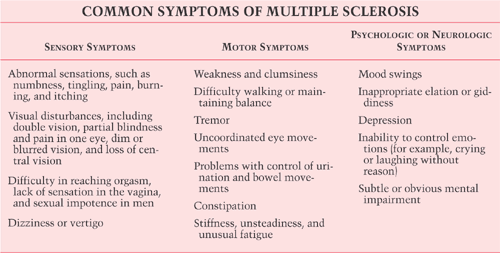
Does good news come in two's or three's? Another report was published in the BBC today about cord blood stem cells in the treatment of Multiple Sclerosis. This company in the Netherlands has already reported some work earlier on but there are a few more details on how the stem cells are administered in this article.
MS largely affects women more than men (ratios from 2.8 Female to 1 Male). In this case, Patricia Frost is a 66 year old who has had the disease for 14 years, lost the ability to walk for 10 years experienced a slow down her speech and in the last year, the disease has debilitated her arms and neck. Doctors will typically inform a patient that there is no cure for MS and certainly very few steps that can be taken to ease her pain or improve her health (check out this link for how MS affects the body). Like the previous blog entry, this patient raised 12,000 GBP (USD 22,293) to go to Rotterdam for some pre-treatments and her stem cell injections.
The Dutch clinic offering the experimental therapy has doctors which say that they have an 80% success rate in achieving improvements in patients' various conditions without experiencing any harmful side effects. The cord blood stem cells are supplied by a Swiss company by the name of Advanced Cell Therapeutics (not to be confused with Advanced Cell Technology, USA) based in Zurich, which apparently supplies a dozen other clinics around the world. Admittedly, their site is thin on information and does look rather dodgy...
What's the procedure that this patient went through? Firstly, a mannitol solution which the article reports as preparing the nervous system for taking up the stem cells (but it is known that mannitol has a special temporary property of opening the channels of the blood-brain barrier). Then, 1 million cord blood stem cells are infused through a drip and a series of injections into her neck, back and navel. This procedure is somewhat similar to the previous case- direct administration of the stem cells to site. The doctor Anneke Matthijssen administers the stem cells over a course of 4 hours and the patient is able to return home in 3 days. The interesting thing is the remarkably quick effects that are seen after the stem cells were injected in both cases. Immediately, the patients were both able to perform movements that they were unable to before.
There is doubt on the validity of the procedures and also on the quality and process in preparing the cells. The BBC attempted to reach ACT in Zurich but received no reply on their procedures. Can't imagine why they would want to reveal this as it would only allow others to replicate its methods. However, there does need to be some form of validation or the Dutch clinic might be forced to move to another country to offer its services. But in a country that was the first in Europe to legalize euthanasia and doctor assisted suicide for terminally ill patients in 2001, I think that this service offering may at least reduce requests for euthanasia for MS patients who now have an experimental alternative.
Who's following up on the patient in 3 months? I'm wondering if Patricia's GP or family members will be able to provide some insight in the near future.
Umbilical Cord Blood Stem Cells for Multiple Sclerosis

Not much news over the holiday weekend but there was an interesting report yesterday from the Evening Times in the UK about a lady, Karen Penders who is 34 years old suffering from Multiple Sclerosis for 18 years and could not walk independently for the last 14 years. She had a baby girl* when she was 29 but due to the illness, has been to exhausted to play with her daughter.
As her condition was worsening, she sought treatment at a clinic in Ireland where she had umbilical cord blood stem cells were injected around her eyes, her head and at the base of her spine in the middle of March. The family raised 10,500 GPB (USD 19,407) to pay for the treatment.
The patient reports amazing improvement with fantastic energy and her eyesight immediately improved. It was reported that the stem cells will work for about a year and then she may need a top up of stem cells.
I am wondering how many stem cells they injected and whether they did any processing or culture or HLA matching. It is nice that something positive has come out of the injections, but I wonder if these results can be published in a medical journal and enter for use mainstream medicine.
In Malaysia, the estimates are that approximately 33,000 patients have Multiple Sclerosis and approximately 92,000 in Thailand, 6000 or so in Singapore. If we could use umbilical cord blood stem cells for therapy, this will be a big application for cord blood stem cells banks; and MS patients will have some relief, albeit temporary, from this neurodegenerative disease.
*According to a presentation on www.direct-ms.org, here are some interesting ratios of MS:
MS in the general population in the US is 1:1000
Children developing MS from parents with MS is 1:30 (35X)
Siblings developing MS of patients with MS is 1:25 (40X)
Daughters of mothers with the DR2 gene error is 1:10 (100X)
Identical Twin 1:3 (300X)
Given these statistics, I wonder if Karen Penders had considered banking her baby's stem cells when she was born, and if this technique proves successful, could be used for her own treatment in the future.
Subscribe to:
Posts (Atom)

 Posts
Posts


